
Pamukkale and Hierapolis Tour







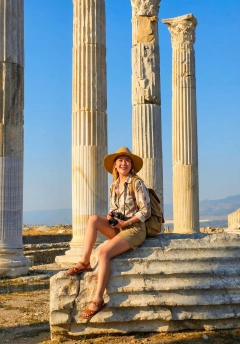


Take a full-day private one day regular Pamukkale tour from Marmaris with visits to Pamukkale travertines, Hierapolis Ancient City, Cleopatra Pool, and the grand Roman theater.
Highlights
- Walk Pamukkale's white thermal terraces and panoramic viewpoints
- Explore Hierapolis Ancient City and its monumental remains
- Enjoy optional time at Cleopatra Pool thermal waters
- Travel with private guide and vehicle from Marmaris
- Return same day with organized round-trip transfer

Pamukkale and Hierapolis Tour
Take a full-day private one day regular Pamukkale tour from Marmaris with visits to Pamukkale travertines, Hierapolis Ancient City, Cleopatra Pool, and the grand Roman theater.
Itinerary
This one day regular Pamukkale tour from Marmaris is built for travelers who want to discover one of Turkey most iconic UNESCO landscapes in a single day. The full-day route starts with morning pick-up from Marmaris hotels or cruise port and continues with private guiding throughout the journey. The first major highlight is Pamukkale, famous for its brilliant white travertine terraces shaped by mineral-rich thermal waters. Walking through this natural area gives visitors a unique mix of geology, scenery, and long spa tradition. The itinerary is designed to keep site time meaningful without adding unrelated stops. For guests seeking a reliable Marmaris to Pamukkale day trip, this plan offers a clear and efficient structure.
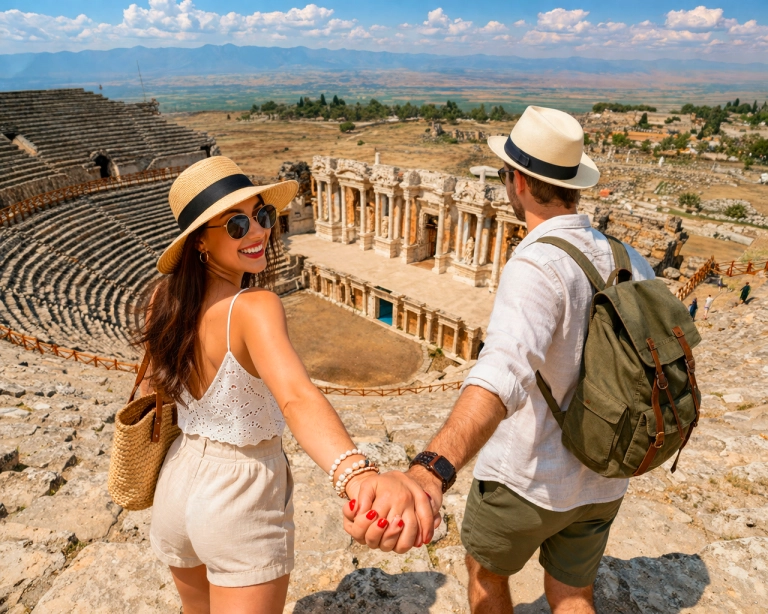
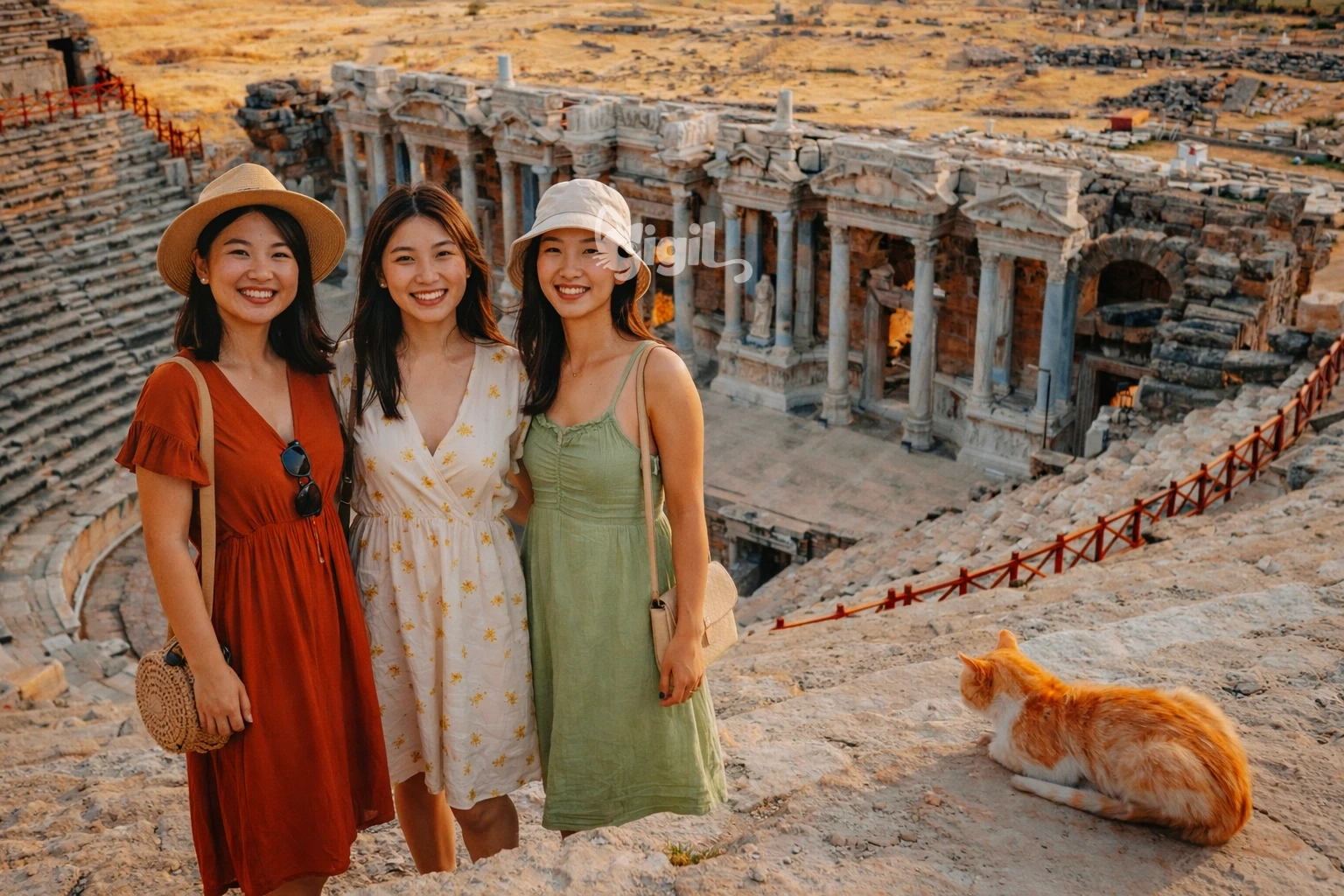
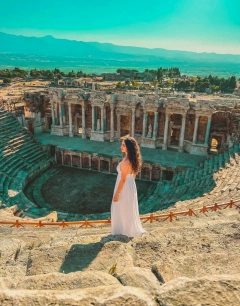
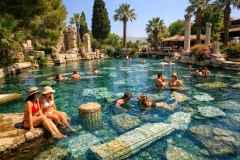
After the travertines, the route expands into the Hierapolis Ancient City tour, where Roman and early Christian era remains reveal the historical depth of the region. Key points include the necropolis zone, monumental city structures, and the impressive theater that dominates the hillside view. This section adds strong archaeological context to the thermal landscape and helps explain why Pamukkale has attracted visitors for centuries. The experience continues with a stop at Cleopatra Pool, known for warm water and visible ancient column remains. Guests can relax, take photos, or enjoy the atmosphere around this historic bathing area. Together, these visits create a balanced Pamukkale Roman theater and heritage experience.
The day also includes time to rest and enjoy the surroundings before the return transfer to Marmaris. Private vehicle support, licensed guiding, parking, and local taxes are included for smooth full-day operations. The program remains fully aligned with listed highlights such as Pamukkale, Hierapolis, and Cleopatra Pool. If you want a practical and content-rich Pamukkale full-day private tour, this itinerary is a strong match. It is especially suitable for travelers who want both natural formations and classical archaeology in one route. Overall, this package delivers a complete Cleopatra Pool Pamukkale day experience with strong cultural value.
-
Departure from Marmaris
Early transfer
Pickup from Marmaris hotel or cruise port.
-
Pamukkale Travertines
White terraces walk
Begin with Pamukkale travertine walk.
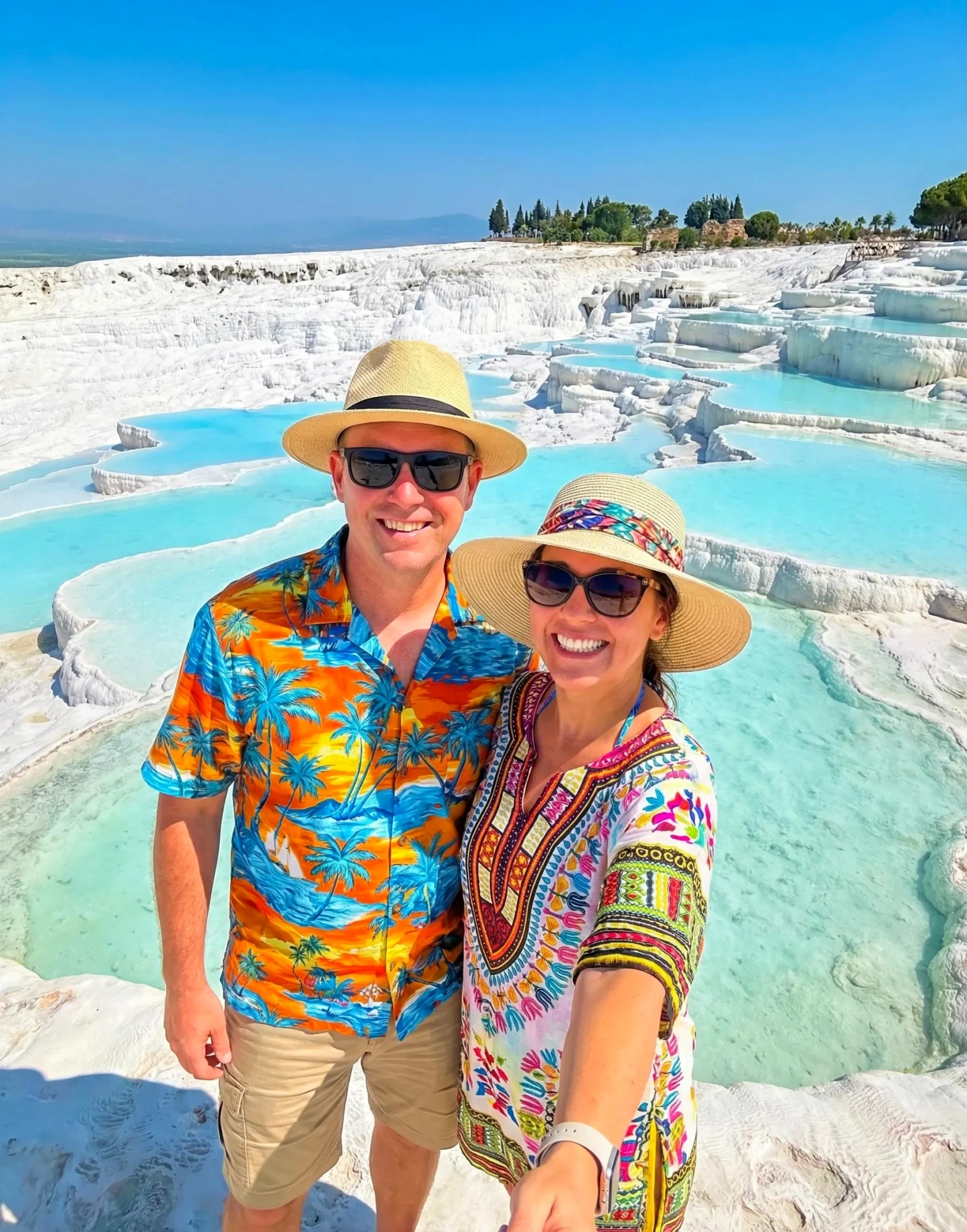
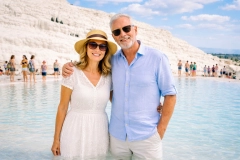
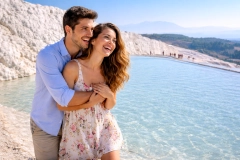
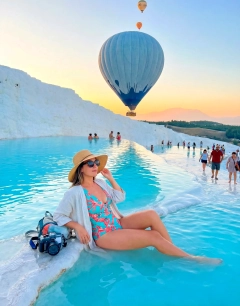
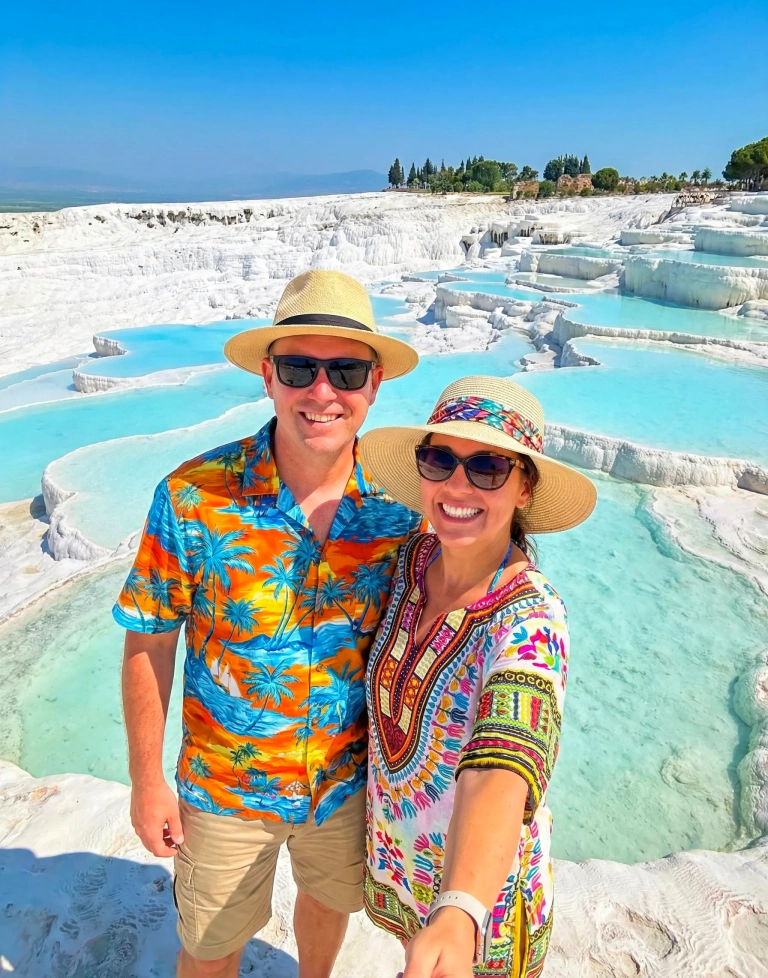
Pamukkale Travertines look almost unreal when you first see them, with white mineral terraces cascading down the hillside like frozen clouds. As you walk through the area, the contrast between bright stone, shallow thermal pools, and wide valley views creates one of the most memorable natural scenes in Turkey. The nickname Cotton Castle makes immediate sense once the formations appear in front of you. Even travelers who have seen many famous landmarks are often surprised by how striking Pamukkale feels in person.
This is a place to enjoy slowly rather than rush through, because the beauty changes with the light and with every shift in perspective. The warm water, the smooth surfaces, and the open sky give the visit a calm rhythm that feels very different from a museum or city monument. It is also one of those rare destinations where photography is easy, but simply standing still for a moment can be even better. Seen together with nearby Hierapolis, the travertines become more than a natural wonder and start to feel like part of a complete travel experience.
-
Cleopatra Pool
Optional thermal swim
Optional swimming at Cleopatra Pool area.
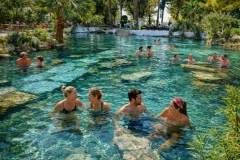
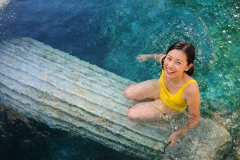
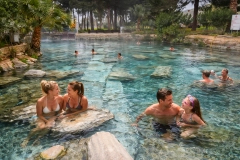
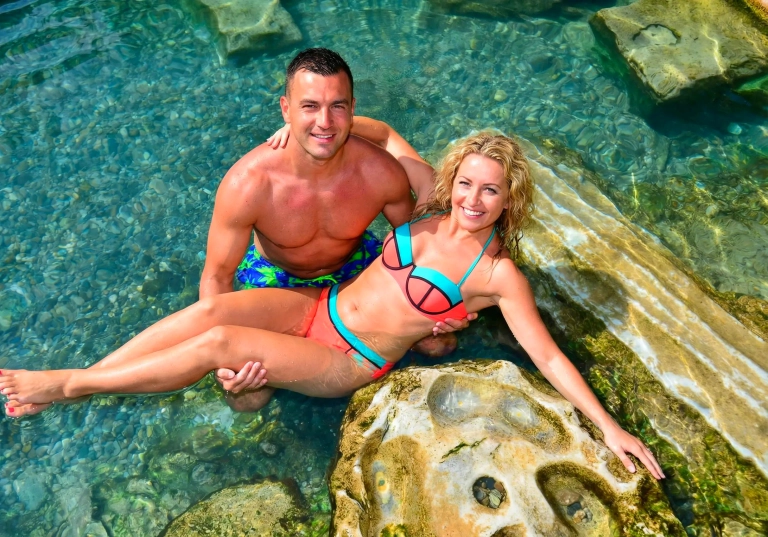
Cleopatra Pool is one of those stops where history and relaxation blend in a way that feels almost theatrical. The warm mineral water, scattered ancient fragments, and leisurely pace create an atmosphere that is very different from the surrounding ruins and walking routes. Even if you choose not to swim, the place has an easy appeal that comes from its unusual setting. It feels less like a formal attraction and more like a pause in the middle of a historic landscape.
What makes the stop memorable is the simple pleasure of being close to thermal water in a place already shaped by centuries of healing culture. After stone terraces, archaeological remains, and sunlit paths, the pool offers a welcome change of rhythm. The combination of comfort and antiquity is exactly what gives it charm. For many travelers, Cleopatra Pool becomes one of the softer, more enjoyable surprises of a Pamukkale day.
-
Hierapolis Ancient City
UNESCO heritage stop
Explore Hierapolis major monuments.
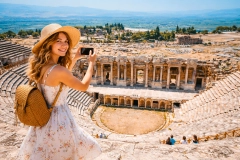
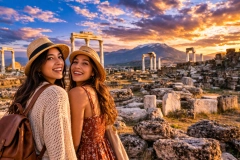
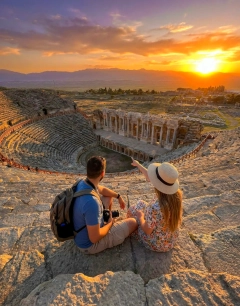
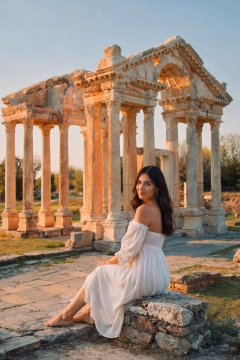
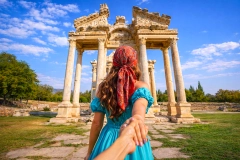
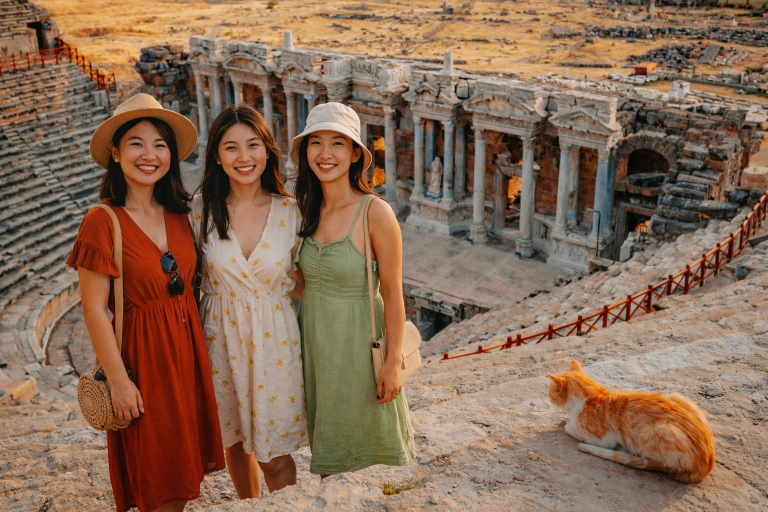
Hierapolis Ancient City rises above Pamukkale like the stone memory of an ancient healing world. The city was built around thermal waters, and as you explore its streets, gates, baths, necropolis, and theatre, you can feel how strongly health, belief, and urban life were connected here. The ruins are broad and open, giving the site a powerful sense of scale. It is the kind of place where the landscape and the archaeology constantly speak to each other.
What makes Hierapolis especially rewarding is that it does not offer only one highlight, but a full historical setting to move through step by step. One moment you are looking at a monumental theatre, and the next you are imagining pilgrims, patients, and traders arriving in a famous spa city of the ancient world. The nearby thermal formations make the experience feel even more distinctive, because the natural wonder and the ancient settlement belong to the same story. For travelers who enjoy ruins with atmosphere, Hierapolis feels expansive, layered, and surprisingly vivid.
-
Return to Marmaris
Transfer back
Return transfer to Marmaris after full-day route.
Got a question about this tour?
Reach out to our travel experts.
Informations
-
What's Included
- Hotel or cruise port pickup and drop-off in Marmaris
- Private licensed tour guide
- Private air-conditioned vehicle and driver
- Parking fees and local taxes
-
What's Excluded
- Museum and archaeological site entrance fees
- Cleopatra Pool entry fee
- Meals and drinks
- Personal expenses
- Tips for guide and driver
-
Entrance Fees
- Entrance fees apply for Hierapolis-Pamukkale archaeological zone and Cleopatra Pool access.
-
Travel Tips
- Wear non-slip comfortable shoes for travertine and wet surfaces
- Bring swimsuit and towel if planning pool access
- Carry hat, sunscreen, and drinking water
- Bring a light change of clothes after thermal stop
- Expect a long transfer day from Marmaris
-
Note
- This is a private tour operated only for your party
- Pickup time is confirmed before service day
- Route timing may vary depending on traffic and site conditions
- Some sections include uneven paths and stairs
- Tour operates year-round under operational availability
Your Peace of Mind Options
Cancellation Policy
A transparent overview of applicable fees.
Customer Comments - Tripadvisor Write A Review!
Customer Comments - Tripadvisor





Tour Reminder!
You can create a reminder for yourself for this tour. We will send you a reminder e-mail/sms about this tour on the date you specify.
FAQs
-
What does the Pamukkale day tour from Marmaris include?
- Private pickup and drop-off in Marmaris (hotel or port)
- Long transfer to Pamukkale (Denizli region)
- Pamukkale travertine terraces walk
- Hierapolis ancient city highlights
- Optional Cleopatra Pool (Antique Pool) time
-
How long is the day and how much time is driving?
- Total duration: about 12 hours
- This is a long day trip with significant driving time each way
- Comfort breaks can be added during the transfer
-
Where is pickup and what time do we start?
- Pickup is from your Marmaris hotel, cruise port, or agreed meeting point
- Start time is usually early because of the distance
- Please be ready 5 to 10 minutes before pickup
-
Can we swim in Cleopatra Pool (Antique Pool)?
- Swimming is optional and depends on opening status
- Entry is usually paid on site if you choose to swim
- Bring swimwear and a towel if you plan to include it
-
What are the rules for walking on the travertines?
- Some sections require bare feet to protect the terraces
- Surfaces can be slippery; walk carefully
- Follow local signage and staff instructions
-
How much walking is involved?
- Moderate walking in Hierapolis and on terraces
- Uneven stone paths and some steps can be involved
- Comfortable shoes are recommended
-
Are entrance fees included?
- Entrance fees and personal expenses are typically paid on site unless stated otherwise
- Your guide can advise current fees on the day
-
Is lunch included?
- Time for a meal break is included in the day plan
- Meals are typically not included unless stated otherwise
- Your guide can recommend options
-
Is this tour suitable for families and seniors?
- Yes for many travelers
- It is a long day, so pacing and breaks matter
- We can adjust walking sections for comfort
-
What should we wear and bring?
- Comfortable shoes
- Sun protection and water
- Small bag for carrying shoes if you remove them on travertines
- Swimwear for Cleopatra Pool (optional)
General FAQs
-
What currency is used in Turkey?
Turkey uses the Turkish Lira (TRY).
- Cards are widely accepted in cities and tourist areas, but cash is still useful for small purchases.
- ATMs are common. Exchange offices and banks are also available.
-
Can I pay by credit card in Turkey?
In most restaurants, hotels, and shops you can pay by card.
- For markets, small shops, taxis, and tips, carrying some cash is recommended.
- Let your bank know you are traveling to avoid card blocks.
-
Is Turkey safe for tourists?
Turkey is generally safe for visitors, especially in main tourist areas.
- As in any destination, watch out for pickpockets in crowded places.
- Use licensed taxis/transport where possible and keep valuables secure.
-
What should I wear when visiting mosques in Turkey?
Dress modestly when entering mosques.
- Shoulders and knees should be covered.
- Women may be asked to cover their hair.
- Shoes are usually removed at the entrance.
-
Do I need a visa to visit Turkey?
Visa requirements depend on your nationality.
- Please check the latest rules from official sources (consulate/embassy or the official e-visa portal) before travel.
-
What is the best time to visit Turkey?
Spring and autumn are popular because temperatures are usually milder.
- Summer can be hot on the coast and inland.
- Winter is quieter and can be great for cities and some regions.
-
Will English be enough in Turkey?
Turkish is the official language. In tourist areas, English is commonly spoken.
- Learning a few basic Turkish words is appreciated and can help outside major areas.
-
What power plug is used in Turkey?
Turkey typically uses Type C and Type F plugs (220V, 50Hz).
- If your devices use a different plug type, bring a travel adapter.
-
Is tap water safe to drink in Turkey?
In many places, visitors prefer bottled water.
- Hotels and restaurants usually provide bottled water easily.
-
Is tipping expected in Turkey?
Tipping is common and appreciated for good service.
- In restaurants, rounding up or leaving a small amount is typical.
- For guides and drivers, tips are at your discretion based on satisfaction.
-
Do I need to carry my passport in Turkey?
We recommend keeping your passport safely in your hotel and carrying a copy (photo or printed) when out.
- Some venues may request an ID; your guide can advise for your route.
-
Do museums and sites have weekly closure days in Turkey?
Opening hours can change by season and some venues may have weekly closure days.
- We recommend checking the latest opening hours close to your travel date.
- Starting earlier in the day helps to avoid crowds at popular sites.
-
What are the emergency numbers in Turkey?
Dial 112 for emergencies (medical, police, fire and other urgent situations).
- 112 is a unified emergency line in Turkey.
- If you do not speak Turkish, try English and share your location clearly.
-
How do I get from airports to the city in Turkey?
Options depend on the city, but common choices are:
- Official airport taxi
- Airport shuttles/buses
- Metro/train (available in some cities)
- Pre-booked private transfers
If you arrive late at night or with luggage, a pre-booked transfer can be the easiest option.
-
Are taxis and ride-hailing apps reliable in Turkey?
Use licensed taxis and make sure the meter is used (unless a fixed airport fare is confirmed).
- In some cities, taxi-hailing apps can help you find a taxi more easily.
- If possible, keep small cash and ask for a receipt when needed.
-
How do I buy a SIM/eSIM in Turkey?
You can buy SIM/eSIM options from mobile operators and official stores.
- Bring your passport for registration.
- For longer stays, foreign phones may require device registration (IMEI) to keep working on local networks.
-
What are typical opening hours in Turkey?
Opening hours vary by city and season.
- Many shops and malls stay open late, especially in tourist areas.
- Some museums may close earlier and may have weekly closure days.
- During national or religious holidays, hours can change.
-
How do pharmacies work in Turkey (duty pharmacy)?
Pharmacies are called Eczane. Outside normal hours, there is usually a rotating on-duty pharmacy (Nöbetçi Eczane).
- Regular pharmacies typically post the on-duty pharmacy information on the door/window.
- Your hotel reception can also help you find the nearest one.
Let's Customize Your Trip!
Prepare your own tour plan!
Good to Know
-
Local tip: start early for comfort
- Earlier starts help avoid peak heat and crowds
- You also get more time flexibility on site
-
Local tip: carry a light bag for shoes
- Barefoot sections are common on terraces
- A small bag makes it easier
-
Local tip: hydrate and take shade breaks
- Pamukkale plateau can be hot
- Short breaks improve comfort
-
Local tip: protect electronics from water
- Terrace sections can be wet
- A simple phone pouch can help
-
Local tip: plan your swim stop
- If Cleopatra Pool is a priority, tell your guide early
- Opening status can vary
Want to read it later?
Download this tour’s PDF brochure and start tour planning offline
Similar Tours

Marmaris Full-Day City, Castle and Coastal Discovery
Explore Marmaris on a private full-day 7-hour tour with licensed guide support, including Marmaris Castle and Museum, Old Bazaar, Iyilik Kayaliklari archaeological area, Tashan bridge route, and Icmeler coast.
Dalyan River, Turtle Beach and Mud Bath Discovery
Join a private full-day 6-7 hour Dalyan tour from Marmaris with licensed guide support, including Iztuzu Turtle Beach, Lycian rock tomb viewpoints, river cruise routes, and therapeutic mud baths.