Pamukkale and Aphrodisias Heritage Tour
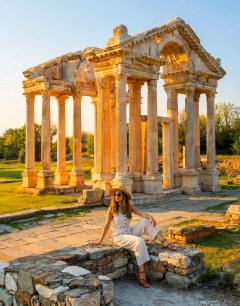
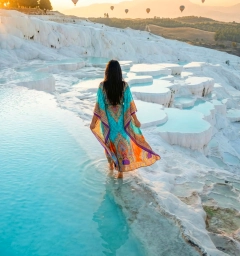
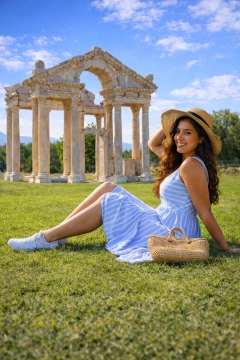
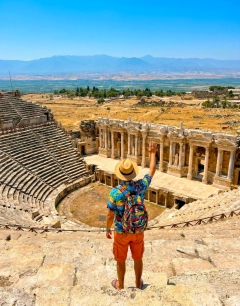
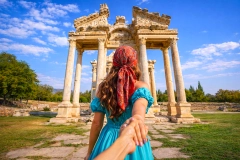
Explore two major heritage sites in one private 12-hour day from Izmir with Aphrodisias Ancient City and Museum, Pamukkale travertines, Hierapolis, and optional Cleopatra’s Pool.
Highlights
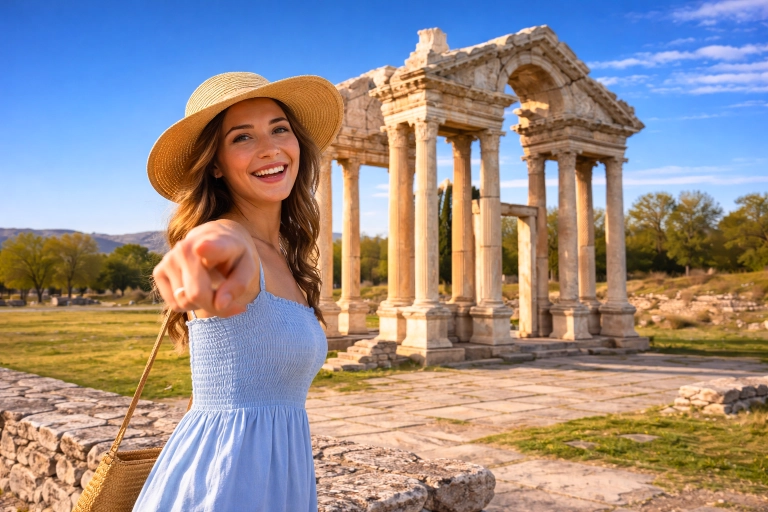
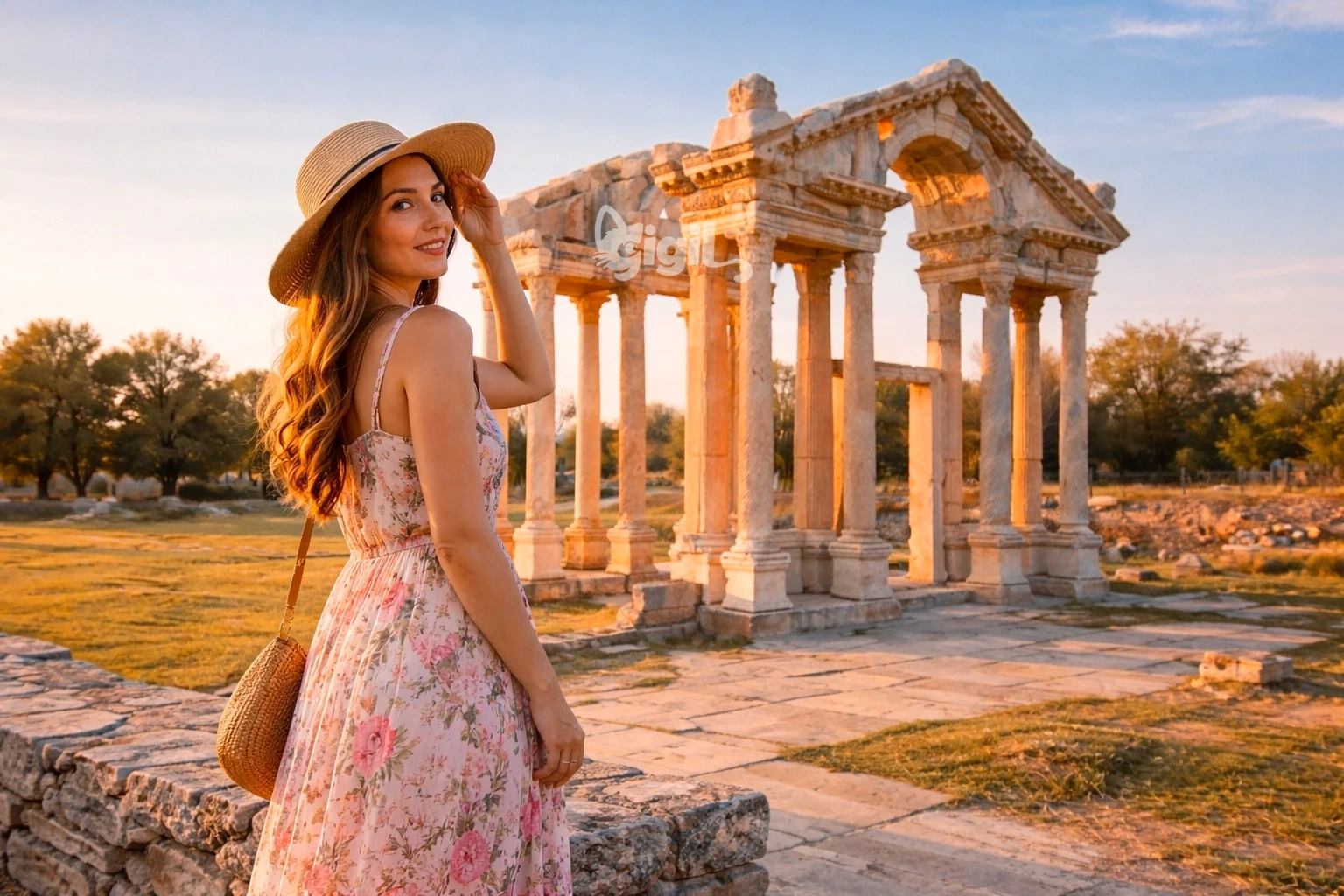
- Aphrodisias Ancient City with Tetrapylon, stadium and sculptural heritage
- Aphrodisias Museum featuring outstanding marble finds from the region
- Hierapolis Ancient City with necropolis and Roman urban remains
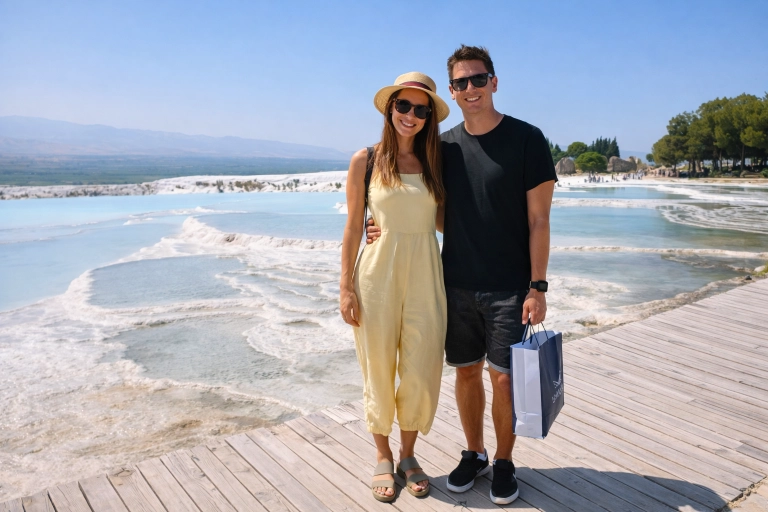
- Pamukkale white travertine terraces shaped by thermal mineral waters
- Optional Cleopatra Antique Pool experience in warm spring-fed waters

Pamukkale and Aphrodisias Heritage Tour
Explore two major heritage sites in one private 12-hour day from Izmir with Aphrodisias Ancient City and Museum, Pamukkale travertines, Hierapolis, and optional Cleopatra’s Pool.
Itinerary
This Pamukkale and Aphrodisias tour from Izmir is designed for travelers who want to combine classical archaeology and natural thermal landscapes in one full day. The itinerary starts with pickup from Izmir hotel or airport and runs privately for around 12 hours. It includes long-route transfer, guided site visits, and practical breaks for comfort. Guests searching a private full-day heritage tour Turkey often choose this format because it covers two major destinations in a single itinerary. the route follows the listed highlights and timing sequence. It remains fully focused on Aphrodisias and Pamukkale-Hierapolis content.
The first major section is Aphrodisias, where visitors explore key monuments such as Tetrapylon, stadium, theater, baths, agora, and associated museum collection. This stage is especially suitable for guests interested in an Aphrodisias museum and ruins experience with guided archaeological interpretation. Site commentary explains urban design, sculpture tradition, and imperial-era cultural significance. A local lunch break is included according to official flow before continuing to the second destination. Walking pace is arranged for practical access and photo opportunities. The route then moves toward Pamukkale.
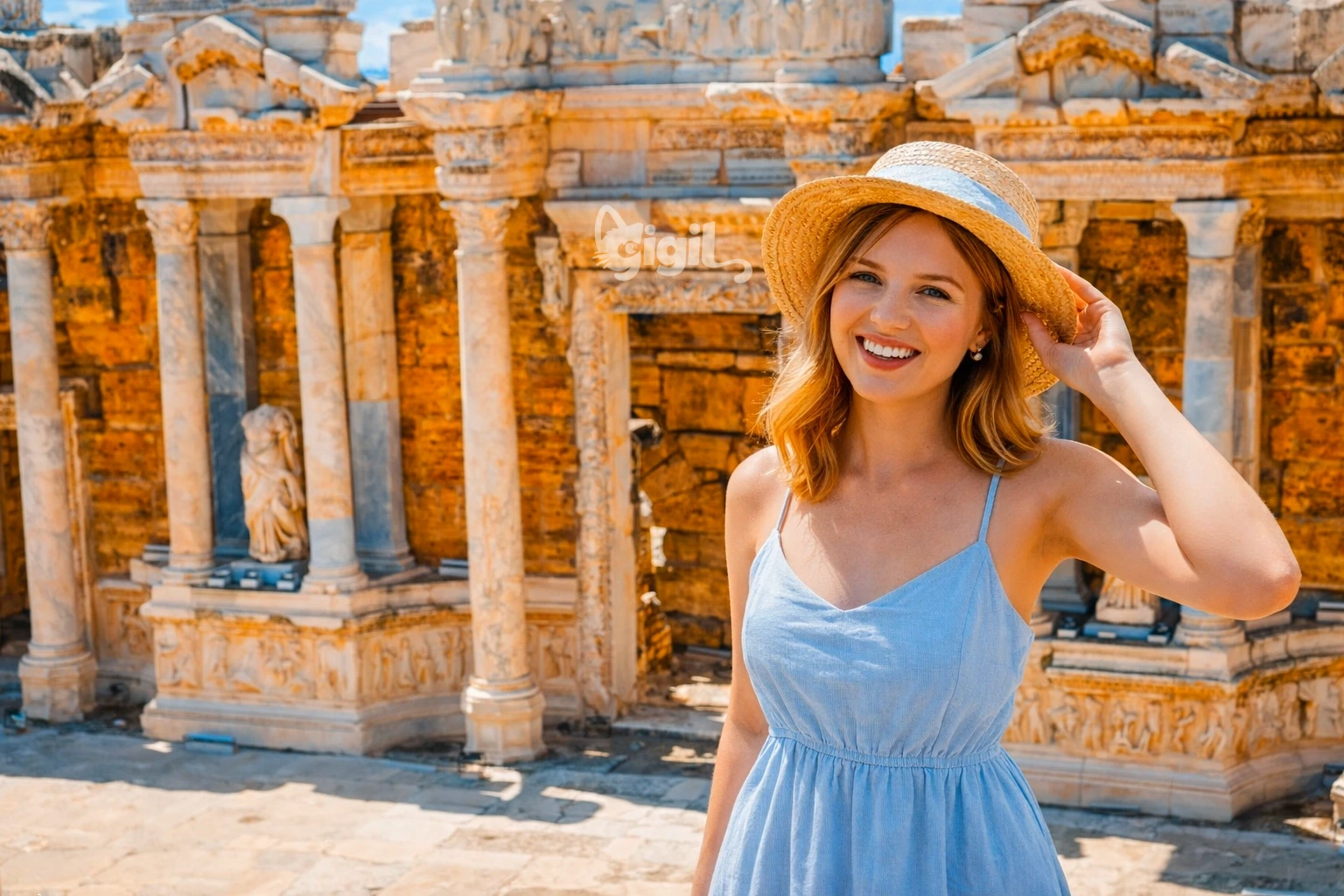
The second section includes Hierapolis and Pamukkale travertines, combining necropolis context, monumental remains, and white thermal terraces shaped by mineral-rich waters. Travelers wanting a Pamukkale travertines and Hierapolis route with deep historical framing gain strong value from this structure. Cleopatra’s Thermal Pool is available as an optional stop with extra entrance fee for guests who wish to swim. Included services are private licensed guide, private deluxe A/C vehicle, parking fees, local taxes, and pickup-drop-off from Izmir points. Entrance fees, gratuities, lunch-drinks, and personal expenses are excluded according to official details. Overall, this is a complete Cleopatra pool optional entry plus dual-site heritage day from Izmir.
-
Hotel Pickup in Izmir
Meet your guide and start inland route.
Your private guide meets you in Izmir and begins the full-day Aphrodisias-Pamukkale program.
-
Intercity Transfer to Aphrodisias
Morning drive toward Aydin hinterland.
This transfer reaches one of Anatolia's most important sculpture-centered ancient cities.
-
Aphrodisias Site Entrance
Start guided walk in Aphrodisias archaeological zone.
Aphrodisias introduces a monumental sacred-urban layout dedicated to Aphrodite traditions.
The Aphrodisias site entrance is where the character of this ancient city first begins to reveal itself. From the outset, the site feels more graceful and open than many other archaeological destinations, with a clear sense of sacred, civic, and artistic order. This first section matters because it frames the visit and introduces the city not simply as a collection of ruins, but as a place shaped by devotion to Aphrodite and by civic ambition. Even the earliest impressions suggest refinement. It is an inviting and memorable way to begin the route.
As you enter, pay attention to the spaciousness of the landscape and the way the monuments seem to emerge naturally from it. The entrance phase often helps travelers understand that Aphrodisias is a city best appreciated as a whole rather than through one iconic highlight. The site's artistic identity is already present from the beginning, even before the major sections come into full view. This makes the opening walk feel both elegant and promising. It sets the tone for one of the most rewarding archaeological experiences in Turkey.
-
Tetrapylon and Stadium Section
Main highlights of the city's preserved core.
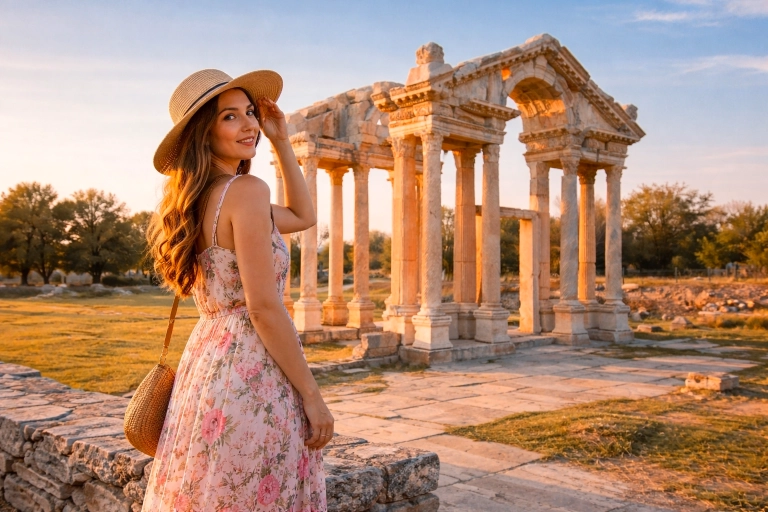
The Tetrapylon gate and vast stadium rank among the best-preserved ancient structures in the region.
Tetrapylon and Stadium Section combine two of Aphrodisias' strongest qualities: ceremonial beauty and extraordinary preservation. In one direction, the Tetrapylon suggests ritual passage and urban elegance; in the other, the stadium reveals the scale of public life, competition, and spectacle. Experiencing them in relation to one another makes the city feel unusually complete. It is one of the best places to understand how varied and sophisticated Aphrodisias once was.
This stop is rewarding because it moves quickly from symbolic architecture to a very physical sense of civic life. The contrast between refined sacred-space design and the long open form of the stadium is especially striking. Together they show that Aphrodisias was both spiritually important and socially dynamic. It is a section that leaves a strong impression even on well-traveled visitors.
-
Aphrodisias Museum Stop
Marble sculpture collections and excavation context.
Museum galleries connect the site visit with elite sculptural production of Roman Asia Minor.
The Aphrodisias Museum is essential for understanding why the ancient city became so admired for sculpture and artistic refinement. Inside, the excavation finds add a level of detail and context that even the outdoor ruins cannot fully provide on their own. The galleries help you connect architectural fragments, sculptural skill, and urban identity into a more complete picture. This is especially valuable at Aphrodisias, where artistic production was one of the city's defining strengths. The museum turns a beautiful site into a much richer historical experience.
As you move through the displays, notice how the quality of workmanship reflects the city's reputation in Roman Asia Minor. Seeing statues, reliefs, and carved pieces up close allows you to appreciate the sophistication behind the monuments you encounter outside. The museum also helps you read the archaeological site more intelligently afterward, because details that might otherwise go unnoticed begin to make sense. It is a calm, rewarding stop for travelers who enjoy art as much as architecture. In many ways, the museum is where Aphrodisias fully explains itself.
-
Lunch Break on Route
Short break before Pamukkale segment.
A lunch stop is planned between the two major archaeological zones.
A lunch break on the route from Aphrodisias toward Pamukkale is a well-placed pause between two of western Anatolia's most rewarding archaeological experiences. After sculpture, stadium, and city-core sections, a slower midday meal helps reset the pace before the thermal and Roman landscape of Hierapolis begins. This is exactly the kind of route where timing matters as much as the menu. The stop feels natural because the day is rich and open-air from start to finish. A calm lunch makes the transition smoother.
If local dishes are available, grilled meats, soups, vegetable plates, gözleme, olive-oil dishes, and other western Anatolian staples all suit the route well. Travelers often appreciate this type of meal because it restores energy without taking them out of the regional atmosphere. The best lunch here should feel practical, local, and unhurried. Between Aphrodisias and Pamukkale, that is the right tone. It keeps the day balanced and enjoyable.
-
Arrival to Pamukkale-Hierapolis
Begin second major heritage segment of the day.
Arrival at Pamukkale combines archaeological exploration with natural thermal scenery.
-
Hierapolis Ancient City Walk
Necropolis and monumental gate-line interpretation.
Hierapolis reveals Roman spa-city planning through its streets, baths and funerary zones.
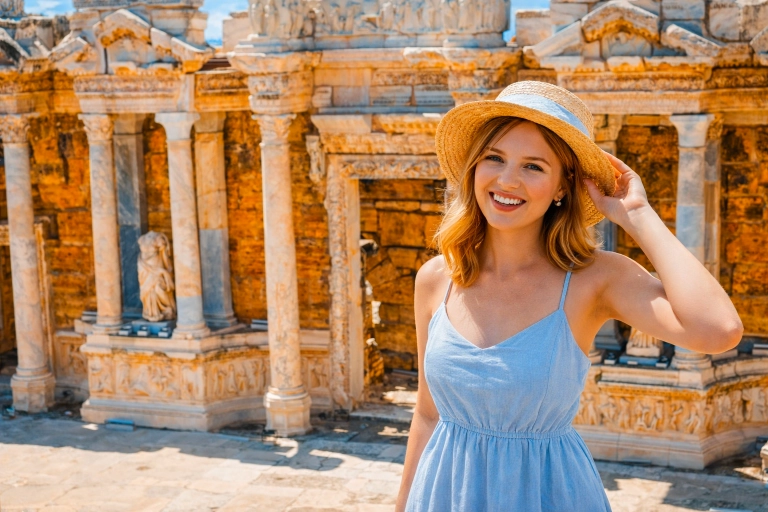
A walk through Hierapolis helps you experience the ancient city as a connected urban landscape rather than a sequence of isolated ruins. As you move along streets, gate lines, and funerary sectors, the logic of a Roman spa city begins to emerge much more clearly. The site feels open and spacious, yet it is full of details that suggest ritual, healing, commerce, and movement. Walking it on foot is the best way to understand how the city once functioned.
This kind of stop rewards a steady pace and a wide gaze. The necropolis, civic remains, and broad stone routes all contribute to a sense that Hierapolis was built for both practical use and symbolic presence. Because the city stands above the famous travertines, every section also carries the awareness of the natural forces below it. The longer you walk, the more Hierapolis becomes a lived place rather than just an archaeological label.
-
Pamukkale Travertine Terrace Stop
Free walk across white calcium formations.
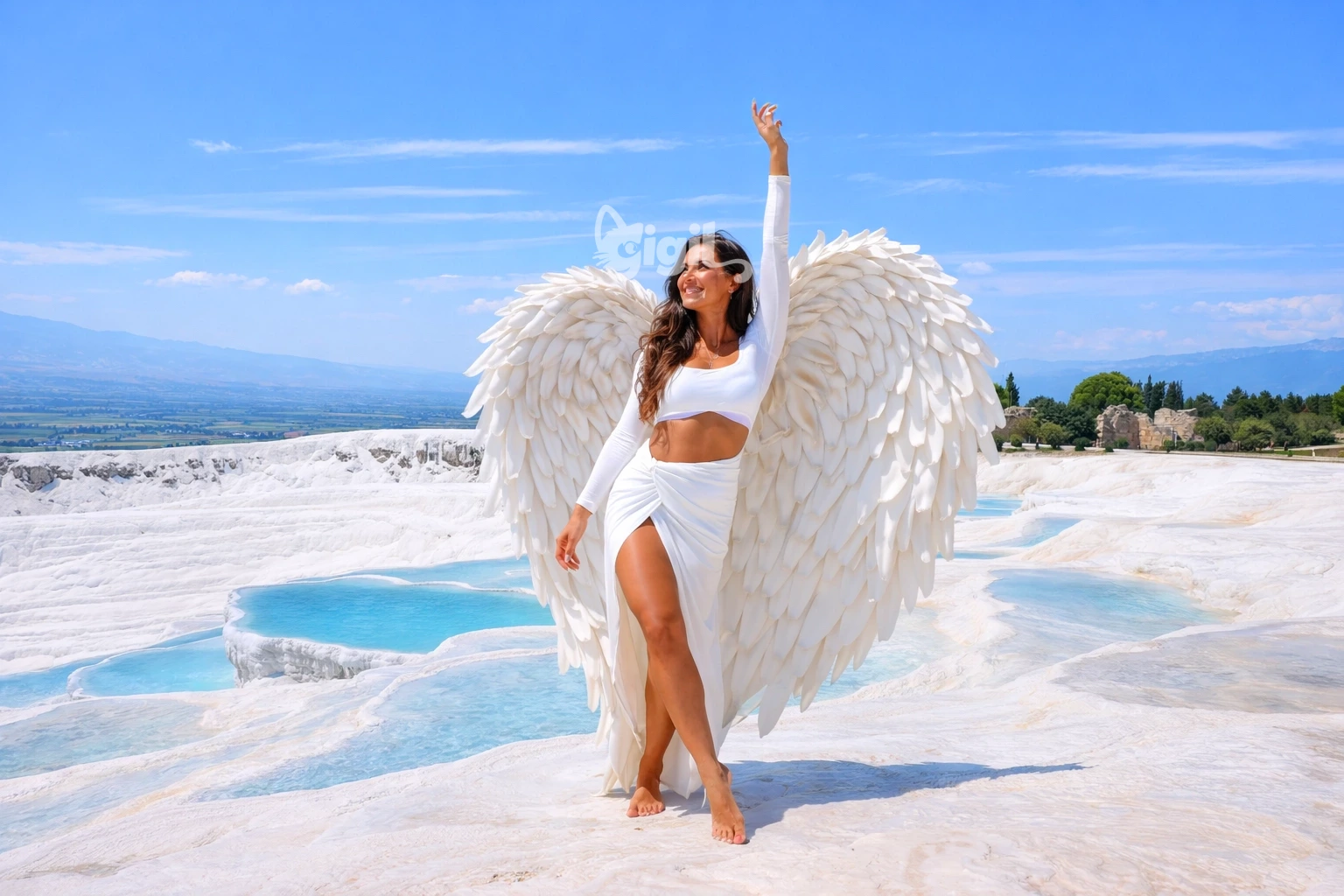
The travertines display Pamukkale's signature white basins formed by mineral-rich spring water.
The Pamukkale travertine terrace stop gives you time to appreciate the famous white basins not just as a quick photo background, but as a living natural formation. By the time you reach this section, the terraces begin to feel less like an icon and more like a textured landscape under your feet. The flowing mineral water, the brightness of the stone, and the open sky all shape the experience. It is a stop that rewards slow looking.
What makes this part of Pamukkale memorable is its unusual atmosphere. The site can feel serene, almost simplified, because color and form reduce themselves to white stone, shallow water, and light. That simplicity is part of the wonder. Even after the ruins of Hierapolis, the terraces bring a completely different kind of grandeur to the day.

-
Cleopatra Pool Entrance (Optional)
Optional access to Antique Pool area.
Guests who choose can enter the Antique Pool section for additional thermal experience.
The optional entrance to Cleopatra Pool introduces one of Pamukkale's most distinctive thermal experiences in a way that lets travelers decide how deeply they want to engage with the site beyond walking and viewing. This optional quality matters. It makes the stop feel personal rather than mandatory. Some visitors will be content with the broader archaeological and travertine route, while others will want the extra immersion. That choice adds flexibility to the day.
As you reach the pool area, think of it as part of the larger thermal story of Hierapolis rather than as a separate leisure add-on. Travelers often enjoy having this option precisely because it changes the rhythm of the route. The entrance signals a different type of encounter with the landscape. Whether or not you go in, it helps complete the site's identity. Pamukkale is as much about water as it is about stone.
-
Cleopatra Pool Free Time (Optional)
Optional swim and relaxation window.
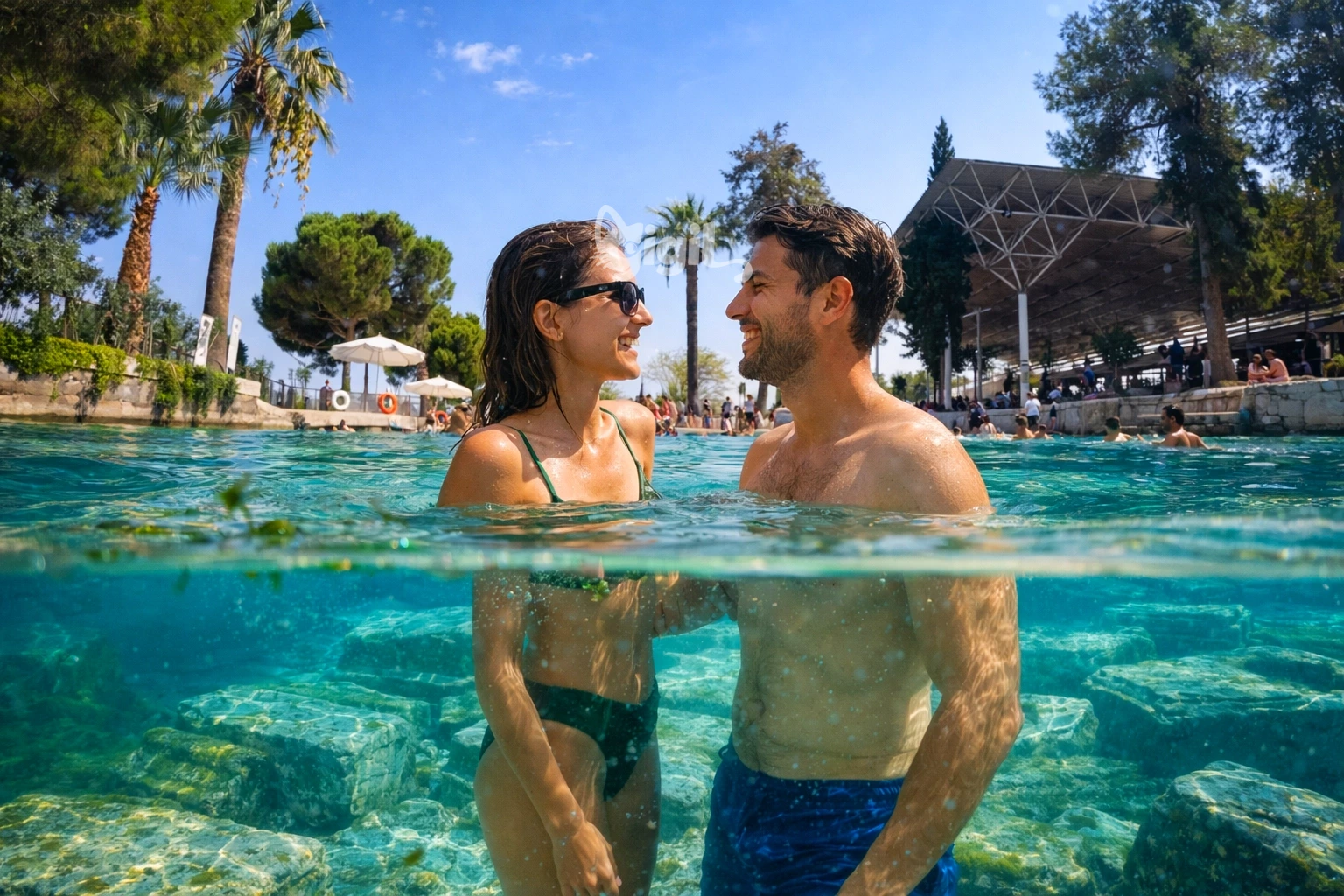
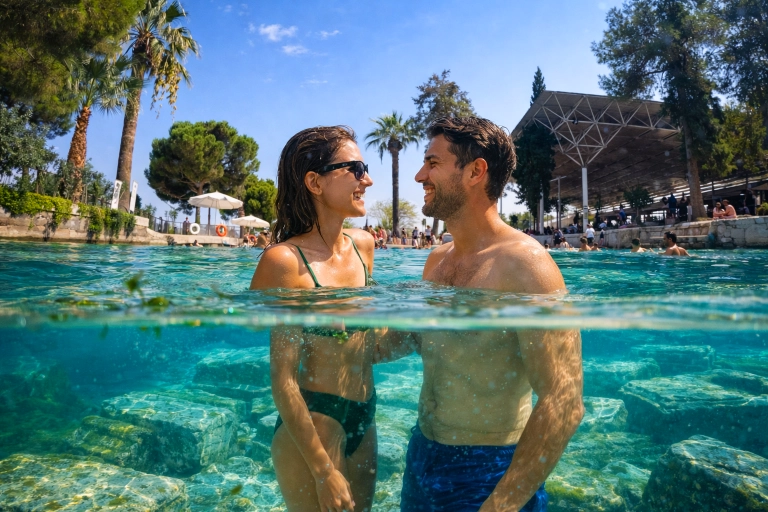
Optional free time is available for swimming among warm waters and submerged stone remains.
Optional free time at Cleopatra Pool gives the Pamukkale day a more flexible and personal ending, especially for travelers who want to decide in the moment whether the thermal experience suits them. That optional quality is part of the stop's appeal. It removes pressure and keeps the route adaptable. The pool remains there as an invitation rather than an obligation. That usually makes the experience feel more relaxed.
If you choose to use the time, let it be about slowing down and enjoying the setting rather than trying to fit in one more formal sight. Travelers often appreciate this option because it adds softness to a day built around strong visual and historical stops. Even a short pause by the pool can change the rhythm of the route. Thermal heritage is part of Pamukkale's identity, and this optional window keeps that dimension open. Sometimes having the choice is what makes the stop valuable.
-
Return Transfer to Izmir
Evening drive back after full-day program.
After completing both heritage zones, return comfortably to Izmir.
-
Drop-off in Izmir
End of tour at your selected point.
You are dropped off at your hotel or meeting location in Izmir.
Got a question about this tour?
Reach out to our travel experts.
Informations
-
What's Included
- Private licensed tour guide
- Private deluxe A/C vehicle
- Hotel or meeting point pick-up
- Hotel or meeting point drop-off
- Parking and local road taxes
-
What's Excluded
- Aphrodisias entrance and museum ticket
- Pamukkale-Hierapolis entrance ticket
- Cleopatra Antique Pool ticket (optional)
- Lunch and drinks
- Personal expenses
- Tips for guide and driver
-
Entrance Fees
- Aphrodisias Archaeological Site: Entrance fee applies
- Aphrodisias Museum: Included with site ticket or charged per current local policy
- Pamukkale-Hierapolis Archaeological Site: Entrance fee applies
- Cleopatra Antique Pool: Additional entrance fee applies for swimming
-
Travel Tips
- Wear comfortable shoes for long archaeological walks
- Bring swimwear and towel for optional Cleopatra Pool access
- Use hat, sunscreen and water for exposed open-air sections
- A camera is recommended for stadium, Tetrapylon and travertine views
- Carry a light jacket for seasonal temperature changes during transfers
-
Note
- This is a long-distance full-day route with early departure
- Site order may vary depending on traffic and ticket-entry flow
- Some sections can be visited from outside during temporary restrictions
- Tour runs privately with your own party and guide
- Final timing is confirmed according to your Izmir pick-up location
Your Peace of Mind Options
Cancellation Policy
A transparent overview of applicable fees.
Customer Comments - Tripadvisor Write A Review!
Customer Comments - Tripadvisor





Tour Reminder!
You can create a reminder for yourself for this tour. We will send you a reminder e-mail/sms about this tour on the date you specify.
FAQs
-
What are the main stops on this private Pamukkale and Aphrodisias tour from Izmir?
This private full-day itinerary includes Aphrodisias archaeological site and museum, then continues to the Pamukkale and Hierapolis area with travertine terraces and optional time at Cleopatra Pool.
- Pickup and drop-off are in Izmir.
- The day includes long-distance driving and multiple walking sections.
-
How long does the tour take and is the drive long?
The planned duration is around 12 hours. There is significant driving time between Izmir, Aphrodisias, and Pamukkale.
- An early start is normal.
- Return time depends on traffic.
-
Are entrance tickets included for Aphrodisias, the museum, and Pamukkale?
Entrance tickets are typically paid separately unless your booking confirmation states otherwise.
- Your guide can help with ticket guidance and timing.
-
How much walking is involved at Aphrodisias and Pamukkale?
Expect moderate walking across both major sites.
- Aphrodisias includes open-air ruins and museum time.
- Pamukkale and Hierapolis include stone paths and travertine walk sections.
-
Is the Aphrodisias Museum included in the itinerary?
Yes. The itinerary includes a museum stop for sculpture collections and site context.
- Time inside depends on interest and opening conditions.
-
Is lunch included?
A lunch break is planned on route before the Pamukkale segment. Whether lunch is included depends on your confirmation.
- If lunch is not included, you can choose what you prefer during the break.
-
Can I swim in Cleopatra Pool on this tour?
Cleopatra Pool is optional. Entry and swimming are typically paid separately unless clearly stated.
- Bring swimwear and a towel if you want to swim.
- Pool time depends on the overall day flow.
-
What should I wear and bring?
Dress for a long outdoor day with walking and sun exposure.
- Comfortable shoes with grip are recommended.
- Hat, sunscreen, and water are helpful in warm months.
- Towel and change of clothes if you plan to swim.
-
Is this tour suitable for children or seniors?
Many guests can join, but the day is long due to travel time.
- Walking is moderate and spread across two major sites.
- Tell your guide if you need more breaks and a slower pace.
-
Is this a private tour and who joins the tour?
Yes. Only your party participates, with a dedicated guide and vehicle.
- This helps with flexible pacing and comfort breaks.
General FAQs
-
What currency is used in Turkey?
Turkey uses the Turkish Lira (TRY).
- Cards are widely accepted in cities and tourist areas, but cash is still useful for small purchases.
- ATMs are common. Exchange offices and banks are also available.
-
Can I pay by credit card in Turkey?
In most restaurants, hotels, and shops you can pay by card.
- For markets, small shops, taxis, and tips, carrying some cash is recommended.
- Let your bank know you are traveling to avoid card blocks.
-
Is Turkey safe for tourists?
Turkey is generally safe for visitors, especially in main tourist areas.
- As in any destination, watch out for pickpockets in crowded places.
- Use licensed taxis/transport where possible and keep valuables secure.
-
What should I wear when visiting mosques in Turkey?
Dress modestly when entering mosques.
- Shoulders and knees should be covered.
- Women may be asked to cover their hair.
- Shoes are usually removed at the entrance.
-
Do I need a visa to visit Turkey?
Visa requirements depend on your nationality.
- Please check the latest rules from official sources (consulate/embassy or the official e-visa portal) before travel.
-
What is the best time to visit Turkey?
Spring and autumn are popular because temperatures are usually milder.
- Summer can be hot on the coast and inland.
- Winter is quieter and can be great for cities and some regions.
-
Will English be enough in Turkey?
Turkish is the official language. In tourist areas, English is commonly spoken.
- Learning a few basic Turkish words is appreciated and can help outside major areas.
-
What power plug is used in Turkey?
Turkey typically uses Type C and Type F plugs (220V, 50Hz).
- If your devices use a different plug type, bring a travel adapter.
-
Is tap water safe to drink in Turkey?
In many places, visitors prefer bottled water.
- Hotels and restaurants usually provide bottled water easily.
-
Is tipping expected in Turkey?
Tipping is common and appreciated for good service.
- In restaurants, rounding up or leaving a small amount is typical.
- For guides and drivers, tips are at your discretion based on satisfaction.
-
Do I need to carry my passport in Turkey?
We recommend keeping your passport safely in your hotel and carrying a copy (photo or printed) when out.
- Some venues may request an ID; your guide can advise for your route.
-
Do museums and sites have weekly closure days in Turkey?
Opening hours can change by season and some venues may have weekly closure days.
- We recommend checking the latest opening hours close to your travel date.
- Starting earlier in the day helps to avoid crowds at popular sites.
-
What are the emergency numbers in Turkey?
Dial 112 for emergencies (medical, police, fire and other urgent situations).
- 112 is a unified emergency line in Turkey.
- If you do not speak Turkish, try English and share your location clearly.
-
How do I get from airports to the city in Turkey?
Options depend on the city, but common choices are:
- Official airport taxi
- Airport shuttles/buses
- Metro/train (available in some cities)
- Pre-booked private transfers
If you arrive late at night or with luggage, a pre-booked transfer can be the easiest option.
-
Are taxis and ride-hailing apps reliable in Turkey?
Use licensed taxis and make sure the meter is used (unless a fixed airport fare is confirmed).
- In some cities, taxi-hailing apps can help you find a taxi more easily.
- If possible, keep small cash and ask for a receipt when needed.
-
How do I buy a SIM/eSIM in Turkey?
You can buy SIM/eSIM options from mobile operators and official stores.
- Bring your passport for registration.
- For longer stays, foreign phones may require device registration (IMEI) to keep working on local networks.
-
What are typical opening hours in Turkey?
Opening hours vary by city and season.
- Many shops and malls stay open late, especially in tourist areas.
- Some museums may close earlier and may have weekly closure days.
- During national or religious holidays, hours can change.
-
How do pharmacies work in Turkey (duty pharmacy)?
Pharmacies are called Eczane. Outside normal hours, there is usually a rotating on-duty pharmacy (Nöbetçi Eczane).
- Regular pharmacies typically post the on-duty pharmacy information on the door/window.
- Your hotel reception can also help you find the nearest one.
Let's Customize Your Trip!
Prepare your own tour plan!
Good to Know
-
Keep your day bag light
This is a long day with multiple sites.
- Carry essentials only: water, sun protection, ID, medication.
-
Use shoes with grip for uneven stone paths
Both Aphrodisias and Pamukkale include uneven surfaces.
- Shoes with grip improve comfort and safety.
-
Bring swim items only if you plan to use the pool
Cleopatra Pool is optional.
- Towel and change of clothes keep the return drive comfortable.
-
Plan photo time at key highlights
Both sites have strong photo points.
- Tell your guide if photos are a priority so stops can be paced well.
-
Skip optional pool time if you prefer a lighter day
Pool time is optional.
- Skipping it can reduce fatigue and help keep the return smoother.
Want to read it later?
Download this tour’s PDF brochure and start tour planning offline