
Tinos Heritage Private Discovery
Enjoy a private full-day Tinos Island Tour from Mykonos with panoramic vehicle sightseeing, Tinos town, Evangelistria Church, Kechrovouni Monastery, Volax, and Venetian Castle.
Highlights
- Ferry crossing from Mykonos to neighboring Tinos
- Church of Panagia Evangelistria pilgrimage landmark
- Monastery of Kechrovouni and village traditions
- Volax village and island panorama route
Tinos Heritage Private Discovery
Enjoy a private full-day Tinos Island Tour from Mykonos with panoramic vehicle sightseeing, Tinos town, Evangelistria Church, Kechrovouni Monastery, Volax, and Venetian Castle.
Itinerary
The Tinos Island Tour from Mykonos is a private full-day program built for travelers who want cultural depth and scenic variety in one route. This experience covers key landmarks across the island with a comfortable pace and clear structure. You will discover the character of Tinos while visiting its most important religious and historical points. The itinerary is designed to combine town life, heritage sites, and village atmosphere in a balanced day. As a private Tinos full day tour, it offers flexibility and a more personal travel rhythm.
A major highlight is the renowned Tinos Evangelistria Church tour, one of the most significant pilgrimage locations in Greece. The route also includes the peaceful and historic Kechrovouni Monastery visit, adding strong spiritual and architectural value to your day. In addition, you will see Tinos island town and its local setting as part of the overall exploration. The experience continues with panoramic sightseeing by vehicle, helping you enjoy broader views across the island. This structure keeps the itinerary rich while remaining comfortable from start to finish.
The tour also features the distinct landscape and artisan atmosphere of Volax, one of the most memorable villages in Tinos. Together with the Volax village and Venetian Castle stops, the route presents both natural scenery and historical character. Every part of the day remains directly connected to the official tour content, so expectations stay accurate. The private format allows smooth transitions between sites and better time use throughout the island. For guests seeking a well-rounded cultural journey, this Tinos Island Tour from Mykonos is an excellent option.
-
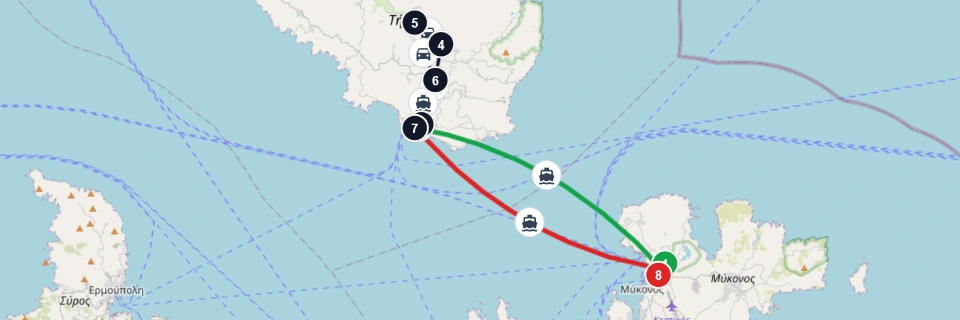
Mykonos New Port (Tourlos)
Ferry departure start
Meet at Tourlos port and board ferry to Tinos.
-
Tinos Port
Island arrival point
Arrive at Tinos port and begin island vehicle route.
-
Panagia Evangelistria
Pilgrimage church stop
Visit the renowned Church of Panagia Evangelistria.
Panagia Evangelistria is one of the most important religious landmarks on Tinos and one of the strongest expressions of pilgrimage culture in the Greek islands. The site carries a powerful sense of devotion that is immediately different from the atmosphere of ordinary sightseeing stops. Its importance to Greek Orthodox life gives the visit a depth that can be felt even by travelers without a religious focus. It is a place where faith shapes the destination's identity very clearly.
What makes the stop memorable is the combination of national significance and lived spirituality. The church is not simply admired as architecture, but approached as an active center of prayer, thanksgiving, and collective memory. That gives the visit a solemn but welcoming tone. On an island route, it stands out as a place of genuine cultural gravity.
-
Kechrovouni Monastery Area
Monastic heritage stop
Continue toward Kechrovouni area for religious and cultural context.
The Kechrovouni Monastery area adds a strong spiritual dimension to the Tinos route, connecting the island's mountain landscape with one of its most important monastic traditions. The setting feels elevated not only in altitude, but also in atmosphere, with the surrounding slopes and quiet roads reinforcing the sense of retreat and devotion. This is the kind of stop where religious heritage and island character meet very naturally. It feels reflective, rooted, and distinctly Aegean.
Even if the visit is brief, the area helps you understand why Tinos is more than a pretty island and why pilgrimage remains central to its identity. The monastic context gives depth to the route by linking local faith, women's religious communities, and the wider sacred geography of the island. It is a stop best experienced with a calm pace and an attentive eye. The mood here tends to linger even after you move on.
-
Volax Village
Traditional village stop
Visit Volax village known for basketry craft and stone landscape.
Volax Village on Tinos stands out for its unusual stone landscape and long association with local basketry and village craft. The setting feels distinctive even by Cycladic standards, because the terrain and settlement character create a stronger sense of local singularity. It is not simply picturesque, but memorable in a more textured way. The village gives Tinos one of its most individual and rooted identities.
What makes Volax so rewarding is the combination of tradition and environment. The craft heritage feels connected to the stone-rich landscape around it rather than added on for visitors. Walking here gives you a sense of how a small island village can develop a character entirely its own. It is one of those stops that expands your idea of what a Greek island village can look and feel like.
-
Tinos Panoramic Route
Island viewpoint segment
Drive panoramic route through Tinos interior villages.
The Tinos panoramic route reveals an island of villages, slopes, and open views that feels very different from the more polished resort image of some neighboring Cycladic islands. Driving through the interior helps you understand Tinos as a lived and textured landscape rather than a single port stop. The route has a calm, spacious quality, with stone villages and inland contours giving it strong character. It is one of the best ways to appreciate the island's deeper personality.
What makes the panorama especially satisfying is the sense of continuity between sea and interior. The route never loses contact with the wider island setting, even as it moves through villages and upland views. That creates a rounded impression rather than a series of separate snapshots. For many visitors, Tinos feels richer and more grounded because of this drive.
-
Tinos Port Return
Ferry boarding point
Return to Tinos port for ferry back to Mykonos.
-
Mykonos New Port Return
Tour completion point
Arrive back at Tourlos and complete full-day excursion.
Got a question about this tour?
Reach out to our travel experts.
Informations
-
What's Included
- Economy ferry tickets between Mykonos and Tinos
- Island bus/vehicle tour in Tinos
- Guide and route coordination
- Operational and port handling costs
-
What's Excluded
- Food, refreshments, and personal purchases
- Any service not listed under included section
-
Entrance Fees
- No mandatory route entrance fee is required for standard stops
- Optional personal museum or attraction fees are paid locally
-
Travel Tips
- Wear comfortable shoes for village lanes and church approaches
- Bring sun protection for outdoor island segments
- Carry a light layer for ferry wind and afternoon breeze
- Keep ferry ticket and ID accessible throughout travel
-
Note
- Operates seasonally with ferry timetable dependency
- Departure and return timing can shift by maritime schedule
- Route may adjust due to local traffic and weather conditions
Your Peace of Mind Options
Cancellation Policy
A transparent overview of applicable fees.
Customer Comments - Tripadvisor Write A Review!
Customer Comments - Tripadvisor



Tour Reminder!
You can create a reminder for yourself for this tour. We will send you a reminder e-mail/sms about this tour on the date you specify.
FAQs
-
What does the Tinos Island Private Full-Day Tour from Mykonos include?
- Economy ferry tickets between Mykonos and Tinos
- Island bus/vehicle tour in Tinos
- Guide and route coordination
- Operational and port handling costs
-
Is this a private tour?
- Yes. This is a private day tour plan with guided coordination
- Ferry segments follow the scheduled maritime timetable
-
Are ferry tickets included between Mykonos and Tinos?
- Yes. Economy ferry tickets between Mykonos and Tinos are included
- Departure and return timing can shift by maritime schedule
-
Which places are visited on Tinos?
- Church of Panagia Evangelistria
- Kechrovouni Monastery area
- Volax village
- Panoramic island route viewpoints
-
Is food included?
- No. Food, refreshments, and personal purchases are excluded
- You can choose your preferred lunch spot during the day
-
Where does the tour start and end?
- Ferry departure is typically from Mykonos New Port (Tourlos)
- Return is to Mykonos New Port based on ferry schedule
-
Does the tour operate year-round?
- No. It operates seasonally and depends on ferry timetables
- Please check availability for your travel date
-
Can the itinerary change?
- Yes. Route may adjust due to local traffic and weather conditions
- Ferry timetable changes can also affect timing
-
How much walking is involved?
- Walking is moderate around churches, villages, and viewpoints
- If you have mobility concerns, tell us in advance so we can plan stops accordingly
-
What is not included in the price?
- Food, refreshments, and personal purchases
- Any service not listed under included section
General FAQs
-
What currency is used in Greece?
Greece uses the Euro (EUR).
- Cards are widely accepted, but carrying cash is useful for small purchases and tips.
-
Do I need a visa to visit Greece?
Visa requirements depend on your nationality. Greece is part of the Schengen Area.
- Please check the latest rules from official sources before travel.
-
What is the best time to visit Greece?
Many travelers prefer spring and early autumn for pleasant temperatures and fewer crowds.
- July and August are peak season, especially on the islands.
- Shoulder seasons can offer better availability and milder weather.
-
Is Greece safe for tourists?
Greece is generally safe for visitors.
- In major cities and crowded areas, watch for pickpockets.
- Use licensed taxis and keep valuables secure, especially at transport hubs.
-
Is tap water safe to drink in Greece?
Tap water is generally fine in many mainland areas, but on some islands visitors prefer bottled water.
- If in doubt, ask your hotel or guide locally.
-
What language is spoken in Greece?
Greek is the official language. In tourist areas, English is commonly spoken.
- Learning a few basic Greek phrases is appreciated.
-
How do ferries and domestic travel work in Greece?
Ferries are a key part of travel between islands and the mainland.
- Schedules can be seasonal and weather-dependent.
- In peak season, booking popular routes ahead can help.
-
What should I know about driving and taxis in Greece?
Driving can be a great way to explore, but roads can be narrow and parking limited in popular towns.
- Use seatbelts and drive defensively.
- For taxis, use licensed providers and confirm the fare when possible.
-
What power plug is used in Greece?
Greece typically uses Type C and Type F plugs (230V, 50Hz).
- Bring a travel adapter if needed.
-
Are SIM cards and mobile data easy to get in Greece?
Yes. Mobile data is widely available and you can buy SIM/eSIM options from common providers.
- Coverage is usually good in cities and many islands, but can vary in remote areas.
-
Is tipping expected in Greece?
Tipping is appreciated, especially for good service.
- In restaurants, rounding up or leaving a small amount is common.
- For guides and drivers, tips are optional and based on satisfaction.
-
What should I pack for Greece?
It depends on season and islands vs mainland, but these basics help:
- Comfortable walking shoes
- Sun protection (hat, sunscreen)
- A light layer for evenings or windy ferry rides
-
What are the emergency numbers in Greece?
Dial 112 for emergencies (free, EU-wide).
- Police: 100
- Ambulance: 166
- Fire: 199
- Coast Guard: 108
If you are unsure, call 112.
-
How do I get from airports/ports to the city in Greece?
Depending on the destination, you may use:
- Metro/train or public buses (common in large cities)
- Licensed taxis
- Pre-booked private transfers
- Ferries between islands and the mainland
In peak season, booking transfers and popular ferry routes ahead can help.
-
How do pharmacies work in Greece (on-duty pharmacy)?
Pharmacies often have a rotating on-duty system outside normal hours.
- Many pharmacies display the on-duty pharmacy information on the door/window.
- If you need urgent assistance, call 112 or your accommodation can help you locate the nearest option.
-
What are typical opening hours in Greece?
Opening hours vary by area and season.
- In some towns, shops may close during the afternoon and reopen in the evening.
- Sundays may have reduced opening, especially outside tourist areas.
- On national/religious holidays, hours can change.
-
What should I wear when visiting monasteries and churches in Greece?
Dress modestly at religious sites.
- Shoulders and knees should be covered.
- Some monasteries may have stricter rules.
-
Are there rules for photography in Greece?
In public areas, photography is usually fine. In museums, churches, and archaeological sites, rules can vary.
- Some places restrict flash or tripods.
- Look for signage and follow staff instructions.
Let's Customize Your Trip!
Prepare your own tour plan!
Good to Know
-
Good to know: ferry timetables drive the day plan
- Departure/return timing depends on the maritime schedule
- Keep some flexibility after the tour day
-
Good to know: it operates seasonally
- Some dates may not be available outside peak season
- Availability depends on ferry routes and demand
-
Good to know: bring modest clothing for monastery visits
- Shoulders and knees should be covered at religious sites
- A light scarf can be useful
-
Good to know: bring cash for small local purchases
- Food and purchases are excluded
- Cash can help in small village areas
-
Good to know: wind can be strong on the Cyclades
- Bring a light layer for ferry decks and viewpoints
- Secure hats and loose items
Want to read it later?
Download this tour’s PDF brochure and start tour planning offline
Similar Tours

Mykonos Town Private Walking Tour
Explore Mykonos Town on a private half-day guided walking tour and discover the islands most iconic alleys, squares, and local atmosphere.


