
Cesme Alacati and Chios Tour

Explore Alacati, Cesme Castle, Cesme Caravanserai, Cesme Museum, and Erythrai Ancient Site, then take the ferry to Chios Greek Island on this 2 days tour from Izmir.
Highlights
- Alacati old town lanes, one of the Aegean's best-known boutique coastal atmospheres
- Cesme Castle, a strong Ottoman seafront fortress overlooking the harbor line
- Cesme Caravanserai, classical 16th-century Ottoman commercial architecture
- Cesme Museum collections, archaeological context from regional Aegean settlements
- Erythrai Ancient Site, Ionian coastal remains linked to early maritime history
- Cesme-Chios ferry route, practical cross-border Aegean island experience
- Chios Island free time, flexible exploration in one of the nearest Greek island ports
Cesme Alacati and Chios Tour
Explore Alacati, Cesme Castle, Cesme Caravanserai, Cesme Museum, and Erythrai Ancient Site, then take the ferry to Chios Greek Island on this 2 days tour from Izmir.
Itinerary
This Cesme Alacati and Chios Tour is ideal for travelers who want to combine coastal heritage and island travel in a short itinerary. On the first day, you visit Alacati windsurfing town, where stone streets, local cafes, and Aegean atmosphere create a lively start. The route then continues to Cesme Castle and Cesme Caravanserai for a clear view of the region's historical texture. You also visit Cesme Museum and move toward the Erythrai Ancient Site to connect local history with ancient settlement traces. This sequence offers a balanced first day between culture, architecture, and seaside character.
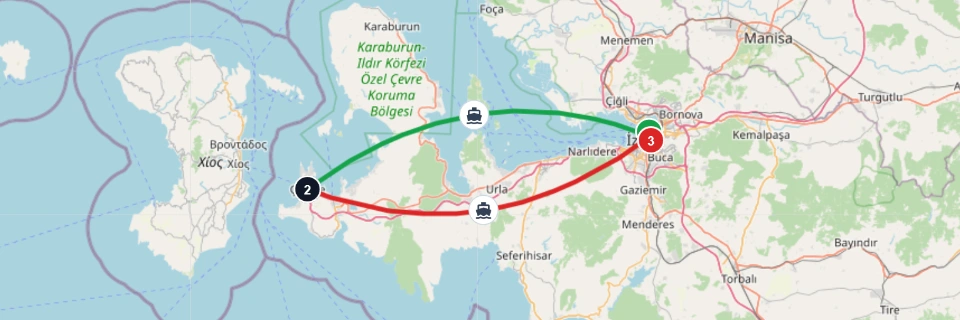
On the second day, the program focuses on the cross border island segment. You board the ferry to Chios Greek Island from Cesme and enjoy a short and practical Aegean sea crossing. This transfer gives the tour a unique two country feeling within only two days. The route is arranged to keep travel flow simple for guests departing from Izmir. As a result, the itinerary combines Turkish coastal heritage with a Greek island extension in one package.
For guests searching for a compact Cesme tour from Izmir, this plan provides clear structure and realistic expectations. All listed stops are directly tied to the published program, so there is no mismatch between content and experience. The tour avoids unrelated detours and keeps focus on Alacati, Cesme landmarks, and Chios ferry travel. Timing is efficient for weekend breaks while preserving meaningful site visits. If you want a reliable Cesme Castle and Caravanserai plus island route, this option is a strong choice.
-
Day 1
Alacati and Cesme Heritage Route
D
Pickup in Izmir and departure for Cesme-Alacati route.
Day one starts with private transfer from Izmir toward Cesme peninsula.
Transfer to AlacatiRoad transfer from Izmir to Alacati district.
Transfer reaches Alacati old-town approach for first stop.
Alacati Old Town WalkOrientation walk through stone houses and boutique streets.
Alacati is one of the Aegean's most recognizable preserved coastal town centers.
The walk through Alacati Old Town is one of the most enjoyable urban strolls on the Aegean coast, where stone houses, narrow streets, and a polished but still local atmosphere create an immediately memorable setting. Alacati feels preserved without becoming stiff, which is part of its appeal. The town is easy to like because every corner offers some combination of texture, light, and slow-moving street life. It is a place made for walking more than rushing. That is what makes the stop so consistently rewarding.
As you move through the streets, notice how architecture, cafés, small shops, and the sea breeze all work together to create the town's distinctive identity. Travelers often enjoy Alacati because it balances heritage and contemporary charm unusually well. It is also a strong place for photographs, especially where stone facades and street details remain simple and elegant. The best way to experience it is at a patient pace. Alacati rewards that immediately.
Cesme CastleVisit the Ottoman-period harbor fortress and panorama points.
Cesme Castle remains one of the strongest seafront fortifications in the region.
Cesme Castle rises above the harbor as one of the peninsula's most important Ottoman landmarks, combining military strength with a commanding coastal setting. Its thick walls and seafront position immediately show why this was once a strategic point for controlling movement along the Aegean shore. From here, you can feel the connection between trade, defense, and maritime life that shaped the town's history. The castle also gives Cesme a strong visual identity, anchoring the waterfront with a sense of permanence. It is both a monument and a superb viewpoint.
As you walk around the fortress, take time to look out over the marina, the sea, and the low-rise townscape stretching around the bay. The contrast between solid stone architecture and the bright Aegean light makes this a particularly photogenic stop. It is easy to imagine the centuries of sailors, merchants, and soldiers who once approached this coastline under the watch of the same walls. If you are exploring Cesme for the first time, the castle is one of the best places to orient yourself. It offers history, atmosphere, and a broad view of the town in a single visit.
Cesme CaravanseraiStop at the restored 16th-century caravanserai complex.
Cesme Caravanserai reflects the commercial architecture of the Ottoman trade era.
The Cesme Caravanserai reflects the commercial life that once animated this Aegean port, where trade, travel, and accommodation were tightly connected. Its restored form gives you a clear sense of the Ottoman-era architecture that supported movement through coastal towns like Cesme. This is not a grand imperial monument, but it is historically important because it speaks to everyday commerce and the networks behind it. The building adds texture to the town beyond the castle and the marina. It is a useful stop for understanding Cesme as a working port as well as a scenic destination.
As you look at the structure, imagine merchants and travelers using this space as part of a busy maritime economy. The caravanserai helps reveal how deeply the town was tied to exchange across the Aegean. Travelers often appreciate stops like this because they show the practical side of history rather than only its ceremonial face. It also fits naturally within the waterfront character of Cesme. The result is a compact but meaningful historical encounter.
Cesme MuseumVisit exhibits presenting regional archaeological heritage.
Cesme Museum displays material connected to Ionian and later period settlements.
Cesme Museum adds depth to your understanding of the peninsula by bringing together archaeological and regional material within a more focused interpretive setting. Rather than relying only on outdoor impressions, the museum helps connect Cesme to the older settlements and maritime history that shaped the area. This makes the visit particularly useful if you want to understand the peninsula as more than a resort landscape. The exhibits give context to the ruins, fortifications, and coastal routes you may have already seen. It is a quieter stop, but a very informative one.
As you move through the displays, notice how regional museums often tell broader stories through smaller objects and local finds. Cesme becomes more interesting when seen through these layers of continuity rather than only through its modern beach-town identity. Travelers often appreciate the museum because it anchors the wider itinerary in concrete evidence and place-specific detail. It is also a good complement to the castle and town walk. Together, they create a fuller picture of Cesme's past.
Erythrai Ancient SiteStop at the coastal Ionian archaeological zone.
Erythrai preserves traces of an early Ionian city-state with maritime links.
Erythrai offers a quieter, more atmospheric encounter with the ancient Ionian world on the windswept coast near Ildiri. Unlike larger archaeological sites, this stop often feels intimate, allowing you to appreciate the dialogue between history, sea, and landscape without heavy crowds. The remains speak of a city-state connected to maritime trade, regional power, and the wider Aegean cultural sphere. Even in fragmentary form, the site carries the elegance of an old coastal settlement shaped by both geography and commerce. It is a rewarding place for travelers who enjoy history in a more contemplative setting.
As you look across the archaeological traces, notice how the natural scenery remains part of the experience rather than a backdrop. The coastline helps explain why places like Erythrai flourished through their relationship with the sea. This stop is especially satisfying if you like connecting ancient history with the broader character of the peninsula today. There is a calm, open quality here that makes it easy to imagine ships, trade routes, and daily life tied to the shore. Erythrai may be less famous than some major classics, but that is part of its charm.
Lunch Break in Cesme AreaMidday meal break during route (not included).
Lunch break is scheduled and paid directly by guests.
A lunch break in the Cesme area brings the route back into the easy rhythm of the Aegean coast after the day's castle, caravanserai, island, or heritage stops. The wider peninsula has a distinctly relaxed food culture shaped by sea air, olive oil, and lighter coastal dishes. That makes lunch here feel refreshing rather than routine. It is a good place to slow down without losing the atmosphere of the day.
Meals in this area are best enjoyed simply and unhurriedly. Fresh fish, grilled seafood, meze, seasonal vegetables, and classic western Turkish dishes all fit naturally here, especially if you want something that feels local but not overly heavy. Even a modest lunch can feel stylish in Cesme because the setting does a lot of the work. The break adds a clear Aegean flavor to the route.
Hotel Check-in in CesmeOvernight stay with included dinner.
Day one ends with hotel check-in and included dinner in Cesme.
-
Day 2
Chios Island Ferry Route
B
Start day-two ferry route after breakfast.
Morning departure heads to Cesme port for Chios crossing.
Cesme Port Check-inPassport control and ferry boarding procedures.
Port formalities are required before international ferry departure.
Ferry to Chios IslandMorning ferry crossing from Cesme to Chios.
Aegean crossing connects Turkey coast with Chios Island, Greece.
Chios Island Free TimeFree exploration time around Chios town and harbor zone.
Guests can explore Chios independently during the scheduled island stop.
Free time on Chios Island gives you the pleasure of discovering the harbor town at your own pace rather than through a fixed sequence of stops. That freedom is part of the appeal, because islands often reveal themselves best through small choices: a side street, a waterfront café, a local shop, or a quiet square. Chios has a distinct atmosphere, balancing Greek island ease with the everyday life of a working town. Even a short independent stroll can make the stop feel personal. It is an excellent moment to enjoy the island on your own terms.
If you are deciding how to spend the time, start with the harbor and old streets, then follow whatever catches your attention. This is also a good chance to sample simple local flavors, have a coffee by the water, or browse for island products and small souvenirs. Travelers often enjoy free-time stops like this because they create room for spontaneity within a structured itinerary. Chios rewards curiosity more than speed. The best approach is to wander lightly and let the island set the pace.
Lunch Break on ChiosMidday meal break on island (not included).
Lunch break is scheduled and paid directly by guests.
A lunch break on Chios is an easy pleasure, because Greek island meals often fit travel days beautifully: simple, flavorful, and best enjoyed without rushing. The island atmosphere naturally encourages a slower pace, so lunch here can feel like a small holiday within the route. Even when it is not included, the stop often becomes one of the most enjoyable independent moments of the day. Chios lends itself well to relaxed eating. The setting does a lot of the work for you.
If you are choosing what to try, grilled seafood, meze, village salad, moussaka, souvlaki, or local sweets with a mastic flavor are all good island options depending on where you stop. A shaded table near the harbor or in an old-town lane can make the meal even more memorable. Travelers often enjoy lunches like this because they combine freedom, scenery, and local taste very naturally. There is no need to overplan it. On Chios, a simple Greek island lunch is often the right answer.
Return Ferry to CesmeAfternoon return ferry from Chios to Cesme.
Return crossing completes the island segment of the program.
Transfer to IzmirRoad transfer for airport or city drop-off in Izmir.
Final transfer returns guests from Cesme to Izmir.
Program End and Drop-offFinal drop-off and service completion.
Tour services conclude after arrival at the selected Izmir drop location.
Got a question about this tour?
Reach out to our travel experts.
Informations
-
What's Included
- Round-trip ferry tickets between Cesme and Chios Island
- 1 night accommodation with dinner (4-star or special-class boutique category)
- Private deluxe A/C VIP vehicle for all local transfers and tours
- Pickup from your hotel or designated meeting point
- Drop-off to your hotel or designated meeting point
- Parking fees for listed route locations
- Private professional licensed tour guide (Turkey segment)
- Private tour operation only for your group
- Local taxes
-
What's Excluded
- Museum and site admission fees
- Personal expenses
- Lunches and beverages
- Domestic transportation tickets unless explicitly added to booking
- Gratuities for guide and driver
- Visa costs and border-related personal fees
-
Entrance Fees
- Entrance fees are not included and are paid directly on site according to current official rates.
-
Travel Tips
- A valid passport is required for Chios crossing; verify visa requirements in advance and wear comfortable walking shoes for old-town and harbor routes.
-
Note
- Ferry timings may vary due to weather and maritime regulations; travelers are responsible for passport validity
- visa compliance
- and timely port check-in.
Your Peace of Mind Options
Cancellation Policy
A transparent overview of applicable fees.
Customer Comments - Tripadvisor Write A Review!
Customer Comments - Tripadvisor




Tour Reminder!
You can create a reminder for yourself for this tour. We will send you a reminder e-mail/sms about this tour on the date you specify.
FAQs
-
What does the 2 Days Cesme, Alacati and Chios Ferry Experience include?
- Private tour operation only for your group
- Private professional licensed tour guide (Turkey segment)
- Private deluxe A/C VIP vehicle for all local transfers and tours
- Round-trip ferry tickets between Cesme and Chios Island
- 1 night accommodation with dinner (4-star or special-class boutique category)
- Pickup and drop-off at your hotel or designated meeting point
- Parking fees for listed route locations and local taxes
-
Is the Cesme-Chios round-trip ferry ticket included?
- Yes. Round-trip ferry tickets between Cesme and Chios Island are included
- Ferry schedules are subject to seasonal timetables and operational updates
-
Do I need a passport or visa for Chios (Greece)?
- Yes. You cross an international border to Greece, so you must carry your passport
- Visa requirements depend on your nationality and travel documents
- Visa costs and border-related personal fees are not included
- It is the traveler's responsibility to ensure entry compliance
-
What is covered on Day 1 (Alacati and Cesme route)?
- Alacati old town walk
- Cesme Castle
- Cesme Caravanserai
- Cesme Museum
- Erythrai Ancient Site
- Lunch break in Cesme area (excluded)
- Overnight stay in Cesme with included dinner
-
What happens on Day 2 (Chios ferry day)?
- Port check-in at Cesme and ferry to Chios
- Free time on Chios Island
- Lunch break on the island (excluded)
- Return ferry to Cesme and transfer back to Izmir
-
Is there a tour guide on Chios Island?
- A licensed guide is provided for the Turkey segment (Alacati and Cesme route)
- On Chios Island the program is usually free time for self-exploration
- If you need a guided option on the island, please ask before booking so it can be arranged if available
-
Is accommodation included?
- Yes. 1 night accommodation is included with dinner
- Final hotel name is confirmed based on availability
-
Are museum and site entrance fees included?
- No. Museum and site admission fees are excluded
- Please plan budget for Cesme Museum, Cesme Castle (if ticketed), Erythrai, and any optional paid visits
-
Are lunches and beverages included?
- No. Lunches and beverages are excluded on both days
- Dinner is included for the overnight hotel stay
-
What is not included in the price?
- Museum and site admission fees
- Personal expenses
- Lunches and beverages
- Domestic transportation tickets unless explicitly added to booking
- Gratuities for guide and driver
- Visa costs and border-related personal fees
General FAQs
-
What currency is used in Turkey?
Turkey uses the Turkish Lira (TRY).
- Cards are widely accepted in cities and tourist areas, but cash is still useful for small purchases.
- ATMs are common. Exchange offices and banks are also available.
-
Can I pay by credit card in Turkey?
In most restaurants, hotels, and shops you can pay by card.
- For markets, small shops, taxis, and tips, carrying some cash is recommended.
- Let your bank know you are traveling to avoid card blocks.
-
Is Turkey safe for tourists?
Turkey is generally safe for visitors, especially in main tourist areas.
- As in any destination, watch out for pickpockets in crowded places.
- Use licensed taxis/transport where possible and keep valuables secure.
-
What should I wear when visiting mosques in Turkey?
Dress modestly when entering mosques.
- Shoulders and knees should be covered.
- Women may be asked to cover their hair.
- Shoes are usually removed at the entrance.
-
Do I need a visa to visit Turkey?
Visa requirements depend on your nationality.
- Please check the latest rules from official sources (consulate/embassy or the official e-visa portal) before travel.
-
What is the best time to visit Turkey?
Spring and autumn are popular because temperatures are usually milder.
- Summer can be hot on the coast and inland.
- Winter is quieter and can be great for cities and some regions.
-
Will English be enough in Turkey?
Turkish is the official language. In tourist areas, English is commonly spoken.
- Learning a few basic Turkish words is appreciated and can help outside major areas.
-
What power plug is used in Turkey?
Turkey typically uses Type C and Type F plugs (220V, 50Hz).
- If your devices use a different plug type, bring a travel adapter.
-
Is tap water safe to drink in Turkey?
In many places, visitors prefer bottled water.
- Hotels and restaurants usually provide bottled water easily.
-
Is tipping expected in Turkey?
Tipping is common and appreciated for good service.
- In restaurants, rounding up or leaving a small amount is typical.
- For guides and drivers, tips are at your discretion based on satisfaction.
-
Do I need to carry my passport in Turkey?
We recommend keeping your passport safely in your hotel and carrying a copy (photo or printed) when out.
- Some venues may request an ID; your guide can advise for your route.
-
Do museums and sites have weekly closure days in Turkey?
Opening hours can change by season and some venues may have weekly closure days.
- We recommend checking the latest opening hours close to your travel date.
- Starting earlier in the day helps to avoid crowds at popular sites.
-
What are the emergency numbers in Turkey?
Dial 112 for emergencies (medical, police, fire and other urgent situations).
- 112 is a unified emergency line in Turkey.
- If you do not speak Turkish, try English and share your location clearly.
-
How do I get from airports to the city in Turkey?
Options depend on the city, but common choices are:
- Official airport taxi
- Airport shuttles/buses
- Metro/train (available in some cities)
- Pre-booked private transfers
If you arrive late at night or with luggage, a pre-booked transfer can be the easiest option.
-
Are taxis and ride-hailing apps reliable in Turkey?
Use licensed taxis and make sure the meter is used (unless a fixed airport fare is confirmed).
- In some cities, taxi-hailing apps can help you find a taxi more easily.
- If possible, keep small cash and ask for a receipt when needed.
-
How do I buy a SIM/eSIM in Turkey?
You can buy SIM/eSIM options from mobile operators and official stores.
- Bring your passport for registration.
- For longer stays, foreign phones may require device registration (IMEI) to keep working on local networks.
-
What are typical opening hours in Turkey?
Opening hours vary by city and season.
- Many shops and malls stay open late, especially in tourist areas.
- Some museums may close earlier and may have weekly closure days.
- During national or religious holidays, hours can change.
-
How do pharmacies work in Turkey (duty pharmacy)?
Pharmacies are called Eczane. Outside normal hours, there is usually a rotating on-duty pharmacy (Nöbetçi Eczane).
- Regular pharmacies typically post the on-duty pharmacy information on the door/window.
- Your hotel reception can also help you find the nearest one.
Let's Customize Your Trip!
Prepare your own tour plan!
Good to Know
-
Good to know: allow time for port check-in and border controls
- International ferry routes can require early arrival for check-in
- Border control timing can vary by day and season
- Bring your passport and any required documents with you
-
Good to know: currency on Chios is Euro
- Most purchases on Chios are in EUR
- Having some cash can be helpful for small expenses
-
Good to know: Alacati streets are cobblestoned
- Comfortable footwear improves the walk through old town lanes
- Midday heat in summer can be strong
-
Good to know: mobile data may switch to roaming in Greece
- On Chios your phone may connect to a Greek network
- Check roaming settings and costs with your provider before travel
-
Good to know: plan cash for tickets and lunch
- Entrance fees are excluded
- Lunches and beverages are excluded
Want to read it later?
Download this tour’s PDF brochure and start tour planning offline


