
Pergamon Assos Troy Gallipoli Tour

Explore Pergamon Acropolis, Asclepion, Red Basilica, Assos, Troy Ancient City, and Gallipoli including ANZAC Cove on this 2 days tour from Izmir.
Highlights
- Pergamon Acropolis, a dramatic hilltop capital with major Hellenistic and Roman remains
- Asclepion of Pergamon, an influential ancient healing sanctuary linked to medical history
- Red Basilica in Bergama, one of the largest Roman-period temple complexes in Anatolia
- Assos Athena Temple viewpoint, sweeping Aegean panoramas above the old stone settlement
- Troy Ancient City, UNESCO layers connected to the legendary Trojan War tradition
- Canakkale Wooden Horse stop, symbolic modern reference to Troy's enduring story
- ANZAC Cove and Gallipoli ridges, frontline landscapes of World War I remembrance
- Lone Pine and Chunuk Bair area, memorial grounds central to Gallipoli campaign history
Pergamon Assos Troy Gallipoli Tour
Explore Pergamon Acropolis, Asclepion, Red Basilica, Assos, Troy Ancient City, and Gallipoli including ANZAC Cove on this 2 days tour from Izmir.
Itinerary
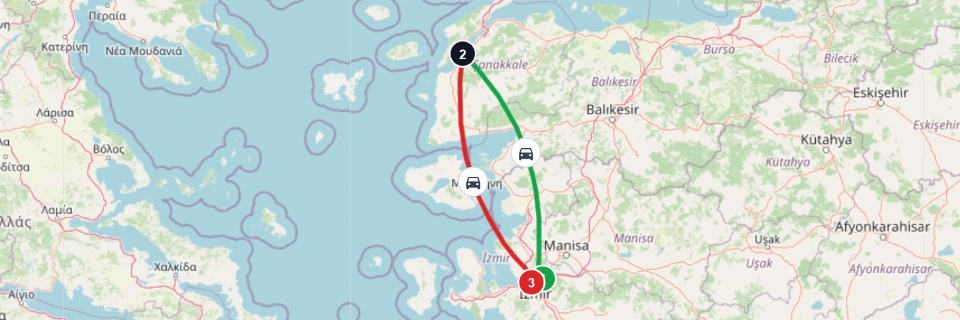
This Pergamon Assos Troy and Gallipoli Tour starts from Izmir and follows a strong North Aegean history route in only two days. On the first day, you visit Pergamon Acropolis and continue to the Asclepion Ancient Site, which was a major healing center of antiquity. The itinerary then includes the Red Basilica Kizil Avlu, one of the most remarkable monuments dedicated to Egyptian gods in the region. Later, you move toward Assos Ancient City and enjoy the coastal atmosphere from its elevated historical setting. This sequence creates a rich introduction to the ancient heritage of western Anatolia.
On the second day, the program focuses on the legendary and military history layers of the region. You explore Troy Ancient City and see the symbolic wooden horse while learning about the stories that made Troy world famous. After Troy, the route continues to the Gallipoli Peninsula, one of the most significant World War I landscapes. Visits to ANZAC Cove and Ari Burnu help you understand the human side of the Gallipoli campaign in a direct and emotional way. The day combines archaeology and modern history in a clear and memorable structure.
This itinerary is ideal for travelers looking for a compact overland historical journey from Izmir. All stops are directly connected to the published route, so the tour stays transparent and expectation friendly. The program does not include unrelated attractions and keeps full focus on Pergamon, Assos, Troy, and Gallipoli. The pacing is efficient for short travel windows while still offering meaningful site time. If you want a complete Gallipoli Peninsula and ancient cities experience, this tour is a reliable choice.
-
Day 1
Pergamon and Assos Heritage Route
D
Pickup in Izmir and departure for Pergamon route.
Day one starts with private transfer from Izmir to Bergama.
Pergamon AcropolisGuided visit on the acropolis terraces and theatre zone.
Pergamon Acropolis is one of western Anatolia's most important hilltop archaeological capitals.
Pergamon Acropolis is one of the most dramatic hilltop archaeological sites in western Anatolia. The terraces, commanding views, royal setting, and famously steep theatre immediately explain why Pergamon became such an important Hellenistic capital. This is not a flat ruin spread quietly across a plain, but a place where power was staged high above the landscape. The setting gives the whole visit a strong sense of ambition and prestige.
As you move across the acropolis, it helps to imagine the city as a political, intellectual, and ceremonial center rather than just a collection of remains. Pergamon was associated with royal patronage, major temples, and a cultural reputation that reached far beyond the region. The viewpoints also add a special energy, because the archaeology and the surrounding terrain constantly reinforce one another. For travelers interested in Hellenistic history, Pergamon often feels both grand and unexpectedly memorable.
Asclepion of PergamonVisit the ancient medical sanctuary and treatment complex.
Asclepion reflects Pergamon's global legacy in early medical thought and healing practice.
Asclepion of Pergamon deepens the story of ancient medicine in a way that feels both intellectual and human. This was not simply a sanctuary, but a place where healing practice, spiritual belief, and therapeutic space came together in one influential center. The site carries a different emotional tone from a royal acropolis or monumental city gate because it was tied directly to suffering, hope, and care. That gives the ruins a distinctive atmosphere from the beginning.
For travelers, the most interesting part is often imagining how patients would have approached the sanctuary in search of treatment and relief. Pergamon's global reputation in early medical thought gives the site a significance that extends far beyond the region itself. Even in ruin, the place still suggests purpose rather than mere display. Asclepion is one of the stops that makes ancient history feel especially close to real human experience.
Red Basilica (Bergama)Stop at the monumental Roman temple complex.
Red Basilica is among the largest surviving Roman-period sacred structures in the region.
Red Basilica (Bergama) stands out as one of the largest and most atmospheric Roman-period sacred complexes in the region. Its brick construction, massive scale, and long afterlife in later religious history give the monument unusual weight and character. Even in ruin, it feels bold and difficult to ignore. The stop adds an important dimension to Bergama beyond its hilltop acropolis and healing sanctuary.
The value of the site lies in that layered continuity. It is not only a Roman monument, but a structure that continued to matter as beliefs and historical periods changed around it. This gives the visit both architectural force and historical depth. Red Basilica is one of those places where scale, survival, and transformation all become visible at once.
Lunch Break in BergamaMidday meal break during route (not included).
Lunch break is scheduled and paid directly by guests.
Lunch Break in Bergama offers a chance to taste the northern Aegean character of the region while pausing between major heritage sites. Food here tends to reflect the same balance you find across western Türkiye: olive oil, herbs, village produce, strong dairy traditions, and satisfying but not overly heavy main dishes. After a historical route through Pergamon-related landscapes, that grounded and local style of cooking feels especially appropriate. It is a lunch stop that can quietly deepen your sense of place.
If you want to eat with a regional mindset, start with Aegean-style mezes and herb dishes, and keep an eye out for Bergama tulum cheese, one of the area's distinctive flavors. You may also find local köfte, olive-oil vegetables, and plates built around the herb-rich cooking that defines much of Izmir province. The best choice is often a table with a few shared items rather than one single heavy dish. That way, the meal feels local, generous, and well matched to a long cultural travel day.
Transfer to AssosScenic drive toward Assos archaeological hill and harbor.
Route continues southward to Assos for afternoon visit and views.
Assos Athena Temple ViewpointExplore the acropolis edge and Aegean panorama.
Assos offers one of the most striking Aegean viewpoints from the Athena Temple terrace.
The Athena Temple viewpoint at Assos is one of those rare stops where archaeology and landscape come together so perfectly that the memory stays long after the route ends. From the acropolis edge, the Aegean opens in a wide, luminous sweep that gives the temple setting extraordinary emotional power. The view explains why this height mattered. It was not only strategic, but also deeply expressive. Few temple terraces feel this complete.
Travelers usually love this stop because the panorama makes the ancient remains feel larger than their surviving fragments. Even a short pause here can be enough to understand why Assos has inspired visitors for generations. Let yourself take in both the stones and the sea rather than choosing between them. The magic of the place lies in that union. This is one of the strongest Aegean viewpoints on the whole route.
Canakkale Region Hotel Check-inOvernight in the Canakkale region with included dinner.
Day one ends with hotel check-in and evening rest in Canakkale area.
-
Day 2
Troy and Gallipoli Memorial Route
B
Start day-two Troy and Gallipoli route after breakfast.
Morning departure heads first to Troy archaeological site.
Troy Ancient CityGuided visit through archaeological layers of ancient Troy.
Troy presents multi-layered settlement history tied to the legendary Trojan War narrative.
Troy Ancient City is one of the rare archaeological sites where myth and excavation are inseparable. The layered remains may appear modest at first to travelers expecting a single monumental ruin, but the real power of Troy lies in the deep sequence of settlements and the cultural imagination attached to the name. Standing here means being in a place connected to Bronze Age history, Homeric legend, and generations of archaeological debate. That alone gives the visit an unusual gravity.
The best way to experience Troy is to think in layers rather than look for one perfect image. Each period adds to the site's importance, and that accumulation is what makes the place so compelling. Once you shift into that mindset, the ruins start to feel richer, more complex, and far more meaningful. Troy rewards travelers who bring curiosity and patience to one of the ancient world's most famous names.
Canakkale Wooden Horse StopPhoto stop at the symbolic wooden horse display.
The wooden horse display is a modern emblem linked to Troy's enduring cultural legend.
The Canakkale wooden horse stop is a modern symbolic pause that works because the story of Troy still has such strong cultural life far beyond the archaeological site itself. The display is not an ancient monument, but it reflects how myth and memory continue to shape the region's identity. That gives the stop a playful but still meaningful character. It is an easy photo point, yet it connects to something larger. Troy remains alive partly through symbols like this.
Travelers often enjoy this stop because it offers a recognizable, approachable reference to one of the world's most famous legends. There is no need to overread it. The pleasure comes from seeing how ancient narrative continues to circulate in contemporary form. It also adds variety to a route otherwise dominated by ruins, memorials, and museums. Sometimes a symbolic stop helps a destination feel culturally complete.
Transfer to Gallipoli PeninsulaRoad transfer to ANZAC sector memorial zones.
Route continues to Gallipoli for battlefield and remembrance stops.
ANZAC CoveVisit the shoreline landing area and memorial context.
ANZAC Cove is one of the most recognized landing points of the 1915 Gallipoli campaign.
ANZAC Cove is one of the most emotionally charged stops on the Gallipoli Peninsula. The shoreline itself is modest in scale, but the historical weight it carries is enormous, because this is one of the landing areas most closely associated with the 1915 campaign and the collective memory that followed. Standing here, the contrast between the calm sea and the violence once experienced on these shores is impossible to ignore. It is a place of reflection rather than spectacle.
What makes the visit especially powerful is the human closeness of the landscape. The cove, ridges, and narrow coastal strip help you understand how exposed and difficult the conditions were for the soldiers who came ashore here. For many travelers from Australia, New Zealand, Türkiye, and beyond, this is not only a historical location but also a place of remembrance. ANZAC Cove asks to be approached with quiet attention and respect.
Lone Pine MemorialStop at the memorial and cemetery section.
Lone Pine marks one of the fiercest sectors and commemorates many unidentified servicemen.
Lone Pine Memorial is one of the most poignant remembrance sites on the Gallipoli Peninsula. The landscape appears calm now, yet the memorial stands over ground associated with some of the campaign's fiercest fighting and deepest loss, especially in ANZAC memory. That contrast between the peaceful setting and the violence it commemorates gives the stop a powerful emotional force. It is a place that encourages reflection rather than explanation alone.
For many travelers, Lone Pine becomes memorable because it personalizes the Gallipoli story. Names, graves, memorial space, and battlefield context come together in a way that makes the human cost much harder to keep abstract. The stop works not through spectacle, but through quiet concentration. Lone Pine is one of the places where the campaign's memory feels most immediate and most human.
Chunuk Bair RidgeVisit the strategic ridge and memorial viewpoints.
Chunuk Bair offers commanding views and central remembrance points of Gallipoli history.
Chunuk Bair Ridge is one of the key high points of the Gallipoli story, both literally and historically, because from here the relationship between ridge lines, sea approaches, and battlefield difficulty becomes unmistakable. The stop is visually impressive, but its power comes from more than the panorama. This ground mattered intensely. That is still easy to feel today. The ridge helps the campaign make physical sense.
As you look across the surrounding landscape, notice how much terrain can be read from this position and why control of such heights was so contested. Travelers often appreciate this stop because it turns military history into something legible in the land itself. The memorial atmosphere adds depth without reducing the ridge to ceremony alone. It remains a place of strategy and remembrance together. That balance gives Chunuk Bair its lasting force.
Lunch Break in Eceabat AreaMidday meal break during route (not included).
Lunch break is scheduled and paid directly by guests.
A lunch break in the Eceabat area gives the Gallipoli route a necessary pause after emotionally intense memorial and battlefield stops. The town and surrounding strait region are practical rather than theatrical, which makes them especially suitable for a steady, unhurried meal before the journey continues. After remembrance sites, the pause feels grounding. It helps restore balance to the day.
Food in this area often suits a straightforward Marmara-coastal style. Grilled fish, meat dishes, meze, soups, and classic Turkish home-style plates are usually the best fit, especially when you want something satisfying but not too elaborate. Tea afterward works perfectly before getting back on the road. The break is simple, but it supports the route well.
Return Transfer to IzmirRoad transfer back to Izmir for final drop-off.
After Gallipoli visits, return transfer completes the program in Izmir.
Program End and Drop-offFinal drop-off and service completion in Izmir.
Tour services conclude after arrival at Izmir drop location.
Got a question about this tour?
Reach out to our travel experts.
Informations
-
What's Included
- 1 night accommodation with dinner (4-star or special-class boutique category)
- Private deluxe A/C VIP vehicle throughout the route
- Pickup from your hotel or designated meeting point
- Drop-off to your hotel, airport, or designated meeting point
- Parking fees for listed archaeological and memorial sites
- Private professional licensed tour guide
- Private tour operation only for your group
- Local taxes
-
What's Excluded
- Museum and archaeological site admission fees
- Personal expenses
- Lunches and beverages
- Domestic transportation tickets unless explicitly added to booking
- Gratuities for guide and driver
-
Entrance Fees
- Entrance fees are not included and are paid directly on site according to current official rates.
-
Travel Tips
- Bring comfortable walking shoes
- weather-appropriate clothing
- sun protection
- and a water bottle since archaeological and battlefield visits involve open-air walking on uneven ground.
-
Note
- Route timing may change based on seasonal traffic
- site schedules
- and weather conditions; final operation details are shared after reservation confirmation.
Your Peace of Mind Options
Cancellation Policy
A transparent overview of applicable fees.
Customer Comments - Tripadvisor Write A Review!
Customer Comments - Tripadvisor




Tour Reminder!
You can create a reminder for yourself for this tour. We will send you a reminder e-mail/sms about this tour on the date you specify.
FAQs
-
What does the 2 Days Pergamon, Assos, Troy and Gallipoli Heritage Tour include?
- Private tour operation only for your group
- Private professional licensed tour guide
- Private deluxe A/C VIP vehicle throughout the route
- 1 night accommodation with dinner (4-star or special-class boutique category)
- Pickup from your hotel or designated meeting point
- Drop-off to your hotel, airport, or designated meeting point
- Parking fees for listed archaeological and memorial sites and local taxes
-
What is covered on Day 1 (Pergamon and Assos route)?
- Pergamon Acropolis
- Asclepion of Pergamon
- Red Basilica (Bergama)
- Lunch break in Bergama (excluded)
- Assos Athena Temple viewpoint
- Overnight stay in the Canakkale region with included dinner
-
What is covered on Day 2 (Troy and Gallipoli route)?
- Troy Ancient City
- Canakkale Wooden Horse stop
- ANZAC Cove
- Lone Pine Memorial
- Chunuk Bair ridge area
- Lunch break in Eceabat area (excluded)
- Return transfer to Izmir
-
Is this a private tour?
- Yes. It is operated privately for your group with a private guide and VIP vehicle
- Pace can be adjusted within the operational route and opening hours
-
Is accommodation included?
- Yes. 1 night accommodation is included with dinner
- The overnight stay is planned in the Canakkale region based on availability
-
Are museum and archaeological site entrance fees included?
- No. Admission fees are excluded
- Please plan budget for Pergamon Acropolis, Asclepion, Troy, and any optional paid entries
-
How much walking is involved? Is it suitable for limited mobility?
- Expect walking on uneven archaeological terrain and some slopes (Pergamon, Assos, Troy)
- Gallipoli memorial areas involve walking but can be adjusted by vehicle positioning
- If you have mobility concerns, tell us in advance so we can optimize the pacing
-
What should I wear for Gallipoli memorial visits?
- Comfortable shoes and layered clothing are recommended (wind can be strong)
- Respectful attire is advised in memorial zones
- Bring sun protection or rain protection depending on season
-
Are lunches and beverages included?
- No. Lunches and beverages are excluded on both days
- Dinner is included for the overnight hotel stay
-
What is not included in the price?
- Museum and archaeological site admission fees
- Personal expenses
- Lunches and beverages
- Domestic transportation tickets unless explicitly added to booking
- Gratuities for guide and driver
General FAQs
-
What currency is used in Turkey?
Turkey uses the Turkish Lira (TRY).
- Cards are widely accepted in cities and tourist areas, but cash is still useful for small purchases.
- ATMs are common. Exchange offices and banks are also available.
-
Can I pay by credit card in Turkey?
In most restaurants, hotels, and shops you can pay by card.
- For markets, small shops, taxis, and tips, carrying some cash is recommended.
- Let your bank know you are traveling to avoid card blocks.
-
Is Turkey safe for tourists?
Turkey is generally safe for visitors, especially in main tourist areas.
- As in any destination, watch out for pickpockets in crowded places.
- Use licensed taxis/transport where possible and keep valuables secure.
-
What should I wear when visiting mosques in Turkey?
Dress modestly when entering mosques.
- Shoulders and knees should be covered.
- Women may be asked to cover their hair.
- Shoes are usually removed at the entrance.
-
Do I need a visa to visit Turkey?
Visa requirements depend on your nationality.
- Please check the latest rules from official sources (consulate/embassy or the official e-visa portal) before travel.
-
What is the best time to visit Turkey?
Spring and autumn are popular because temperatures are usually milder.
- Summer can be hot on the coast and inland.
- Winter is quieter and can be great for cities and some regions.
-
Will English be enough in Turkey?
Turkish is the official language. In tourist areas, English is commonly spoken.
- Learning a few basic Turkish words is appreciated and can help outside major areas.
-
What power plug is used in Turkey?
Turkey typically uses Type C and Type F plugs (220V, 50Hz).
- If your devices use a different plug type, bring a travel adapter.
-
Is tap water safe to drink in Turkey?
In many places, visitors prefer bottled water.
- Hotels and restaurants usually provide bottled water easily.
-
Is tipping expected in Turkey?
Tipping is common and appreciated for good service.
- In restaurants, rounding up or leaving a small amount is typical.
- For guides and drivers, tips are at your discretion based on satisfaction.
-
Do I need to carry my passport in Turkey?
We recommend keeping your passport safely in your hotel and carrying a copy (photo or printed) when out.
- Some venues may request an ID; your guide can advise for your route.
-
Do museums and sites have weekly closure days in Turkey?
Opening hours can change by season and some venues may have weekly closure days.
- We recommend checking the latest opening hours close to your travel date.
- Starting earlier in the day helps to avoid crowds at popular sites.
-
What are the emergency numbers in Turkey?
Dial 112 for emergencies (medical, police, fire and other urgent situations).
- 112 is a unified emergency line in Turkey.
- If you do not speak Turkish, try English and share your location clearly.
-
How do I get from airports to the city in Turkey?
Options depend on the city, but common choices are:
- Official airport taxi
- Airport shuttles/buses
- Metro/train (available in some cities)
- Pre-booked private transfers
If you arrive late at night or with luggage, a pre-booked transfer can be the easiest option.
-
Are taxis and ride-hailing apps reliable in Turkey?
Use licensed taxis and make sure the meter is used (unless a fixed airport fare is confirmed).
- In some cities, taxi-hailing apps can help you find a taxi more easily.
- If possible, keep small cash and ask for a receipt when needed.
-
How do I buy a SIM/eSIM in Turkey?
You can buy SIM/eSIM options from mobile operators and official stores.
- Bring your passport for registration.
- For longer stays, foreign phones may require device registration (IMEI) to keep working on local networks.
-
What are typical opening hours in Turkey?
Opening hours vary by city and season.
- Many shops and malls stay open late, especially in tourist areas.
- Some museums may close earlier and may have weekly closure days.
- During national or religious holidays, hours can change.
-
How do pharmacies work in Turkey (duty pharmacy)?
Pharmacies are called Eczane. Outside normal hours, there is usually a rotating on-duty pharmacy (Nöbetçi Eczane).
- Regular pharmacies typically post the on-duty pharmacy information on the door/window.
- Your hotel reception can also help you find the nearest one.
Let's Customize Your Trip!
Prepare your own tour plan!
Good to Know
-
Good to know: this is a long-distance 2-day route
- The itinerary covers multiple regions (Bergama, Assos, Canakkale, Gallipoli)
- Early starts help maximize sightseeing time
-
Good to know: weather can change between sites
- Coastal wind is common around Assos and Gallipoli
- Bring layers even in warmer seasons
-
Good to know: bring cash for tickets and lunch
- Entrance fees are excluded
- Lunch stops are excluded, so choose freely based on preferences
-
Good to know: respectful behavior at memorial sites matters
- Gallipoli is a remembrance area
- Quiet and respectful conduct improves the visit experience for everyone
-
Good to know: comfortable shoes improve the archaeological experience
- Ancient sites have uneven surfaces and steps
- Footwear with good grip helps during long days
Want to read it later?
Download this tour’s PDF brochure and start tour planning offline


