
Istanbul Jewish Districts Tour

Explore Istanbul Jewish heritage in a private 2-day route from Izmir by flight, including Balat and Fener districts, Ahrida Synagogue, Neve Shalom, Ashkenazi Synagogue, and Galata landmarks.
Highlights
- Balat and Fener, historic neighborhoods carrying multi-faith urban memory of old Istanbul
- Ahrida Synagogue area, one of the most established Jewish worship landmarks in the city
- Neve Shalom and Jewish Museum, core modern reference points of Istanbul's Jewish community
- Ashkenazi Synagogue and Schneidertempel, distinctive layers of Ashkenazi history in Galata zone
- Kamondo Stairs and Galata Tower, iconic urban traces linked to Jewish-Ottoman merchant legacy
- Golden Horn waterfront, Eminonu and Karakoy, historical trade corridor connecting both itinerary days
Istanbul Jewish Districts Tour
Explore Istanbul Jewish heritage in a private 2-day route from Izmir by flight, including Balat and Fener districts, Ahrida Synagogue, Neve Shalom, Ashkenazi Synagogue, and Galata landmarks.
Itinerary
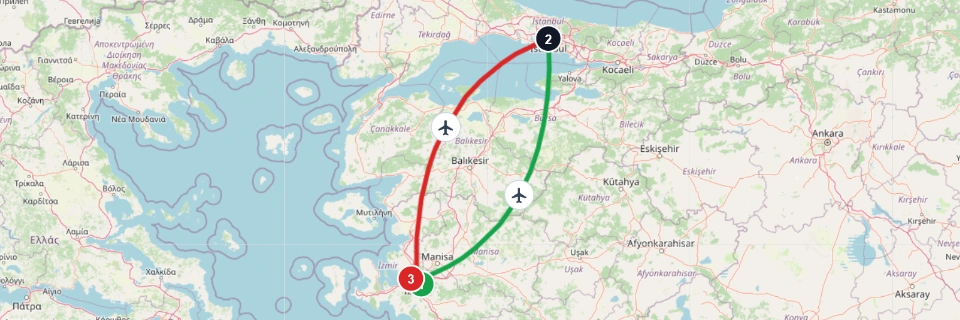
This Istanbul Jewish heritage tour from Izmir is designed for travelers who want a focused cultural route in a short schedule. After flight arrival, day one begins in Balat and Fener, where Jewish community history is closely connected with old Istanbul neighborhoods. The itinerary includes landmark points around the Golden Horn and contextual visits linked to Ahrida Synagogue and historic Balat institutions. With private guiding, each stop is explained through social, religious, and architectural background rather than quick photo breaks. It is a practical 2 days Istanbul Jewish tour for guests seeking depth.
The route continues through Eminonu, Karakoy, and Galata Bridge to show how trade, daily life, and community geography intersected over centuries. Walking this corridor helps visitors understand why Galata and Beyoglu became central areas for later Jewish cultural life. Day two highlights Neve Shalom Synagogue, Ashkenazi Synagogue, and Jewish Museum context in the same urban zone. Kamondo Stairs and Schneidertempel area add further detail to the citys Jewish social and architectural memory. This creates a coherent Balat to Galata Jewish heritage route.
The itinerary stays fully aligned with listed highlights and avoids unrelated attractions outside the program scope. Private operation allows flexible pacing for families, couples, and small groups with different interests. Guests can spend extra time where needed while keeping full coverage of key sites. The route is suitable for first time visitors and repeat travelers who want a more thematic Istanbul experience. Overall, it is a reliable private Istanbul Jewish districts package by flight from Izmir.
-
Day 1
Balat-Fener and Golden Horn Jewish Heritage Route
D
Pickup in Izmir and transfer for Istanbul flight.
Day one starts with private transfer for Istanbul-bound connection.
Flight from Izmir to IstanbulDomestic flight segment to Istanbul gateway airport.
Connection segment reaches Istanbul for Jewish heritage route.
Transfer to Balat-FenerRoad transfer to old-city Jewish heritage neighborhoods.
Transfer reaches Balat and Fener district starting point.
Balat Historic DistrictWalk through historic streets and neighborhood layers.
Balat preserves long-standing multi-faith and Jewish neighborhood traces in Istanbul.
The Balat Historic District is one of Istanbul's most character-filled neighborhoods, where color, architecture, and layered community history all remain visible in the streets. Walking here gives you a different experience from the city's monumental core, because Balat feels intimate, lived-in, and textured by many generations. The district is especially meaningful for its multi-faith heritage, including strong Jewish, Greek Orthodox, and Muslim traces. That mixture gives the neighborhood unusual cultural depth. It is one of the best places in Istanbul to feel history through the street itself.
As you explore, look beyond the famous facades and notice the way everyday life still animates the old urban fabric. Balat rewards slow walking, curiosity, and attention to details that are easy to miss from a bus window. Travelers often enjoy it because the neighborhood feels real rather than staged, even while it remains visually distinctive. This is also where Istanbul's multicultural past becomes easy to imagine in practical, human terms. Balat is vibrant, layered, and deeply memorable.
Balat Or-Ahayim Hospital AreaStop near historical Jewish community medical landmark.
Or-Ahayim reflects the philanthropic institutional history of Istanbul's Jewish community.
The Balat Or-Ahayim Hospital area highlights an important institutional layer of Istanbul's Jewish history, reflecting philanthropy, care, and community organization within the old neighborhood fabric. Stops like this are valuable because they show that heritage is not only expressed through houses of worship, but also through the social institutions that sustained daily life. In Balat, that story feels especially tangible because the district still carries so much historical texture. The area adds nuance to any exploration of the city's minority heritage. It is a quieter stop, but an important one.
As you consider the site, think about how communities build continuity not only through faith, but through education, medicine, and mutual support. The Or-Ahayim connection helps broaden your sense of what Jewish life in Istanbul once looked like in practical terms. This is the kind of detail that makes a neighborhood visit feel richer and more complete. It also deepens the Balat experience beyond surface-level architecture. For travelers interested in social history, the stop has real value.
Ahrida Synagogue AreaVisit one of Istanbul's oldest synagogue quarters.
Ahrida area represents one of the city's most established Jewish worship traditions.
The Ahrida Synagogue area introduces one of the oldest and most historically resonant Jewish quarters in Istanbul. Located within Balat's layered urban fabric, the area reflects centuries of worship, migration, and community continuity. This is not a grand imperial monument zone, but that is exactly what gives it depth and character. The streets around it help you feel the human scale of minority heritage in the city. It is a meaningful stop for travelers who want to understand Istanbul beyond its most famous skyline icons.
As you walk through the neighborhood, notice how religious memory here is woven into the everyday city rather than isolated from it. The Ahrida tradition is especially important in the history of Istanbul's Jewish life, and that makes the area culturally significant well beyond its size. Balat's atmosphere also adds warmth and texture to the visit, with old streets and layered architecture all around. This stop works best when approached slowly and attentively. It offers a quieter but very valuable perspective on the city's multicultural past.
Golden Horn WaterfrontOrientation stop on historic inlet and trade corridor.
Golden Horn has been central to Istanbul's commercial and communal geography for centuries.
The Golden Horn waterfront reveals one of Istanbul's most historically important natural inlets, where trade, ship activity, and neighborhood life shaped the city for centuries. This is not just a scenic edge of the water, but a corridor that influenced how communities settled and how the city functioned. Standing here, you can sense the difference between the Bosphorus' grand openness and the Golden Horn's more enclosed, urban character. It is a place where geography and history feel tightly linked. Even a short orientation stop adds real depth to the city.
As you look along the inlet, imagine the layers of commerce, migration, and daily movement that once animated these shores. The waterfront works especially well when understood as part of the city's social and economic story rather than only as a view. Travelers often appreciate this stop because it helps connect neighborhoods like Fener, Balat, and Galata into a larger urban picture. It is one of those places where Istanbul becomes easier to understand as a working historical city. The water here tells an old and important story.
Eminonu and Karakoy CorridorCross-waterfront movement between key historical districts.
Eminonu-Karakoy corridor links major market, port, and community routes.
Galata BridgeWalk and photo stop on Golden Horn crossing.
Galata Bridge remains one of the city's most iconic links between historic quarters.
Galata Bridge is one of the places where Istanbul feels unmistakably like itself. Spanning the Golden Horn, it links major historical districts while also functioning as a lived urban scene full of movement, fishermen, ferries, layered skylines, and constant city energy. It is not simply a crossing point, but a vantage point from which Istanbul's scale and character become easier to read. Even a short stop here often leaves a strong impression.
The bridge is especially rewarding because it connects everyday life with postcard-level views. Looking one way, you feel the historic silhouette of the old city; looking the other, the water and the surrounding neighborhoods keep the scene in motion. That blend of practical city life and visual identity is what makes the place memorable. Galata Bridge gives travelers one of the clearest urban snapshots of Istanbul in a single stop.
Lunch Break on Golden Horn RouteMidday meal break during route (not included).
Lunch break is scheduled and paid directly by guests.
A lunch break on the Golden Horn route keeps you inside one of Istanbul's most historically layered urban zones, where the meal can remain connected to the day's cultural atmosphere rather than feeling separate from it. This part of the city rewards slower exploration, and a midday pause here can fit very naturally between neighborhood walks and heritage stops. The setting is urban, historical, and socially textured. That makes lunch here more engaging than a standard route break. The city continues speaking even while you sit down.
If you can choose, small local lokantas, kebab houses, soup kitchens, meze spots, or simple Turkish home-style meals are all good fits for the district. Fish sandwiches or tea by the water may also suit the route depending on exactly where the stop falls. Travelers often enjoy lunch here because it lets them remain in the fabric of old Istanbul rather than stepping out of it. The key is to keep the meal local and easy. Around the Golden Horn, atmosphere matters as much as the menu.
Transfer to Istanbul HotelDrive to hotel for overnight stay.
Day one concludes with hotel check-in and included dinner.
-
Day 2
Galata-Beyoglu Jewish Community Route
B
Start day-two Jewish community route after breakfast.
Morning departure begins Galata-Beyoglu heritage sequence.
Beyoglu Street (Istiklal)Walk through the district's historical cultural artery.
Beyoglu-Istiklal corridor has long reflected Istanbul's cosmopolitan social life.
A walk along Beyoglu Street, especially Istiklal Avenue, places you in one of Istanbul's most famous urban corridors, where culture, commerce, and cosmopolitan memory all converge. This is not a quiet heritage stop, but a living artery shaped by embassies, passages, churches, shops, and decades of social change. The avenue still carries the sense of a city performing itself in public. Every block offers a different texture, from historic facades to modern movement. It is one of the clearest places to feel Istanbul's layered modern identity.
As you continue along the street, notice how Beyoglu balances grandeur with everyday bustle. The district rewards slow walking because small side streets, arcades, and architectural details often reveal as much as the main avenue itself. Travelers usually enjoy this stop for its energy and for the way it contrasts with the imperial peninsula. If you want to understand Istanbul as a city of modern urban life as well as ancient monuments, this is essential ground. Istiklal is lively, historic, and always full of atmosphere.
Galata TowerVisit tower district and panoramic historic quarter.
Galata Tower zone anchors one of the oldest merchant neighborhoods in the city.
Galata Tower anchors one of Istanbul's oldest and most characterful districts, where merchant history, hillside streets, and city panoramas come together in a memorable way. The tower's presence gives the quarter a strong visual center, but the real appeal of the stop lies in the surrounding neighborhood as much as the structure itself. This is a part of the city where old trade routes, cultural change, and modern urban life still overlap. The result is both historically rich and visually rewarding. It is one of Istanbul's most recognizable district landmarks.
As you spend time in the tower area, notice how the streets around it feel different from the imperial peninsula. The neighborhood has a more mercantile and cosmopolitan character, shaped by centuries of movement and exchange. Travelers often enjoy the stop because it combines atmosphere with orientation and gives a strong sense of the older city beyond the monuments of Sultanahmet. The tower district works best when explored with curiosity rather than speed. It is lively, layered, and full of urban identity.
Neve Shalom SynagogueVisit principal modern synagogue of Istanbul Jewish community.
Neve Shalom remains a central worship and communal reference point.
The Neve Shalom Synagogue is one of the most important active reference points of Istanbul's modern Jewish community, and visiting it adds depth to any exploration of the city's plural religious life. This is a place of continuity rather than archaeological distance, and that living quality matters. The synagogue helps show that Jewish heritage in Istanbul is not only a matter of memory, but also of ongoing communal identity. It is a stop that feels current as well as historical. That balance gives it special value.
As you reflect on the site, think about how active religious spaces preserve meaning differently from museums or ruins. Travelers often find Neve Shalom especially meaningful because it anchors larger stories of community, resilience, and belonging within the modern city. It also complements visits to Galata, Balat, and other minority-heritage neighborhoods. The stop is serious, focused, and culturally important. It offers a living dimension to Istanbul's layered history.
Jewish Museum of TurkeyVisit museum collections documenting community history.
The museum presents Ottoman-to-modern narratives of Jewish life in Turkey.
The Jewish Museum of Turkey offers one of the clearest ways to understand the long and layered history of Jewish life in the country from the Ottoman period into the modern era. This is a valuable stop because it gathers community memory, objects, and narrative into a focused setting that helps the broader urban heritage make more sense. Rather than looking only at streets or individual synagogues, the museum provides a structured story of continuity, change, and identity. It is especially rewarding for travelers interested in minority history and cultural depth. The visit adds context that is hard to gain from a walk alone.
As you move through the collections, pay attention to how everyday life, ritual, migration, and civic belonging all appear together. Museums like this are most powerful when they help you see a city and a country more fully afterward. Travelers often find the visit meaningful because it gives voice and shape to histories that are easy to overlook. It also complements neighborhood visits in places like Balat, Fener, and Galata. The museum is thoughtful, informative, and quietly important.
Ashkenazi SynagogueStop at the remaining active Ashkenazi synagogue in Istanbul.
Ashkenazi Synagogue preserves distinct liturgical and communal traditions in Galata.
The Ashkenazi Synagogue represents an important and distinctive layer of Istanbul's Jewish heritage, especially within the historic Galata area. As one of the city's notable Ashkenazi places of worship, it reflects a different communal and liturgical tradition from the better-known Sephardic heritage of other neighborhoods. This makes the stop especially valuable for understanding how diverse Jewish life in Istanbul has been over time. The setting may feel modest compared with imperial monuments, but its historical importance is considerable. It is a meaningful stop for travelers interested in the city's plural identity.
As you consider the synagogue and its surroundings, think about Galata as a quarter long shaped by trade, migration, and layered communities. Sites like this reveal a quieter but essential part of Istanbul's story, where religious life and urban life developed side by side. The stop also works well within a broader walk through minority heritage in the city. Rather than being isolated from the neighborhood, the synagogue belongs to its social memory. That sense of continuity is what makes the visit especially resonant.
Schneidertempel Art GalleryVisit former synagogue building reused as cultural-art space.
Schneidertempel reflects adaptive preservation of Ashkenazi communal architecture.
The Schneidertempel Art Gallery offers a particularly interesting example of how Istanbul's minority heritage can continue to live through adaptive reuse rather than remaining only as static memory. Once a synagogue, the building now functions as a cultural and artistic space, which gives the stop a layered and thoughtful character. It is a place where architecture, community memory, and contemporary cultural life meet. That combination makes the visit especially rewarding. It shows preservation through transformation.
As you spend time here, notice how the building still carries traces of its original communal identity even while serving a new purpose. Travelers often appreciate stops like this because they reveal a more nuanced form of heritage than monumental conservation alone. The gallery also helps broaden the Jewish and Ashkenazi story of Galata and Beyoglu. It is not only about what the building was, but about how it continues to matter. That continuity gives the site real depth.
Kamondo StairsPhoto stop at iconic Art Nouveau staircase.
Kamondo Stairs are linked to the influential Jewish-Ottoman Kamondo family legacy.
The Kamondo Stairs are a small but very distinctive piece of Istanbul's urban heritage, admired for their elegant Art Nouveau form and for their connection to the influential Kamondo family. What makes this stop so appealing is that it combines architecture, family history, and neighborhood identity in a very compact space. The stairs feel decorative, refined, and unmistakably tied to Galata's cosmopolitan past. It is the sort of landmark that rewards attention to detail rather than scale. Even a short photo stop here can be memorable.
As you look at the staircase, think of it not only as an attractive urban object but as part of the wider Jewish-Ottoman story of the district. Stops like this help make the city's layered social history visible in unexpected ways. Travelers often enjoy the Kamondo Stairs because they feel like a discovery tucked into the urban fabric rather than a major headline monument. They add texture and personality to the Galata route. Small in size, they carry a lot of atmosphere.
Etz Ahayim Synagogue AreaVisit the Ortakoy synagogue district area.
Etz Ahayim represents one of Istanbul's long-standing Jewish worship continuities.
The Etz Ahayim Synagogue area reflects one of the enduring layers of Istanbul's multicultural Bosphorus heritage. In Ortakoy, where different communities have long lived side by side, this area helps you sense the neighborhood's rich religious and social continuity. The experience is not only about a single building, but about the wider memory of worship, community life, and urban coexistence. Even a short visit adds depth to your understanding of the Bosphorus beyond palaces and waterfront views. It reminds you that Istanbul's identity has always been shaped by many voices.
As you move through the area, notice how the neighborhood setting still carries the texture of lived history. Ortakoy is often celebrated for its lively square and shoreline, yet places like this reveal its quieter cultural foundations. Travelers interested in faith heritage and minority history usually find this stop especially meaningful. It is also a valuable counterpoint to the city's grand imperial monuments, showing a more intimate side of Istanbul's past. The result is a brief but memorable encounter with one of the city's long-standing Jewish traditions.
Lunch Break in Galata-BeyogluMidday meal break during route (not included).
Lunch break is scheduled and paid directly by guests.
A lunch break in Galata-Beyoglu puts you in one of Istanbul's liveliest and most cosmopolitan districts, where a meal can easily become part of the city experience rather than only a pause in it. The area is full of cafés, casual restaurants, and side streets that make midday choices feel flexible and enjoyable. This works especially well after walks through historic urban quarters, because you remain in a setting with strong character. The district suits wandering before and after the meal. Lunch here rarely feels dull.
If you have options, this is a good area for meze, kebab, döner, pide, modern Turkish cooking, or simply a good café lunch depending on your mood. A stop for dessert or Turkish coffee afterwards also fits naturally into the Beyoglu rhythm. Travelers often enjoy eating here because the district offers both energy and variety. The key is not to overplan it. In Galata-Beyoglu, lunch works best when it stays spontaneous and urban.
Transfer to Istanbul AirportRoad transfer for return connection to Izmir.
Transfer reaches departure airport for Izmir return segment.
Return Flight to IzmirDomestic return flight from Istanbul to Izmir.
Return segment completes the 2-day Jewish heritage route.
Izmir Arrival and Final Drop-offFinal drop-off and service completion.
Tour services conclude with drop-off at designated point in Izmir.
Got a question about this tour?
Reach out to our travel experts.
Informations
-
What's Included
- 1 night accommodation with dinner (4-star or special-class boutique category)
- Private deluxe A/C VIP vehicle for all local transfers and tours
- Pickup from your hotel or meeting point
- 4 airport transfers as listed in itinerary
- Drop-off to your hotel or meeting point
- Parking fees for listed route locations
- Private professional licensed tour guide
- Private tour operation only for your group
- Local taxes
-
What's Excluded
- Museum and site admission fees
- Personal expenses
- Lunches and beverages
- Domestic flight tickets unless explicitly added to booking
- Gratuities for guide and driver
-
Entrance Fees
- Entrance fees are not included and are paid directly on site according to current official rates.
-
Travel Tips
- Carry passport/ID for synagogue security checks and wear respectful attire; some community sites require pre-approval or timed access.
-
Note
- Synagogue and community-site access can change by security protocol
- prayer schedule
- and holiday calendar; route sequence may be adjusted accordingly.
Your Peace of Mind Options
Cancellation Policy
A transparent overview of applicable fees.
Customer Comments - Tripadvisor Write A Review!
Customer Comments - Tripadvisor



Tour Reminder!
You can create a reminder for yourself for this tour. We will send you a reminder e-mail/sms about this tour on the date you specify.
FAQs
-
What does the 2 Days Istanbul Jewish Heritage and Community Route include?
- Private tour operation only for your group
- Private professional licensed tour guide
- Private deluxe A/C VIP vehicle for all local transfers and tours
- Pickup and drop-off at your hotel or meeting point
- 4 airport transfers as listed in the itinerary
- Parking fees for listed route locations and local taxes
- 1 night accommodation with dinner (4-star or special-class boutique category)
-
Are domestic flight tickets included between Izmir and Istanbul?
- No. Domestic flight tickets are excluded unless explicitly added to your booking
- Please check your confirmation for the exact flight plan and inclusions
-
What is covered on Day 1 (Balat-Fener and Golden Horn Jewish heritage route)?
- Flight from Izmir to Istanbul (as per booking plan)
- Balat and Fener districts walk
- Ahrida Synagogue area and Jewish community landmarks
- Golden Horn waterfront
- Eminonu and Karakoy corridor
- Galata Bridge
- Overnight in Istanbul with included dinner
-
What is covered on Day 2 (Galata-Beyoglu Jewish community route)?
- Neve Shalom Synagogue (visit subject to opening rules)
- Jewish Museum of Turkey
- Ashkenazi Synagogue (visit subject to opening rules)
- Schneidertempel Art Gallery
- Kamondo Stairs
- Etz Ahayim synagogue area
- Transfer to Istanbul Airport and return flight to Izmir
-
Do synagogue visits require special rules or permissions?
- Yes. Synagogue and community-site access can change by security protocol, prayer schedule, and holiday calendar
- Visits may require advance coordination and an ID or passport
- Photography rules can differ by site
-
Is this a private tour?
- Yes. It is operated privately for your group with a private guide and VIP vehicle
- Pace can be adjusted within the operational route
-
Are entrance fees included?
- No. Museum and site admission fees are excluded
- Please plan budget for museum entries and any paid sites on the route
-
Are lunches and beverages included?
- No. Lunches and beverages are excluded
- Hotel dinner is included for the overnight stay
-
Can the itinerary be adjusted if a site is closed?
- Yes. Some community sites can be closed due to security or prayer times
- Your guide will adjust the day plan to focus on what is open and practical
-
What is not included in the price?
- Museum and site admission fees
- Lunches and beverages
- Personal expenses
- Domestic flight tickets unless explicitly added to booking
- Gratuities for guide and driver
General FAQs
-
What currency is used in Turkey?
Turkey uses the Turkish Lira (TRY).
- Cards are widely accepted in cities and tourist areas, but cash is still useful for small purchases.
- ATMs are common. Exchange offices and banks are also available.
-
Can I pay by credit card in Turkey?
In most restaurants, hotels, and shops you can pay by card.
- For markets, small shops, taxis, and tips, carrying some cash is recommended.
- Let your bank know you are traveling to avoid card blocks.
-
Is Turkey safe for tourists?
Turkey is generally safe for visitors, especially in main tourist areas.
- As in any destination, watch out for pickpockets in crowded places.
- Use licensed taxis/transport where possible and keep valuables secure.
-
What should I wear when visiting mosques in Turkey?
Dress modestly when entering mosques.
- Shoulders and knees should be covered.
- Women may be asked to cover their hair.
- Shoes are usually removed at the entrance.
-
Do I need a visa to visit Turkey?
Visa requirements depend on your nationality.
- Please check the latest rules from official sources (consulate/embassy or the official e-visa portal) before travel.
-
What is the best time to visit Turkey?
Spring and autumn are popular because temperatures are usually milder.
- Summer can be hot on the coast and inland.
- Winter is quieter and can be great for cities and some regions.
-
Will English be enough in Turkey?
Turkish is the official language. In tourist areas, English is commonly spoken.
- Learning a few basic Turkish words is appreciated and can help outside major areas.
-
What power plug is used in Turkey?
Turkey typically uses Type C and Type F plugs (220V, 50Hz).
- If your devices use a different plug type, bring a travel adapter.
-
Is tap water safe to drink in Turkey?
In many places, visitors prefer bottled water.
- Hotels and restaurants usually provide bottled water easily.
-
Is tipping expected in Turkey?
Tipping is common and appreciated for good service.
- In restaurants, rounding up or leaving a small amount is typical.
- For guides and drivers, tips are at your discretion based on satisfaction.
-
Do I need to carry my passport in Turkey?
We recommend keeping your passport safely in your hotel and carrying a copy (photo or printed) when out.
- Some venues may request an ID; your guide can advise for your route.
-
Do museums and sites have weekly closure days in Turkey?
Opening hours can change by season and some venues may have weekly closure days.
- We recommend checking the latest opening hours close to your travel date.
- Starting earlier in the day helps to avoid crowds at popular sites.
-
What are the emergency numbers in Turkey?
Dial 112 for emergencies (medical, police, fire and other urgent situations).
- 112 is a unified emergency line in Turkey.
- If you do not speak Turkish, try English and share your location clearly.
-
How do I get from airports to the city in Turkey?
Options depend on the city, but common choices are:
- Official airport taxi
- Airport shuttles/buses
- Metro/train (available in some cities)
- Pre-booked private transfers
If you arrive late at night or with luggage, a pre-booked transfer can be the easiest option.
-
Are taxis and ride-hailing apps reliable in Turkey?
Use licensed taxis and make sure the meter is used (unless a fixed airport fare is confirmed).
- In some cities, taxi-hailing apps can help you find a taxi more easily.
- If possible, keep small cash and ask for a receipt when needed.
-
How do I buy a SIM/eSIM in Turkey?
You can buy SIM/eSIM options from mobile operators and official stores.
- Bring your passport for registration.
- For longer stays, foreign phones may require device registration (IMEI) to keep working on local networks.
-
What are typical opening hours in Turkey?
Opening hours vary by city and season.
- Many shops and malls stay open late, especially in tourist areas.
- Some museums may close earlier and may have weekly closure days.
- During national or religious holidays, hours can change.
-
How do pharmacies work in Turkey (duty pharmacy)?
Pharmacies are called Eczane. Outside normal hours, there is usually a rotating on-duty pharmacy (Nöbetçi Eczane).
- Regular pharmacies typically post the on-duty pharmacy information on the door/window.
- Your hotel reception can also help you find the nearest one.
Let's Customize Your Trip!
Prepare your own tour plan!
Good to Know
-
Good to know: bring an ID for synagogue visits
- Some synagogue visits can require ID or passport verification
- Opening hours and access rules can change
-
Good to know: dress respectfully and follow photography rules
- Modest clothing is recommended for worship sites
- Photography rules can vary, follow local guidance
-
Good to know: Istanbul traffic can impact timing
- Old districts and Golden Horn routes can be affected by traffic
- Early starts and flexible pacing help the experience
-
Good to know: plan cash for tickets and lunches
- Entrance fees are excluded
- Lunches and beverages are excluded
-
Good to know: site access can change during holidays and services
- Prayer schedules and community calendars can affect access
- Your guide will optimize the route order on the day
Want to read it later?
Download this tour’s PDF brochure and start tour planning offline


