Pamukkale and Aphrodisias Heritage Journey



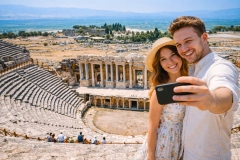
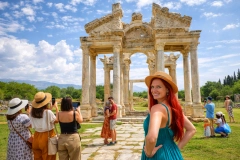
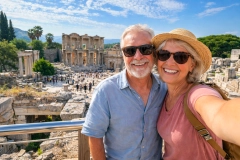
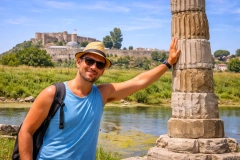
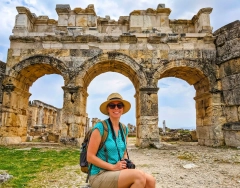
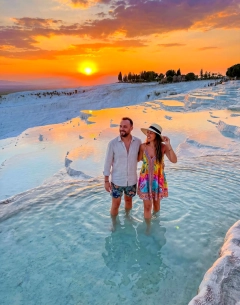

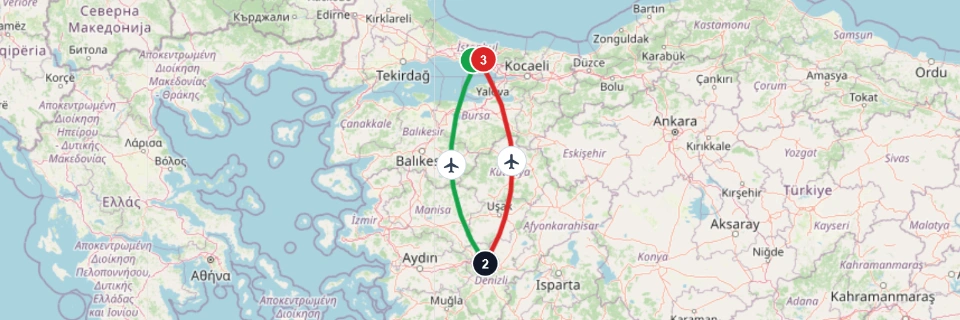
Discover a 2 days Pamukkale and Aphrodisias Heritage Journey from Istanbul by flight with private guide. Visit Aphrodisias Ancient City, Aphrodisias Archaeological Museum, Pamukkale travertines, Hierapolis Ancient City, and Cleopatra Swimming Pool in one complete route.
Highlights
- Aphrodisias Ancient City, UNESCO-listed marble city renowned for sculpture and monumental urban planning
- Aphrodisias Museum, rich Roman-period statuary and relief collections from one of Anatolia's key art centers
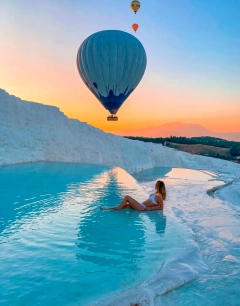
- Pamukkale Travertines, world-famous white thermal terraces with unique natural texture and color contrast
- Hierapolis and Cleopatra Pool area, blending Roman healing heritage with thermal-water landscape experience
Pamukkale and Aphrodisias Heritage Journey
Discover a 2 days Pamukkale and Aphrodisias Heritage Journey from Istanbul by flight with private guide. Visit Aphrodisias Ancient City, Aphrodisias Archaeological Museum, Pamukkale travertines, Hierapolis Ancient City, and Cleopatra Swimming Pool in one complete route.
Itinerary
This itinerary is designed for travelers who want a complete Pamukkale and Aphrodisias tour from Istanbul in two days. The route combines one of Turkey's top archaeological sculpture centers with its most famous thermal landscape. Guests searching an Aphrodisias Ancient City private guide option can follow this plan because each stop is clearly listed. Day one focuses on Aphrodisias and its museum collections with detailed context. Day two continues with Pamukkale terraces, Hierapolis, and a full Cleopatra Swimming Pool experience.
The first part includes Aphrodisias Ancient City and Aphrodisias Archaeological Museum in one connected sequence. This setup is ideal for visitors looking for an Aphrodisias archaeological museum tour with strong historical depth. The ancient city highlights the artistic identity of the region, especially in sculpture and urban planning. The museum visit complements the ruins by presenting key finds in a structured narrative. It becomes a focused Aphrodisias sculpture heritage route without unrelated detours.
The second part includes Pamukkale, Hierapolis Ancient City, and Cleopatra Swimming Pool exactly as listed in the itinerary. This segment suits travelers searching a Pamukkale Hierapolis private day trip with both natural and historical value. The white travertine terraces provide the iconic landscape that defines this destination globally. Hierapolis adds the ancient healing-center context, and Cleopatra Pool completes the thermal experience. Overall, the package delivers a reliable 2 days Pamukkale calcium terraces and Aphrodisias journey from Istanbul.
-
Day 1
Aphrodisias Route (Aydin)
D
Pickup in Istanbul and transfer to departure airport.
Day one starts with private transfer for Denizli-bound domestic flight.
Flight from Istanbul to DenizliDomestic flight segment to Denizli Cardak Airport.
Flight connection enables same-day Aphrodisias route.
Transfer to Aphrodisias (Karacasu)Road transfer from Denizli airport to Aphrodisias zone.
Inland transfer connects Denizli basin with Aphrodisias archaeological corridor.
Aphrodisias Ancient CityGuided exploration of Aphrodisias core remains.
Aphrodisias is one of Anatolia's most important sculpture-centered Roman cities.
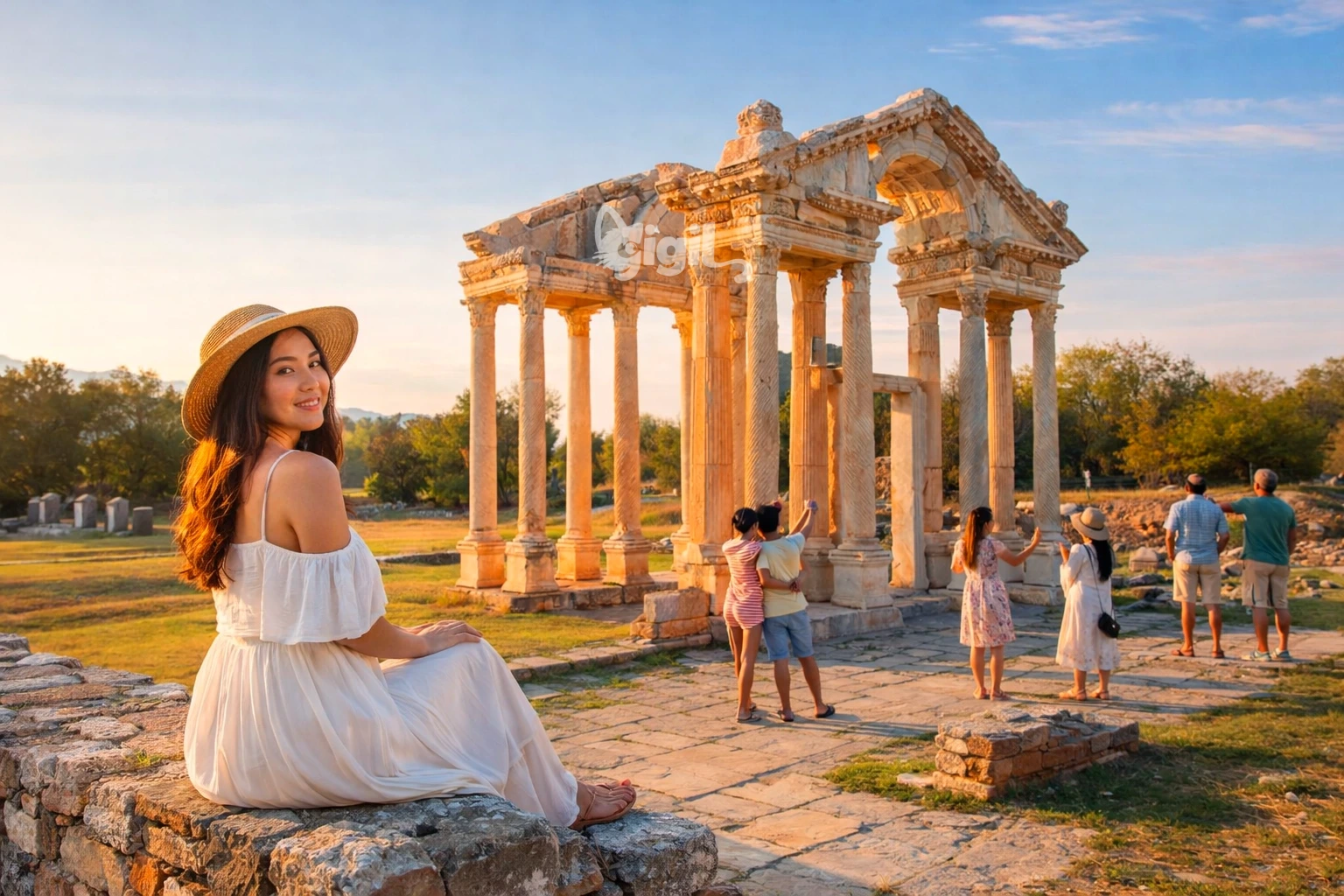
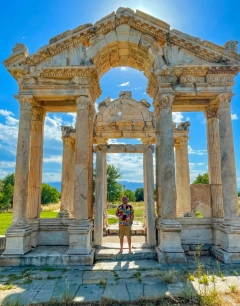
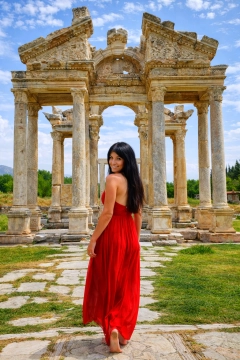
Aphrodisias Ancient City stands out for its elegance as much as for its scale. Dedicated to Aphrodite and enriched by a celebrated tradition of marble sculpture, the city feels refined in a way that is immediately visible in its monuments, urban planning, and artistic identity. The stadium, temple zone, Tetrapylon, and broad streets create an experience that feels both monumental and unusually graceful. It is one of those sites where beauty and archaeology are equally strong.
What makes Aphrodisias especially memorable is the sense that this was not only a city of power, but also a city of craft. The connection to sculpture gives the ruins a distinctive character, as if the place itself was shaped with extra care and ambition. Because the site is not always as crowded as better-known names, it can also feel more spacious and contemplative. For many travelers, Aphrodisias becomes one of the most rewarding archaeological surprises of the journey.
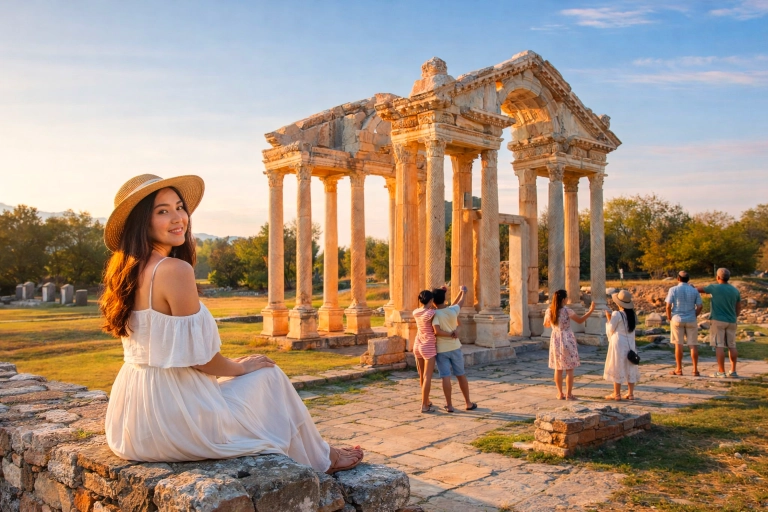 Tetrapylon and Stadium Axis
Continue through ceremonial gate and stadium sections.
Tetrapylon and stadium remains highlight the city's ceremonial and civic planning.
The route through the Tetrapylon and Stadium axis highlights two of Aphrodisias's most memorable elements, linking ceremonial display with civic scale. The Tetrapylon is one of the site's great visual signatures, with its ornate gateway-like form creating an immediate sense of refinement and importance. The stadium, by contrast, reveals the city's public ambition through sheer size and preserved structure. Together, these sections show how Aphrodisias combined artistic elegance with monumental urban planning. It is a part of the site that feels both grand and highly distinctive.
As you continue between these areas, notice how the city's identity becomes clearer through movement rather than through one isolated monument. The ceremonial and athletic functions represented here help bring ancient civic life into sharper focus. Travelers often find this section especially rewarding because it is visually strong and easy to imagine in use. The Tetrapylon gives you a sense of processional dignity, while the stadium evokes crowds, competition, and spectacle. Few archaeological sites balance beauty and scale quite as effectively as this one.
Aphrodisias MuseumVisit museum galleries linked to excavations.
Museum collections preserve outstanding marble statuary and relief artifacts.
Aphrodisias Museum is one of the places where the artistic reputation of the ancient city becomes fully visible. After walking through Aphrodisias itself, entering the museum allows you to see the sculptural quality, refinement, and human detail that made the site famous across the Roman world. Portraits, reliefs, and carved fragments give the city a second life indoors. The result feels less like a secondary stop and more like the key to understanding why Aphrodisias mattered so much.
What makes the museum especially memorable is the strength of its site-linked collection. These are not random objects gathered from elsewhere, but works that belong directly to the city you have just explored, which gives the visit unusual clarity and continuity. The marble craftsmanship is often the highlight, and even travelers who are not usually museum-focused tend to notice the quality here. Aphrodisias Museum turns admiration for the ruins into a deeper appreciation of the people and artistry behind them.
Lunch Break near KaracasuMidday meal break during route (not included).
Lunch break is scheduled and paid directly by guests.
A lunch break near Karacasu puts you in the wider Aydin region, where the food culture reflects fertile western Anatolia and a strong tradition of village cooking. After the archaeological focus of Aphrodisias, this kind of meal stop often feels especially welcome. The pace here is usually calmer, and the regional cuisine tends to be generous without being overly heavy. It is a good place to enjoy the route in a more grounded way. Even an informal lunch can carry a clear local identity.
If you have a choice, look for olive-oil dishes, seasonal vegetables, keşkek, gözleme, grilled meats, beans, or homemade-style Aegean plates that reflect the region's rural strengths. Simple yogurt, salad, and bread combinations also work well if you want something lighter before continuing. Travelers often enjoy lunch in this area because it feels honest and regional rather than generic. Karacasu and its surroundings are well suited to straightforward, flavorful food. The stop works best when kept local and relaxed.
Transfer to Pamukkale HotelDrive to Pamukkale region for overnight stay.
Evening transfer positions the route for day-two thermal heritage program.
Pamukkale Hotel Check-in and DinnerOvernight stay with included dinner.
Day one concludes with accommodation and dinner included in Pamukkale.
-
Day 2
Pamukkale and Hierapolis Route
B
Start day-two route after breakfast.
Morning departure begins Pamukkale-Hierapolis circuit.
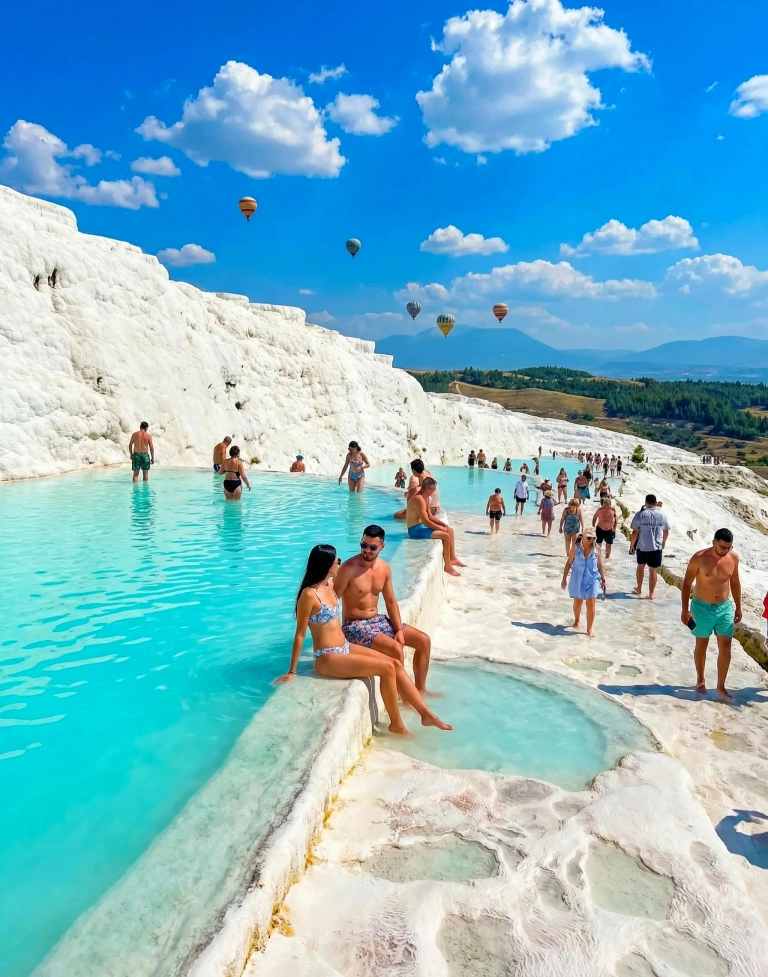
Pamukkale TravertinesWalk on white calcium terraces of Pamukkale.
Pamukkale travertines are among the world's most distinctive natural-thermal formations.
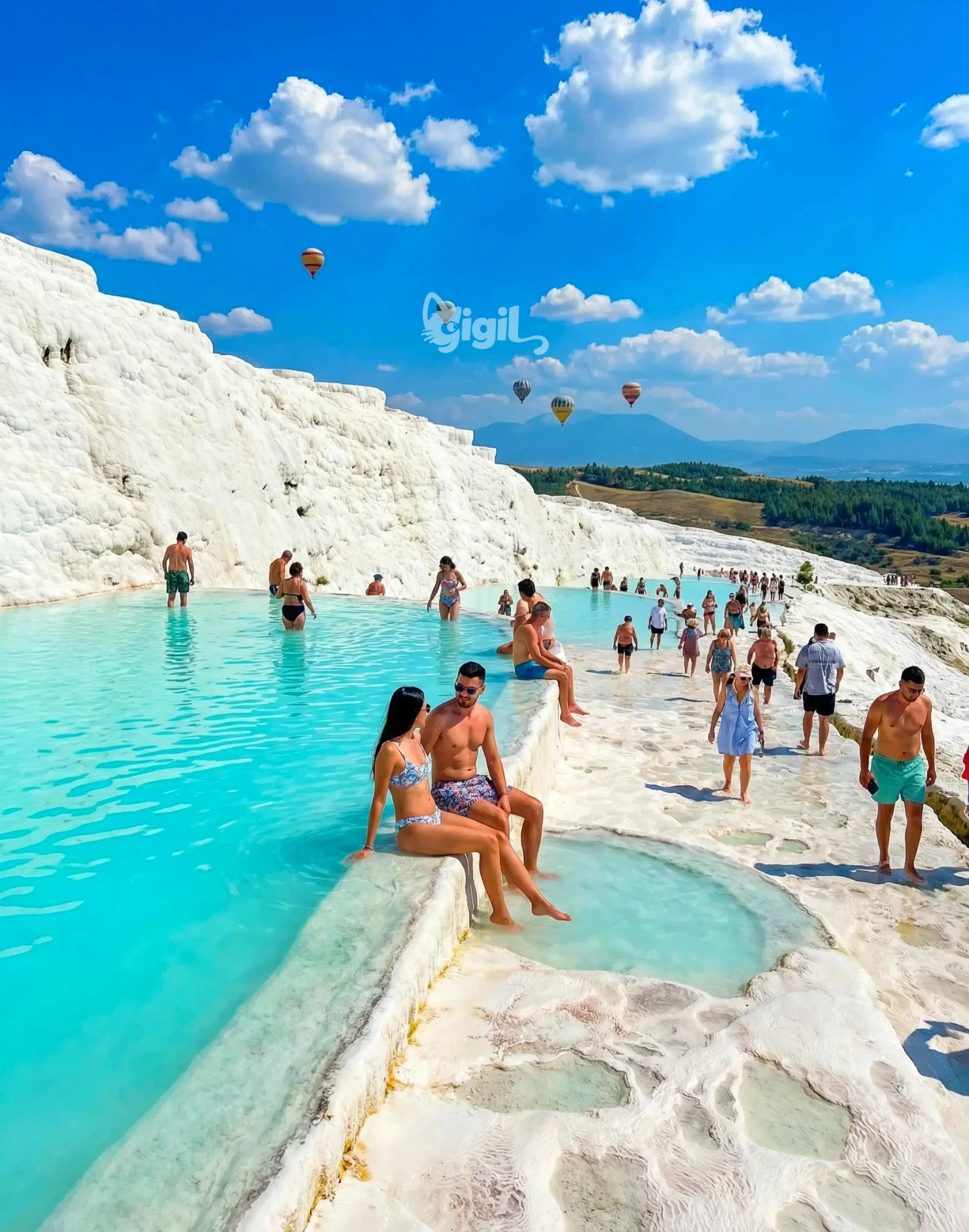
Pamukkale Travertines look almost unreal when you first see them, with white mineral terraces cascading down the hillside like frozen clouds. As you walk through the area, the contrast between bright stone, shallow thermal pools, and wide valley views creates one of the most memorable natural scenes in Turkey. The nickname Cotton Castle makes immediate sense once the formations appear in front of you. Even travelers who have seen many famous landmarks are often surprised by how striking Pamukkale feels in person.
This is a place to enjoy slowly rather than rush through, because the beauty changes with the light and with every shift in perspective. The warm water, the smooth surfaces, and the open sky give the visit a calm rhythm that feels very different from a museum or city monument. It is also one of those rare destinations where photography is easy, but simply standing still for a moment can be even better. Seen together with nearby Hierapolis, the travertines become more than a natural wonder and start to feel like part of a complete travel experience.
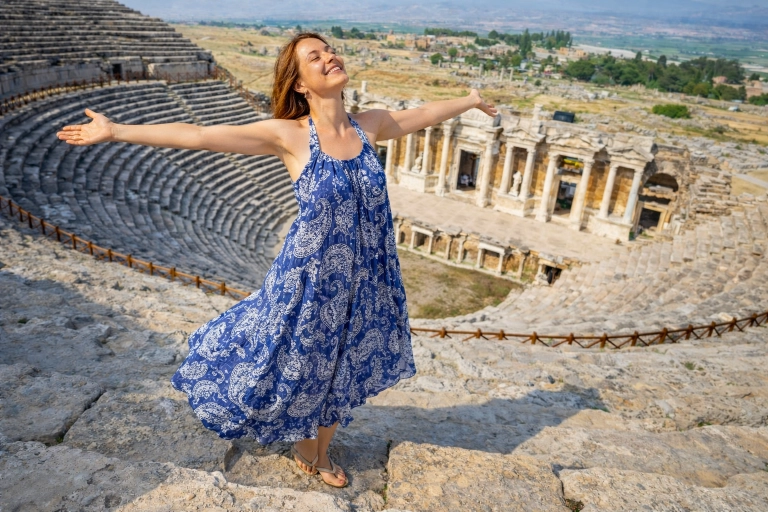
 Hierapolis Ancient City
Guided exploration of Hierapolis remains.
Hierapolis combines sacred thermal culture with theatre, necropolis, and Roman urban layers.
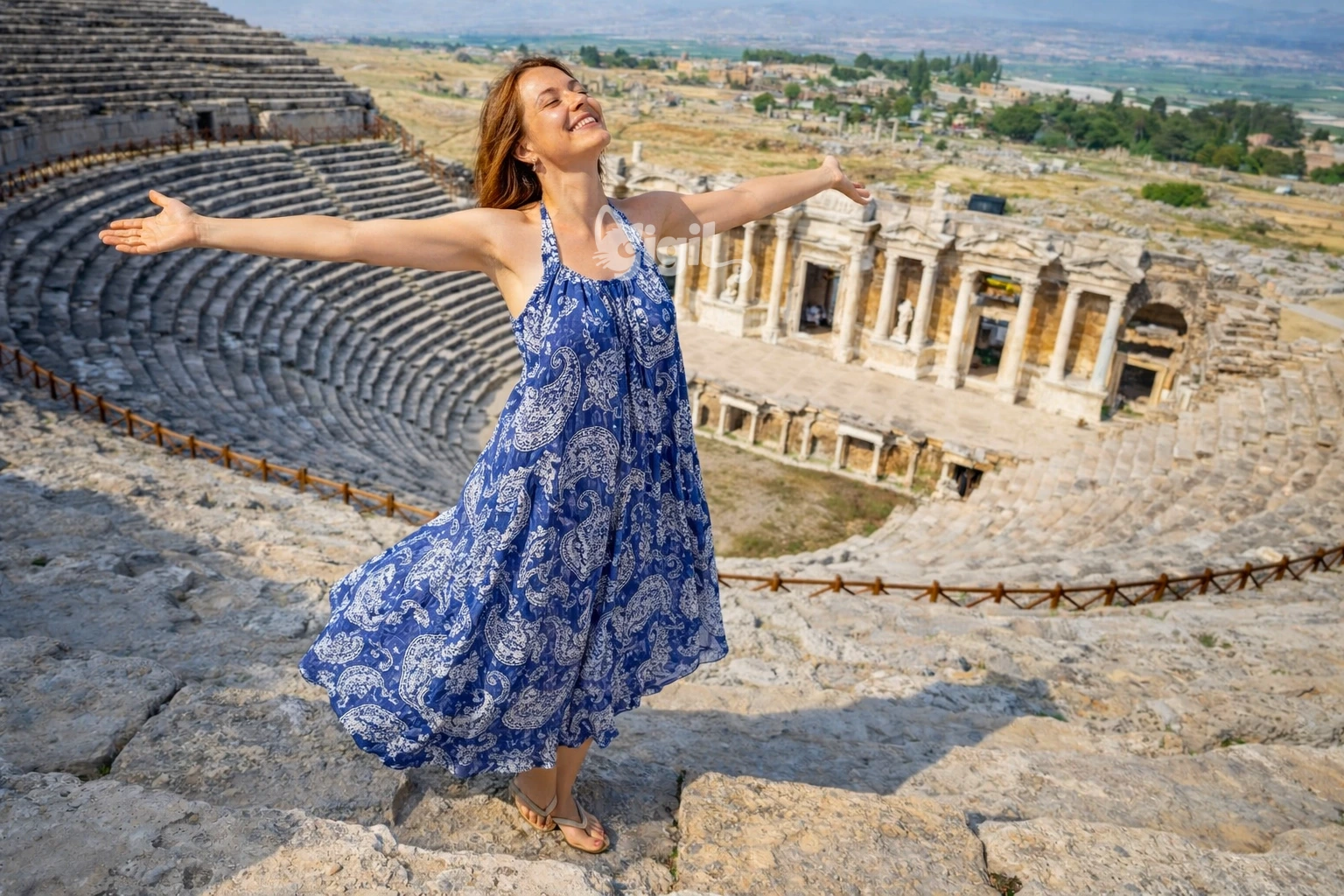
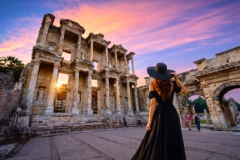
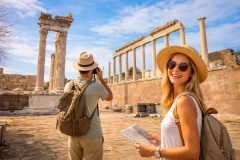
Hierapolis Ancient City rises above Pamukkale like the stone memory of an ancient healing world. The city was built around thermal waters, and as you explore its streets, gates, baths, necropolis, and theatre, you can feel how strongly health, belief, and urban life were connected here. The ruins are broad and open, giving the site a powerful sense of scale. It is the kind of place where the landscape and the archaeology constantly speak to each other.
What makes Hierapolis especially rewarding is that it does not offer only one highlight, but a full historical setting to move through step by step. One moment you are looking at a monumental theatre, and the next you are imagining pilgrims, patients, and traders arriving in a famous spa city of the ancient world. The nearby thermal formations make the experience feel even more distinctive, because the natural wonder and the ancient settlement belong to the same story. For travelers who enjoy ruins with atmosphere, Hierapolis feels expansive, layered, and surprisingly vivid.
 Cleopatra Pool Area
Free time around thermal pool zone (optional swim).
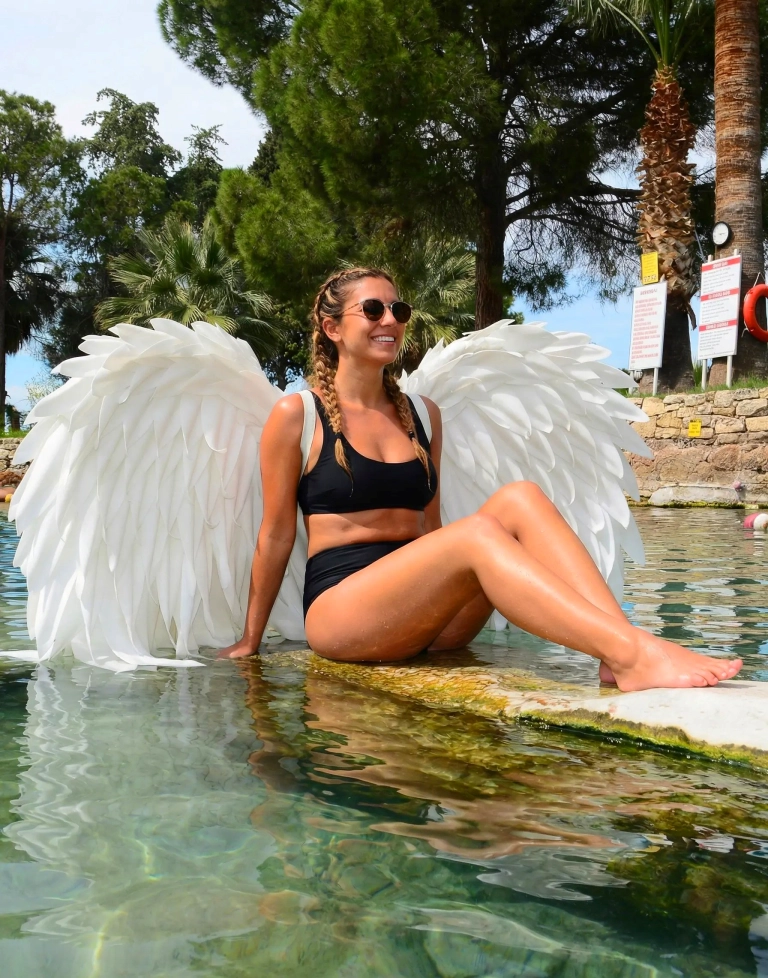
Cleopatra Pool area is known for warm mineral waters and submerged ancient fragments.
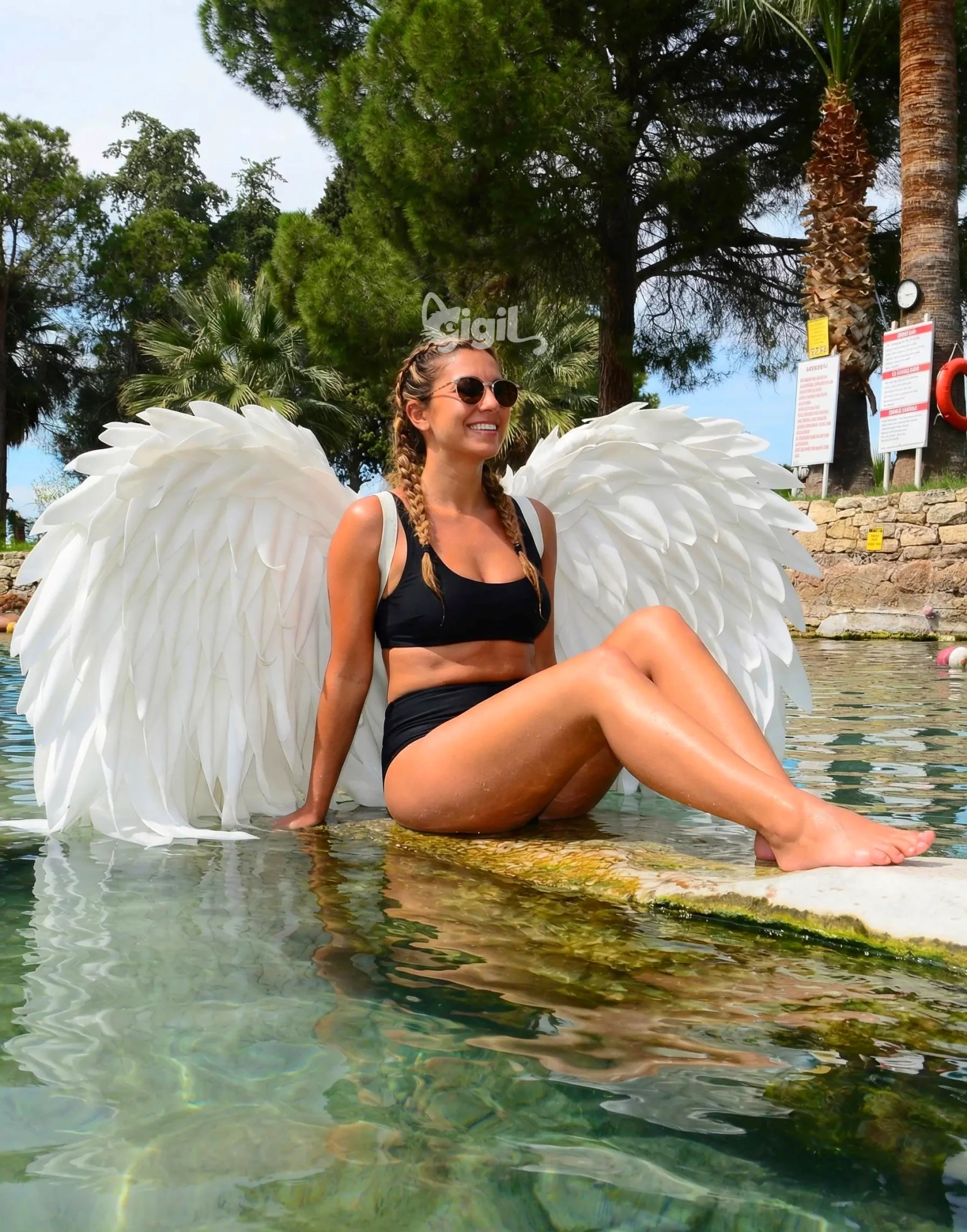
Cleopatra Pool Area combines thermal relaxation with a strong sense of antiquity. The warm mineral water, ancient stone fragments, and open setting create an experience that feels part spa, part archaeological encounter, and part scenic pause within the wider Pamukkale and Hierapolis landscape. Even if you do not swim, the atmosphere of the area is distinctive and easy to enjoy. It feels softer, slower, and more leisure-oriented than the surrounding ruins.
For many travelers, the appeal of this stop comes from the unusual chance to be close to thermal water and ancient remains at the same time. The pool area invites you to pause, cool your pace, and appreciate how deeply the region's identity has always been shaped by healing springs. After walking through terraces and ruins, the setting can feel especially rewarding. Cleopatra Pool works well as a refreshing change of rhythm within a day full of major historical sights.
 Lunch Break in Pamukkale
Midday meal break during route (not included).
Lunch break is scheduled and paid directly by guests.
Lunch Break in Pamukkale gives you the perfect excuse to taste the flavors of Denizli while resting between terraces, ruins, and thermal stops. The local table combines the herb-rich habits of the Aegean with stronger inland specialties, so lunch here can be both fresh and deeply satisfying. After a morning in the sun and on stone paths, this kind of regional meal feels especially welcome. It is a stop where local food can add real character to the route instead of being just a practical break.
If you see it on the menu, Denizli kebab is the classic dish to try, known for slow-roasted lamb and a very local style of serving. You can also look for vegetable plates, black-eyed pea salads, herb dishes, and regional touches built around thyme and sage, which are strongly associated with the area. For something sweet afterward, semolina helva with ice cream is a very fitting finish. A good lunch in Pamukkale should leave you rested, well fed, and ready for the next historical or thermal stop.
Transfer to Denizli AirportDrive to airport for return flight.
Return transfer aligns with Istanbul-bound domestic evening flight.
Flight from Denizli to IstanbulDomestic return flight to Istanbul.
Air return completes the two-day Pamukkale-Aphrodisias route.
Istanbul Drop-offFinal drop-off at hotel or meeting point.
Services conclude at original Istanbul drop-off location.
Got a question about this tour?
Reach out to our travel experts.
Informations
-
What's Included
- 1 night accommodation with breakfast and dinner (4-star or special-class boutique category)
- Private deluxe A/C VIP vehicle for all ground transfers and tours
- Pickup from your hotel or meeting point
- 4 airport transfers as listed in itinerary
- Drop-off to your hotel or meeting point
- Parking fees for listed route locations
- Private professional licensed tour guide
- Private tour operation only for your group
- Local taxes
-
What's Excluded
- Museum and site admission fees
- Personal expenses
- Lunches and beverages
- Domestic flight tickets unless explicitly added to booking
- Gratuities for guide and driver
-
Entrance Fees
- Entrance fees are not included and are paid directly on site according to current official rates.
-
Travel Tips
- Bring comfortable walking shoes
- swimwear
- towel
- sun protection
- and seasonal layers for archaeological walks and thermal-pool surroundings.
-
Note
- This itinerary includes domestic flights and overland transfers between Denizli and Aphrodisias; route timing may vary based on traffic and site operation hours.
Your Peace of Mind Options
Cancellation Policy
A transparent overview of applicable fees.
Customer Comments - Tripadvisor Write A Review!
Customer Comments - Tripadvisor



Tour Reminder!
You can create a reminder for yourself for this tour. We will send you a reminder e-mail/sms about this tour on the date you specify.
FAQs
-
What does the 2 Days Pamukkale and Aphrodisias Heritage Tour include?
- Private tour operation only for your group
- Private professional licensed tour guide
- Private deluxe A/C VIP vehicle for all ground transfers and tours
- Pickup and drop-off at your hotel or meeting point
- 4 airport transfers as listed in the itinerary
- Parking fees for listed route locations and local taxes
- 1 night accommodation with breakfast and dinner (4-star or special-class boutique category)
-
Are domestic flight tickets included between Istanbul and Denizli?
- No. Domestic flight tickets are excluded unless explicitly added to your booking
- The itinerary is planned with flights for timing efficiency, but inclusion depends on the selected option
-
What is covered on Day 1 (Aphrodisias route)?
- Flight from Istanbul to Denizli
- Transfer to Aphrodisias (Karacasu)
- Aphrodisias Ancient City including the Tetrapylon and stadium axis area
- Aphrodisias Museum
- Transfer to Pamukkale region for dinner and overnight
-
What is covered on Day 2 (Pamukkale and Hierapolis route)?
- Pamukkale travertines
- Hierapolis Ancient City
- Cleopatra Pool area (optional)
- Transfer to Denizli Airport for the flight back to Istanbul
-
Is Cleopatra Pool included?
- No. Cleopatra Pool entry is typically an optional extra ticket
- Availability depends on site conditions and opening status
-
Is this a private tour?
- Yes. It is operated privately for your group with a private guide and VIP vehicle
- Pace can be adjusted within the operational route
-
Are entrance fees included?
- No. Museum and site admission fees are excluded
- Please plan budget for Aphrodisias, Pamukkale, and Hierapolis tickets
-
Are lunches and beverages included?
- No. Lunches and beverages are excluded
- Hotel breakfast and dinner are included for the overnight stay
-
How physically demanding is the itinerary?
- Moderate walking at large open-air sites
- Ancient city streets can be uneven, and Pamukkale surfaces can be wet and smooth
-
What is not included in the price?
- Museum and site admission fees
- Lunches and beverages
- Personal expenses
- Domestic flight tickets unless explicitly added to booking
- Gratuities for guide and driver
General FAQs
-
What currency is used in Turkey?
Turkey uses the Turkish Lira (TRY).
- Cards are widely accepted in cities and tourist areas, but cash is still useful for small purchases.
- ATMs are common. Exchange offices and banks are also available.
-
Can I pay by credit card in Turkey?
In most restaurants, hotels, and shops you can pay by card.
- For markets, small shops, taxis, and tips, carrying some cash is recommended.
- Let your bank know you are traveling to avoid card blocks.
-
Is Turkey safe for tourists?
Turkey is generally safe for visitors, especially in main tourist areas.
- As in any destination, watch out for pickpockets in crowded places.
- Use licensed taxis/transport where possible and keep valuables secure.
-
What should I wear when visiting mosques in Turkey?
Dress modestly when entering mosques.
- Shoulders and knees should be covered.
- Women may be asked to cover their hair.
- Shoes are usually removed at the entrance.
-
Do I need a visa to visit Turkey?
Visa requirements depend on your nationality.
- Please check the latest rules from official sources (consulate/embassy or the official e-visa portal) before travel.
-
What is the best time to visit Turkey?
Spring and autumn are popular because temperatures are usually milder.
- Summer can be hot on the coast and inland.
- Winter is quieter and can be great for cities and some regions.
-
Will English be enough in Turkey?
Turkish is the official language. In tourist areas, English is commonly spoken.
- Learning a few basic Turkish words is appreciated and can help outside major areas.
-
What power plug is used in Turkey?
Turkey typically uses Type C and Type F plugs (220V, 50Hz).
- If your devices use a different plug type, bring a travel adapter.
-
Is tap water safe to drink in Turkey?
In many places, visitors prefer bottled water.
- Hotels and restaurants usually provide bottled water easily.
-
Is tipping expected in Turkey?
Tipping is common and appreciated for good service.
- In restaurants, rounding up or leaving a small amount is typical.
- For guides and drivers, tips are at your discretion based on satisfaction.
-
Do I need to carry my passport in Turkey?
We recommend keeping your passport safely in your hotel and carrying a copy (photo or printed) when out.
- Some venues may request an ID; your guide can advise for your route.
-
Do museums and sites have weekly closure days in Turkey?
Opening hours can change by season and some venues may have weekly closure days.
- We recommend checking the latest opening hours close to your travel date.
- Starting earlier in the day helps to avoid crowds at popular sites.
-
What are the emergency numbers in Turkey?
Dial 112 for emergencies (medical, police, fire and other urgent situations).
- 112 is a unified emergency line in Turkey.
- If you do not speak Turkish, try English and share your location clearly.
-
How do I get from airports to the city in Turkey?
Options depend on the city, but common choices are:
- Official airport taxi
- Airport shuttles/buses
- Metro/train (available in some cities)
- Pre-booked private transfers
If you arrive late at night or with luggage, a pre-booked transfer can be the easiest option.
-
Are taxis and ride-hailing apps reliable in Turkey?
Use licensed taxis and make sure the meter is used (unless a fixed airport fare is confirmed).
- In some cities, taxi-hailing apps can help you find a taxi more easily.
- If possible, keep small cash and ask for a receipt when needed.
-
How do I buy a SIM/eSIM in Turkey?
You can buy SIM/eSIM options from mobile operators and official stores.
- Bring your passport for registration.
- For longer stays, foreign phones may require device registration (IMEI) to keep working on local networks.
-
What are typical opening hours in Turkey?
Opening hours vary by city and season.
- Many shops and malls stay open late, especially in tourist areas.
- Some museums may close earlier and may have weekly closure days.
- During national or religious holidays, hours can change.
-
How do pharmacies work in Turkey (duty pharmacy)?
Pharmacies are called Eczane. Outside normal hours, there is usually a rotating on-duty pharmacy (Nöbetçi Eczane).
- Regular pharmacies typically post the on-duty pharmacy information on the door/window.
- Your hotel reception can also help you find the nearest one.
Let's Customize Your Trip!
Prepare your own tour plan!
Good to Know
-
Good to know: confirm flight inclusion when booking
- Flights are excluded unless explicitly added
- Check your confirmation for the exact option details
-
Good to know: Pamukkale surfaces can be slippery
- Travertines can be wet and smooth
- Move carefully and use stable footwear
-
Good to know: Aphrodisias and Hierapolis are open-air sites
- Bring sun protection and water
- Walking distances are long, comfortable shoes help
-
Good to know: plan cash for tickets and lunches
- Entrance fees are excluded
- Lunches and beverages are excluded
-
Good to know: Cleopatra Pool is an optional extra ticket
- It is not included
- If you want to add it, plan extra budget and time
Want to read it later?
Download this tour’s PDF brochure and start tour planning offline
Similar Tours

Gallipoli ANZAC Dawn Service Tour
Join a 1 Night 2 Days Gallipoli ANZAC Dawn Service Tour from Istanbul by private car. Attend ANZAC Day Dawn Service at Anzac Cove and continue to Australian or New Zealand memorial services on Gallipoli Peninsula.
Ertugrul Ghazi Legacy and Bursa Heritage
Join a 2 day Ertugrul Ghazi Legacy and Bursa Heritage Tour from Istanbul by private A/C VIP vehicle. Visit Bilecik and Sogut shrines including Sheikh Edebali and Ertugrul Gazi, continue to Inegol for Turgut Alp, and explore Bursa highlights such as Ulu Mosque, Koza Han, Green Tomb, Osman-Orhan tombs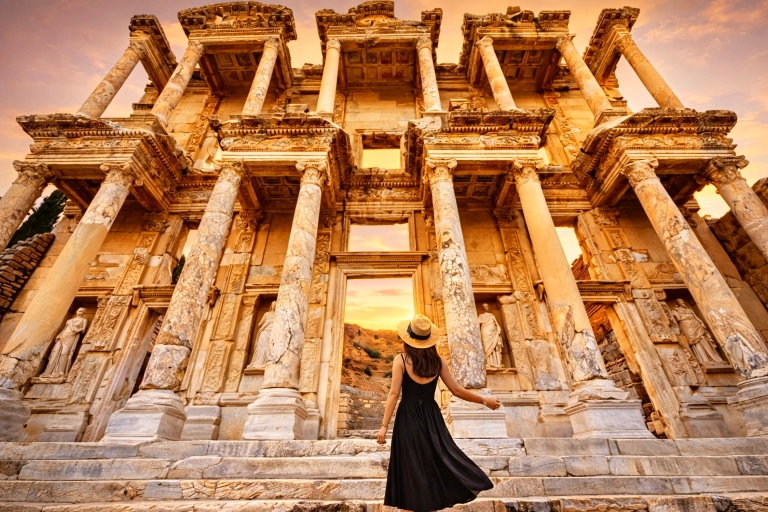
Izmir and Ephesus Heritage Flight Escape
Join a 2 day Izmir and Ephesus Heritage Flight Escape from Istanbul by domestic flight and private VIP vehicle. Discover Izmir city highlights such as Konak, Kemeralti, Kadifekale, Agora, and Izmir Archaeological Museum, then visit Ephesus Ancient City, House of Virgin Mary, Temple of Artemis, and E
Izmir and Sardes Heritage Flight Journey
Join a 2 day Izmir and Sardes Heritage Flight Journey from Istanbul by domestic flight and private VIP vehicle. Explore Old Smyrna highlights in Izmir, then visit Sardes Archaeological Site including the Gymnasium, Jewish Synagogue, and the Temple of Artemis.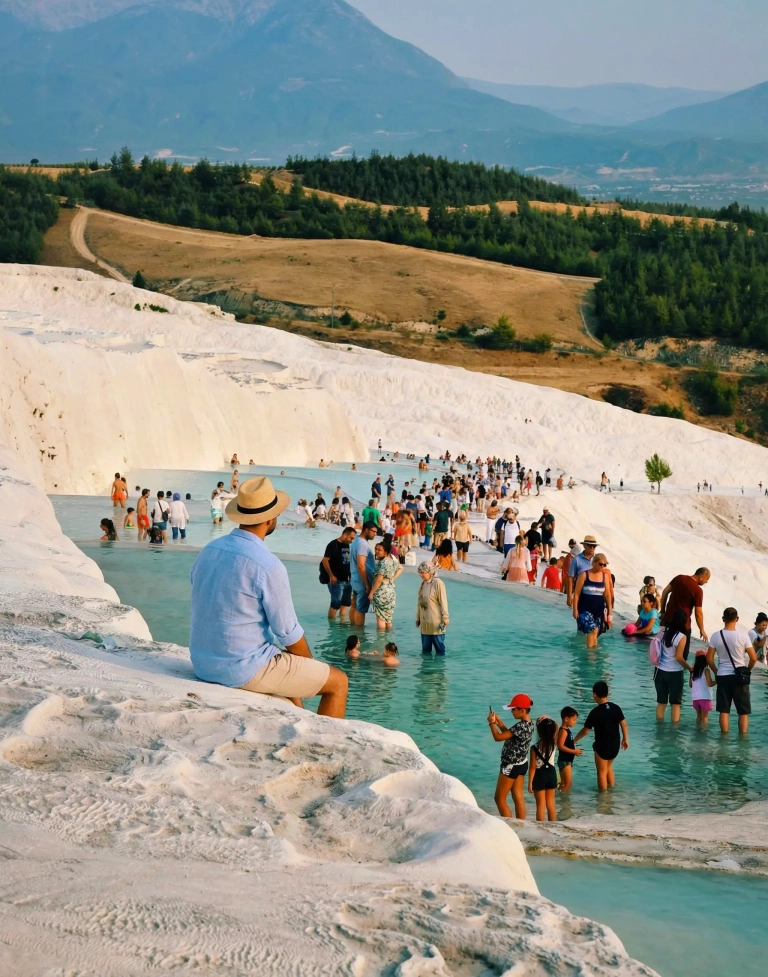
Izmir and Pamukkale Heritage Flight Escape
Join a 2 day Izmir and Pamukkale Heritage Flight Escape from Istanbul by domestic flight and private VIP vehicle. Explore Old Smyrna landmarks in Izmir, then visit Pamukkale white travertines, Cleopatra Pool, and Hierapolis Ancient Site with a private licensed guide.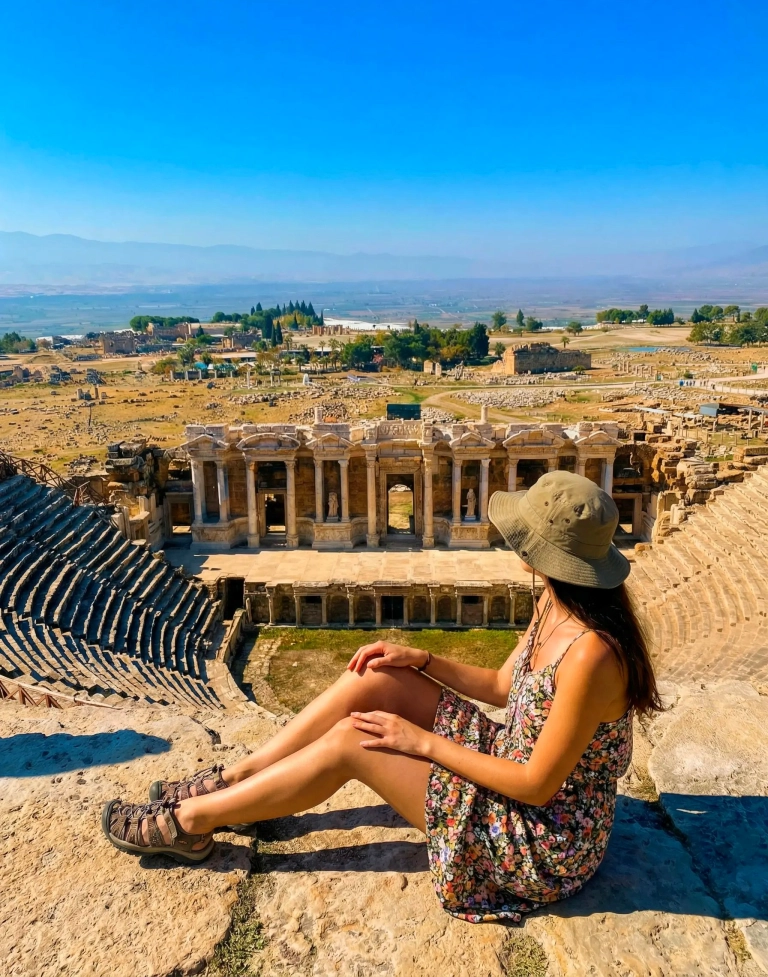
Aphrodisias and Pamukkale Heritage Flight Escape
Join a 2 day Aphrodisias and Pamukkale Heritage Flight Escape from Istanbul by domestic flight and private VIP vehicle. Visit Aphrodisias Ancient City and Aphrodisias Archaeological Museum, then continue to Pamukkale white terraces, Cleopatra Pool, and Hierapolis Ancient Site.