
Konya Mevlana Heritage Tour

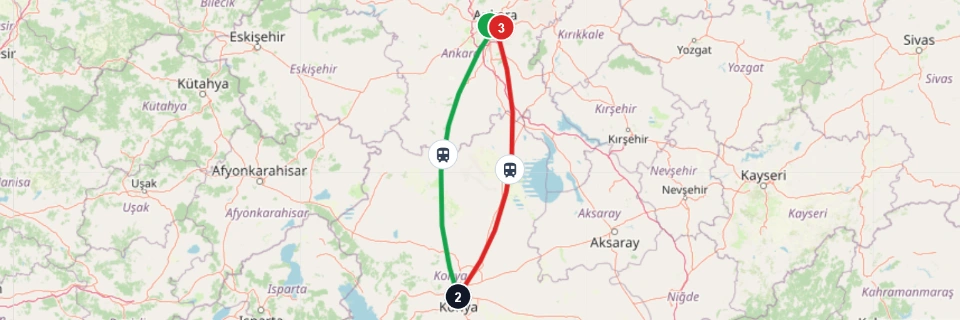
Travel from Ankara to Konya by train on a private 2-day heritage route featuring Mevlana Museum, Alaaddin Hill, Karatay Madrasah, Catalhoyuk, Panorama Konya, and Butterfly Garden.
Highlights
- Konya, one of Anatolia's major spiritual and Seljuk cultural centers
- Mevlana Museum, the core landmark of Rumi and whirling dervish tradition
- Ince Minare and Karatay Madrasah, outstanding examples of Seljuk stone and tile arts
- Konya Archaeological Museum, broad regional collection from prehistoric to classical periods
- Catalhoyuk, UNESCO-listed Neolithic settlement central to early urban social history
- Panorama Konya and Butterfly Garden, modern interpretive stops completing the city experience
Konya Mevlana Heritage Tour
Travel from Ankara to Konya by train on a private 2-day heritage route featuring Mevlana Museum, Alaaddin Hill, Karatay Madrasah, Catalhoyuk, Panorama Konya, and Butterfly Garden.
Itinerary
This Konya whirling dervishes tour starts with train travel from Ankara and introduces the spiritual and historical identity of central Anatolia. On the first day, you explore core city landmarks such as Alaaddin Hill, Ince Minare, and the Mevlana Museum with private guide support. The route also includes Karatay Madrasah and Konya Archaeological Museum, giving you a broad view of Seljuk, Islamic, and classical layers. Konya is widely known as the city of Mevlana, and the itinerary is designed to connect this legacy with other major heritage sites in the city center. For travelers seeking a compact Ankara to Konya by train experience, this program is highly practical.
The tour narrative also references Iconium tradition and the Christian history linked to Saint Paul, which adds another dimension to the route. Walking through the city with this context helps guests understand why Konya stands out in both faith and culture tourism. On day two, you visit Catalhoyuk, one of the most important Neolithic settlements in the world and a key archaeological highlight of the region. The itinerary then continues with Panorama Konya to visualize 13th century urban life and Mevlevi culture in a thematic format. This combination creates a complete Konya heritage and archaeology tour in two days.
The program also includes Konya Butterfly Garden, known for its large indoor tropical butterfly area and family friendly environment. This stop adds a natural and educational element that balances the historical intensity of museums and archaeological sites. Because the tour is private, pacing can be adjusted to your interests while preserving full coverage of listed highlights. All visits remain directly connected to the official Konya itinerary without unrelated additions. Overall, this is a strong private Konya cultural route for short travel plans.
-
Day 1
Konya City and Mevlana Heritage Route
D
Pickup in Ankara and transfer to high-speed train station.
Day one starts with transfer for Konya-bound train journey.
High-Speed Train Ankara to KonyaIntercity train segment from Ankara to Konya.
Train segment opens the Konya cultural and spiritual route.
Transfer to City CenterTransfer from station to central Konya route area.
Transfer reaches old-city and Seljuk heritage zone.
Alaaddin HillVisit central historical hill and surrounding city core.
Alaaddin Hill is one of Konya's oldest urban settlement points.
Alaaddin Hill is one of Konya's oldest urban reference points, and that depth of continuity gives the stop more importance than its modest scale might first suggest. Rather than functioning as a single dramatic monument, the hill works as a historical core from which the long life of the city can be felt. Walking here means standing within one of the oldest settlement layers of Konya itself. The experience is quieter than a major museum stop, but historically very grounding.
The value of the hill lies in orientation and continuity. It helps travelers understand Konya not only as a city of individual landmarks, but as a place whose urban identity has been shaped over many centuries in the same central zone. That kind of continuity is easy to miss if you move only between headline monuments. Alaaddin Hill gives the city a deeper historical center of gravity.
Ince Minare MuseumVisit Seljuk stone and wood works collection.
Ince Minare is one of the finest examples of Seljuk architectural craftsmanship.
Ince Minare Museum gives Konya a very different visual language from the classical and rock-cut sites elsewhere on the route. The building itself is one of the finest expressions of Seljuk craftsmanship, with stone carving and architectural detail that reward slow looking. Even before you focus on the collection, the monument announces its own artistic importance. It feels elegant, scholarly, and deeply tied to the refined urban culture of medieval Konya.
Inside, the museum adds another layer by bringing decorative stone and wood traditions into closer view. This makes the stop especially useful for travelers who want to understand Seljuk aesthetics rather than only admire them from a distance. The atmosphere is quieter than at more crowded landmarks, which helps the details stand out. Ince Minare often becomes one of the stops that broadens the historical range of the journey in a very satisfying way.
Mevlana MuseumVisit Rumi's mausoleum and dervish heritage complex.
Mevlana Museum is the most significant spiritual landmark of Konya.
Mevlana Museum is one of the most spiritually resonant stops in Konya. Closely associated with Rumi and the Mevlevi tradition, the complex carries a contemplative atmosphere that feels very different from a conventional museum visit. The site matters not only for its collections, but for the living emotional weight it still holds for visitors from many backgrounds. It is a place where devotion, poetry, and cultural memory meet in a very direct way.
The experience becomes richer when you approach it slowly and with some quiet attention. Rather than thinking only in terms of objects or architecture, it helps to feel the museum as a center of thought and spiritual heritage that shaped Konya's identity for centuries. Even travelers without a specific religious connection often find the mood here memorable. Mevlana Museum is one of those places that leaves an impression through atmosphere as much as history.
Karatay MadrasahVisit historical tile works and Seljuk educational structure.
Karatay Madrasah preserves important Seljuk tile art traditions.
Karatay Madrasah reflects the same Seljuk elegance and artistic discipline that make Konya's medieval heritage so rewarding. Even when the title appears with this spelling variant, the stop still offers an encounter with tile-rich scholarship, refined decoration, and the intellectual side of the city's past. The building feels cultured, concentrated, and unmistakably tied to Konya's learned urban tradition. That gives it a distinct identity among the route's many religious and archaeological sites.
The experience is especially useful for travelers who want to understand the Seljuk city as more than a backdrop to spiritual history. Karatay helps show how beauty, scholarship, and craftsmanship once worked together in Konya's urban culture. The scale may be intimate, but the historical signal is strong. Karatay Madrasah deepens the artistic dimension of the Konya route.
Konya Archaeological MuseumVisit archaeological collections from regional civilizations.
Konya Archaeological Museum offers broad context for Anatolian cultural history.
Konya Archaeological Museum adds important chronological depth to a city often associated first with Seljuk and Mevlevi heritage. The museum helps widen that perspective by showing that the Konya region carries far older archaeological layers stretching from prehistory into the classical world. That broader context makes the city feel less singular and more deeply rooted in Anatolian history. It is a useful stop for travelers who want the region to make sense beyond one historical period.
The museum is most rewarding when approached as a bridge between sites and eras. Objects, sculpture, and archaeological materials give substance to the wider landscapes you may have already seen or are about to explore. Rather than competing with Konya's spiritual landmarks, it complements them by expanding the city's timeline. Konya Archaeological Museum helps turn the itinerary into a more complete historical journey.
Lunch Break in Konya CenterMidday meal break during route (not included).
Lunch break is scheduled and paid directly by guests.
A lunch break in Konya center is a good opportunity to taste one of central Anatolia's strongest urban food traditions while taking a practical midday pause in the route. Konya's cuisine tends to be rooted, satisfying, and closely tied to the city's long cultural history. That makes the meal stop feel more significant than a simple operational break. Even a modest lunch here can reflect a very recognizable local identity. The city suits serious, warming food.
If you have the choice, look for etli ekmek, tirit, bamya soup, oven dishes, or grilled meats that reflect Konya's classic table. Ayran and simple desserts can round out the meal well without making the stop too heavy. Travelers often appreciate lunch in Konya because the food feels unmistakably regional and satisfying after a morning of sightseeing. It is best approached with a little appetite and not too much hurry. Konya rewards straightforward, traditional flavors.
Konya Hotel Check-inOvernight stay with included dinner.
Day one concludes with hotel check-in and included dinner in Konya.
-
Day 2
Catalhoyuk and Modern Konya Route
B
Start day-two route after breakfast.
Morning departure begins Catalhoyuk and city culture visits.
Catalhoyuk Neolithic SiteVisit one of the world's most important Neolithic settlements.
Catalhoyuk is a UNESCO-listed site critical to understanding early settled life.
Catalhoyuk takes you far beyond the classical world and into one of the earliest large settled communities known to archaeology. This UNESCO World Heritage site offers an extraordinary glimpse into Neolithic life, when people were beginning to build permanent homes, create symbolic art, and organize shared spaces. What makes the site especially striking is how advanced and layered this early settlement appears once you understand its age. You are standing near a place that changed how historians think about the origins of urban living. The atmosphere is quiet, but the historical weight of the site is immense.
As you explore, imagine a community without streets in the modern sense, where people moved across rooftops and entered homes from above. The excavated remains may look subtle at first, yet they represent major discoveries about ritual, domestic life, and social development. This stop rewards careful attention, because its importance lies as much in ideas as in monumental ruins. It helps you see Anatolia not only as a land of empires, but also as one of the deep foundations of human civilization. For travelers interested in archaeology, Catalhoyuk is one of the most intellectually fascinating places on the route.
Panorama Konya MuseumVisit city-history panorama and Mevlevi cultural displays.
Panorama Museum provides a visual narrative of Konya's Seljuk and Mevlevi heritage.
The Panorama Konya Museum offers a visually engaging way to understand the city's layered identity, especially its Seljuk past and Mevlevi spiritual heritage. Rather than presenting history only through isolated objects, the museum uses immersive scenes and narrative displays to help you imagine life in earlier Konya. This makes it a useful stop for orienting yourself before or after visits to the city's major religious and architectural landmarks. The experience feels accessible without losing cultural depth. It is particularly helpful for travelers who like to connect monuments with the world that once surrounded them.
As you move through the displays, notice how the museum links urban life, belief, and artistic culture into a broader story of the city. Konya is often associated first with Mevlana, but this stop helps show the wider setting that shaped that spiritual tradition. The visual format also makes the historical narrative easier to absorb, especially if you are covering several sites in one day. This is a museum that adds orientation rather than repetition. By the end of the visit, Konya usually feels more coherent and more human in scale.
Konya Butterfly GardenVisit tropical butterfly habitat and educational exhibits.
Butterfly Garden is one of Konya's leading family-oriented natural exhibition spaces.
The Konya Butterfly Garden adds an unexpectedly light and colorful dimension to the city, especially for travelers who enjoy a gentler, more sensory stop within a history-heavy itinerary. The tropical habitat, educational setting, and movement of the butterflies create an atmosphere that feels calm, curious, and family-friendly. It is very different from archaeological or religious landmarks, which is part of its appeal. The stop offers a pleasant shift of pace without feeling trivial.
Even a short visit can be enjoyable because the environment is designed to slow you down and focus your attention on small details. It is a reminder that travel days do not have to be made only of monumental heritage to remain memorable. In Konya, this kind of contrast can be especially refreshing. The garden leaves a softer but very pleasant impression.
Lunch Break in KonyaMidday meal break during route (not included).
Lunch break is scheduled and paid directly by guests.
Lunch Break in Konya gives you the chance to taste one of central Anatolia's most established culinary traditions. Konya's food culture tends to be hearty, balanced, and rooted in long-standing urban habits, making it especially satisfying on days with major road segments or heritage stops. The city is not only spiritually important, but also quietly strong as a food destination. That makes a midday break here more valuable than a routine transfer meal.
If you want to eat with a local mindset, look for etli ekmek, one of Konya's classic specialties, along with oven dishes, soups, and other comforting Anatolian plates. Konya cuisine generally favors depth and substance over decorative presentation, which suits the travel day well. A good lunch here should feel warm, traditional, and filling without being excessive. Konya is one of those places where a practical stop can still leave a clear taste memory.
Transfer to Konya Train StationTransfer for return intercity train journey.
Transfer reaches station for Ankara-bound high-speed train.
High-Speed Train Konya to AnkaraIntercity return train segment to Ankara.
Train return completes the 2-day Konya route.
Ankara Arrival and Final Drop-offFinal drop-off and service completion.
Tour services conclude with drop-off at designated point in Ankara.
Got a question about this tour?
Reach out to our travel experts.
Informations
-
What's Included
- 1 night accommodation with dinner (4-star or special-class boutique category)
- Private deluxe A/C VIP vehicle for local transfers and tours
- Pickup from your hotel or meeting point
- Ankara-Konya and Konya-Ankara train transfers as listed in itinerary
- Drop-off to your hotel or meeting point
- Parking fees for listed route locations
- Private professional licensed tour guide
- Private tour operation only for your group
- Local taxes
-
What's Excluded
- Museum and site admission fees
- Personal expenses
- Lunches and beverages
- Intercity transportation tickets unless explicitly added to booking
- Gratuities for guide and driver
-
Entrance Fees
- Entrance fees are not included and are paid directly on site according to current official rates.
-
Travel Tips
- Use comfortable walking shoes and seasonal layers; route includes museum visits
- open archaeological grounds
- and urban walking sections.
-
Note
- Route timing may vary by high-speed train schedule
- local traffic
- and seasonal visitor density at Mevlana and Catalhoyuk sites.
Your Peace of Mind Options
Cancellation Policy
A transparent overview of applicable fees.
Customer Comments - Tripadvisor Write A Review!
Customer Comments - Tripadvisor



Tour Reminder!
You can create a reminder for yourself for this tour. We will send you a reminder e-mail/sms about this tour on the date you specify.
FAQs
-
What does the 2 Days Konya Whirling Dervishes and Seljuk Heritage Tour include?
- Private tour operation only for your group
- Private professional licensed tour guide
- Private deluxe A/C VIP vehicle for local transfers and tours
- Pickup and drop-off at your hotel or meeting point
- Ankara-Konya and Konya-Ankara train transfers as listed in the itinerary
- Parking fees for listed route locations and local taxes
- 1 night accommodation with dinner (4-star or special-class boutique category)
-
Are train tickets included between Ankara and Konya?
- Train transfers are listed as part of the itinerary
- Intercity transportation tickets can be excluded unless explicitly added to booking
- Please check your confirmation or voucher for exact inclusions
-
What is covered on Day 1 (Konya city and Mevlana heritage route)?
- High-speed train Ankara to Konya
- Alaaddin Hill
- Ince Minare Museum
- Mevlana Museum
- Karatay Madrasah
- Konya Archaeological Museum
- Overnight in Konya with included dinner
-
What is covered on Day 2 (Catalhoyuk and modern Konya route)?
- Catalhoyuk Neolithic Site
- Panorama Konya Museum
- Konya Butterfly Garden
- Transfer to Konya train station
- High-speed train Konya to Ankara and final drop-off
-
Is this a private tour?
- Yes. The tour is operated privately for your group with a private guide and vehicle
- Pace can be adjusted within the operational route
-
Are entrance fees included?
- No. Museum and site admission fees are excluded
- Please plan budget for Mevlana Museum, Catalhoyuk, and other museums on the route
-
Are meals included on this itinerary?
- Hotel dinner is included for the overnight stay
- Lunches and beverages are excluded
- Breakfast is not included unless explicitly stated on your confirmation
-
Does the itinerary include a whirling dervish ceremony?
- This tour focuses on Konya's Mevlana heritage and museum route
- If you want a ceremony option, please confirm availability and timing in advance
-
How physically demanding is the itinerary?
- Light to moderate walking in city museums and sites
- Catalhoyuk visit is mostly outdoor and can be exposed to sun
-
What is not included in the price?
- Museum and site admission fees
- Lunches and beverages
- Personal expenses
- Intercity transportation tickets unless explicitly added to booking
- Gratuities for guide and driver
General FAQs
-
What currency is used in Turkey?
Turkey uses the Turkish Lira (TRY).
- Cards are widely accepted in cities and tourist areas, but cash is still useful for small purchases.
- ATMs are common. Exchange offices and banks are also available.
-
Can I pay by credit card in Turkey?
In most restaurants, hotels, and shops you can pay by card.
- For markets, small shops, taxis, and tips, carrying some cash is recommended.
- Let your bank know you are traveling to avoid card blocks.
-
Is Turkey safe for tourists?
Turkey is generally safe for visitors, especially in main tourist areas.
- As in any destination, watch out for pickpockets in crowded places.
- Use licensed taxis/transport where possible and keep valuables secure.
-
What should I wear when visiting mosques in Turkey?
Dress modestly when entering mosques.
- Shoulders and knees should be covered.
- Women may be asked to cover their hair.
- Shoes are usually removed at the entrance.
-
Do I need a visa to visit Turkey?
Visa requirements depend on your nationality.
- Please check the latest rules from official sources (consulate/embassy or the official e-visa portal) before travel.
-
What is the best time to visit Turkey?
Spring and autumn are popular because temperatures are usually milder.
- Summer can be hot on the coast and inland.
- Winter is quieter and can be great for cities and some regions.
-
Will English be enough in Turkey?
Turkish is the official language. In tourist areas, English is commonly spoken.
- Learning a few basic Turkish words is appreciated and can help outside major areas.
-
What power plug is used in Turkey?
Turkey typically uses Type C and Type F plugs (220V, 50Hz).
- If your devices use a different plug type, bring a travel adapter.
-
Is tap water safe to drink in Turkey?
In many places, visitors prefer bottled water.
- Hotels and restaurants usually provide bottled water easily.
-
Is tipping expected in Turkey?
Tipping is common and appreciated for good service.
- In restaurants, rounding up or leaving a small amount is typical.
- For guides and drivers, tips are at your discretion based on satisfaction.
-
Do I need to carry my passport in Turkey?
We recommend keeping your passport safely in your hotel and carrying a copy (photo or printed) when out.
- Some venues may request an ID; your guide can advise for your route.
-
Do museums and sites have weekly closure days in Turkey?
Opening hours can change by season and some venues may have weekly closure days.
- We recommend checking the latest opening hours close to your travel date.
- Starting earlier in the day helps to avoid crowds at popular sites.
-
What are the emergency numbers in Turkey?
Dial 112 for emergencies (medical, police, fire and other urgent situations).
- 112 is a unified emergency line in Turkey.
- If you do not speak Turkish, try English and share your location clearly.
-
How do I get from airports to the city in Turkey?
Options depend on the city, but common choices are:
- Official airport taxi
- Airport shuttles/buses
- Metro/train (available in some cities)
- Pre-booked private transfers
If you arrive late at night or with luggage, a pre-booked transfer can be the easiest option.
-
Are taxis and ride-hailing apps reliable in Turkey?
Use licensed taxis and make sure the meter is used (unless a fixed airport fare is confirmed).
- In some cities, taxi-hailing apps can help you find a taxi more easily.
- If possible, keep small cash and ask for a receipt when needed.
-
How do I buy a SIM/eSIM in Turkey?
You can buy SIM/eSIM options from mobile operators and official stores.
- Bring your passport for registration.
- For longer stays, foreign phones may require device registration (IMEI) to keep working on local networks.
-
What are typical opening hours in Turkey?
Opening hours vary by city and season.
- Many shops and malls stay open late, especially in tourist areas.
- Some museums may close earlier and may have weekly closure days.
- During national or religious holidays, hours can change.
-
How do pharmacies work in Turkey (duty pharmacy)?
Pharmacies are called Eczane. Outside normal hours, there is usually a rotating on-duty pharmacy (Nöbetçi Eczane).
- Regular pharmacies typically post the on-duty pharmacy information on the door/window.
- Your hotel reception can also help you find the nearest one.
Let's Customize Your Trip!
Prepare your own tour plan!
Good to Know
-
Good to know: train schedule can affect the day flow
- High-speed train times can change
- Arrive early at the station and keep ID accessible
-
Good to know: plan cash for tickets and lunches
- Entrance fees are excluded
- Lunches and beverages are excluded
-
Good to know: bring sun protection for Catalhoyuk
- Catalhoyuk is largely outdoors with limited shade
- Hat, sunscreen, and water improve comfort
-
Good to know: dress respectfully at spiritual heritage sites
- Konya is an important spiritual center
- Modest clothing is a good choice for museum and heritage visits
-
Good to know: confirm train inclusion on your voucher
- Some booking options may exclude intercity tickets
- Check your confirmation to avoid surprises
Want to read it later?
Download this tour’s PDF brochure and start tour planning offline
Similar Tours

Izmir and Ephesus Heritage Escape
Discover a 2 days Izmir and Ephesus Heritage Escape from Ankara by flight with private guide. Visit Izmir city center, Konak Square, Kemeralti Bazaar, Kadifekale, Agora, Izmir Archaeological Museum, Ephesus, House of Virgin Mary, and Temple of Artemis.
Izmir and Sardes Heritage Journey
Discover a 2 days Izmir and Sardes Heritage Journey from Ankara by flight with private guide. Visit Izmir Old Smyrna center, Konak Square, Kemeralti Bazaar, Kadifekale, Agora, Izmir Archaeological Museum, Sardes Archaeological Site, gymnasium, synagogue, and Temple of Artemis.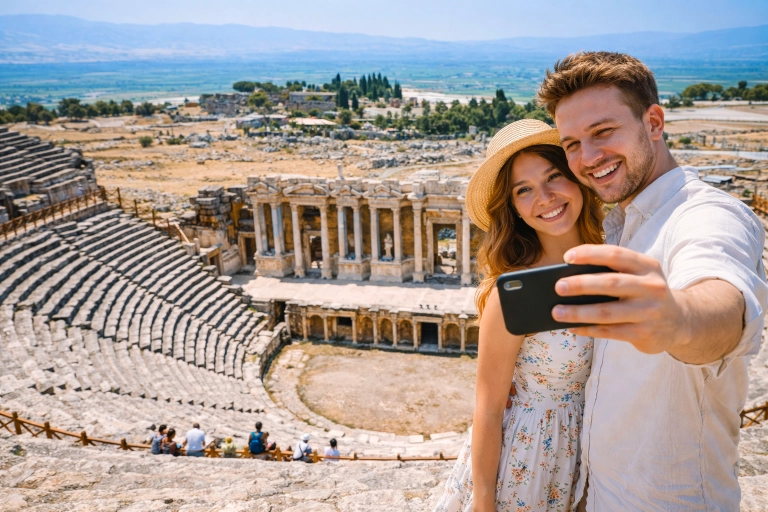
Izmir and Pamukkale Heritage Escape
Discover a 2 days Izmir and Pamukkale Heritage Escape from Ankara by flight with private guide. Visit Izmir Old Smyrna center, Konak Square, Kemeralti Bazaar, Kadifekale, Agora, Izmir Archaeological Museum, Pamukkale terraces, Hierapolis, and Cleopatra Pool.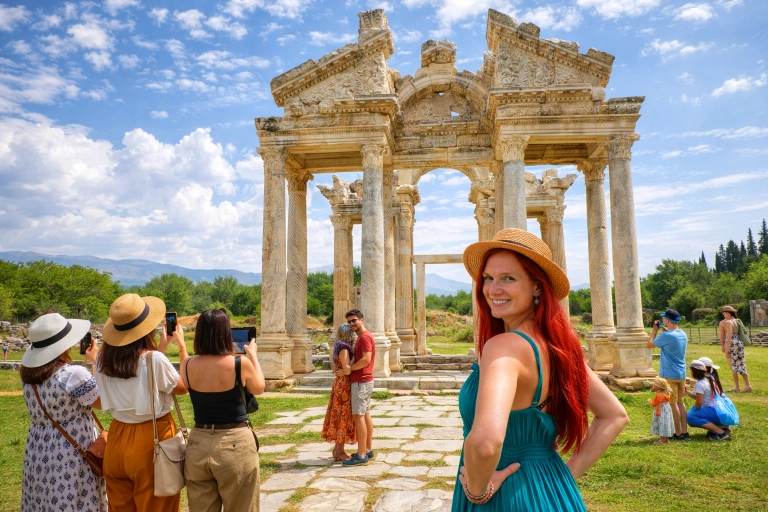
Aphrodisias and Pamukkale Heritage Journey
Discover a 2 days Aphrodisias and Pamukkale Heritage Journey from Ankara by flight with private guide. Visit Aphrodisias Ancient City, Aphrodisias Archaeological Museum, Pamukkale white terraces, Hierapolis Ancient Site, and Cleopatra Swimming Pool.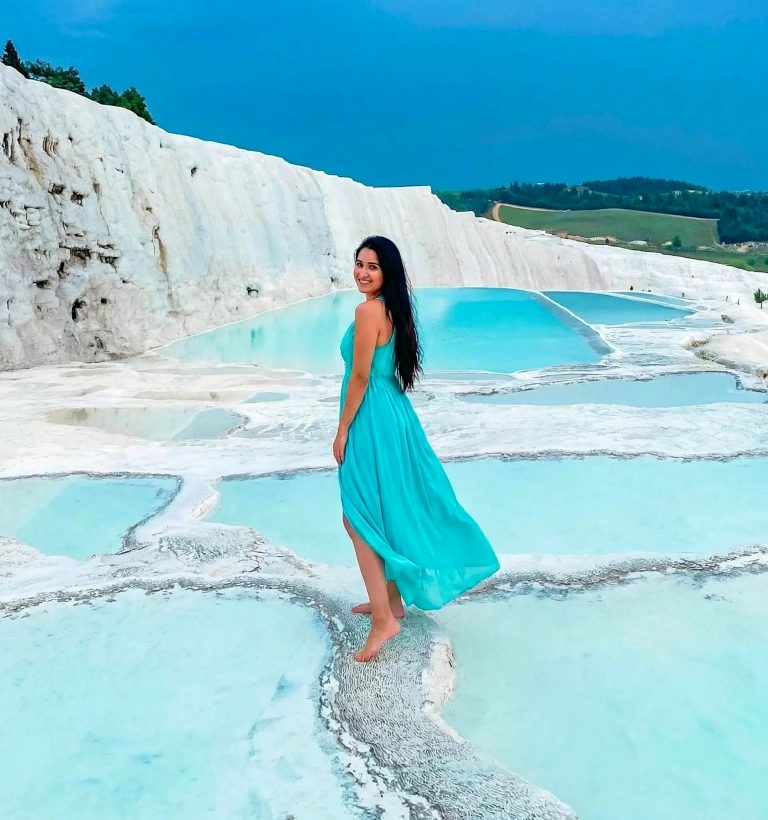
Ephesus and Pamukkale Heritage Journey
Discover a 2 days Ephesus and Pamukkale Heritage Journey from Ankara by flight with private guide. Visit Ephesus Ancient City, House of Virgin Mary, Temple of Artemis, Ephesus Museum, Pamukkale, Hierapolis, and Cleopatra Pool.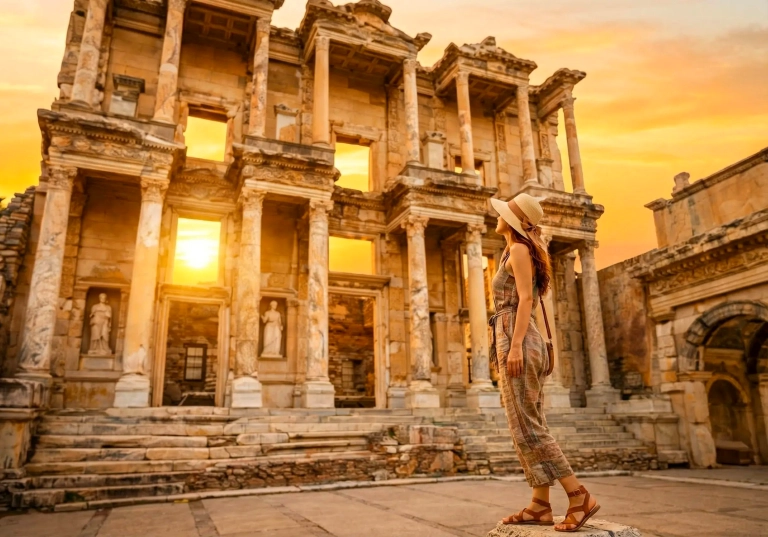
Ephesus and Aphrodisias Heritage Journey
Discover a 2 days Ephesus and Aphrodisias Heritage Journey from Ankara by flight with private guide. Visit Ephesus Ancient City, House of Virgin Mary, Temple of Artemis, Ephesus Archaeological Museum, Aphrodisias Ancient City, and Aphrodisias Archaeological Museum.
Ionian Cities Heritage Journey
Discover a 2 days Ionian Cities Heritage Journey from Ankara by flight with private guide. Visit Ephesus Ancient City, House of Virgin Mary, Temple of Artemis, Ephesus Archaeological Museum, Priene, Miletus, and Didyma Temple of Apollo.


