Biblical Konya and Listra Heritage Journey
Discover a 2 days Biblical Konya and Listra Heritage Journey from Istanbul by flight with private guide. Visit Iconium, Mevlana Museum, Alaaddin Hill, Karatay Madrasah, Konya Archaeological Museum, Catalhoyuk, Panorama Konya, Kilistra (Lystra), Sille, and Hagia Eleni Church.
Highlights
- Konya, one of Anatolia's major faith and culture centers linked to Mevlana tradition and early Christian routes
- Alaaddin Hill, Mevlana Museum, and Karatay Madrasah, core landmarks of Seljuk-Ottoman urban heritage
- Catalhoyuk, a globally significant Neolithic settlement revealing the earliest urban life layers
- Kilistra (Lystra), Sille, and Hagia Eleni Church, key biblical and early-Christian footprints in the Konya region
Biblical Konya and Listra Heritage Journey
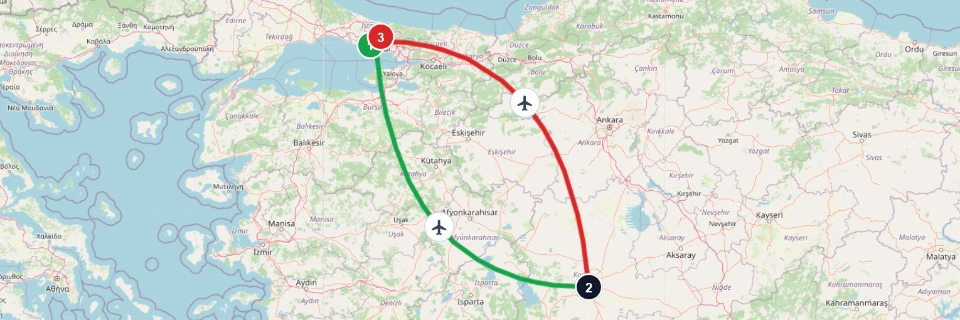
Discover a 2 days Biblical Konya and Listra Heritage Journey from Istanbul by flight with private guide. Visit Iconium, Mevlana Museum, Alaaddin Hill, Karatay Madrasah, Konya Archaeological Museum, Catalhoyuk, Panorama Konya, Kilistra (Lystra), Sille, and Hagia Eleni Church.
Itinerary
This itinerary is designed as a complete Biblical Turkey Konya and Listra tour for travelers who want faith history and Anatolian heritage in two days. The route begins with a flight from Istanbul to Konya and continues with a guided city and countryside program. Guests searching an Iconium St Paul route from Istanbul can follow this schedule because all listed highlights are included directly. Day one focuses on Konya center landmarks such as Alaaddin Hill, Mevlana Museum, Karatay Madrasah, and archaeological collections linked to Catalhoyuk. Day two continues with Kilistra Lystra ancient city private tour stops, Sille village, and Hagia Eleni Church.
Day one is ideal for visitors planning a Mevlana Museum and Karatay Madrasah visit with clear historical context. Konya city layers combine Seljuk, Ottoman, and early Christian references tied to Iconium traditions. Konya Archaeological Museum and Panorama Konya support the route with visual and material evidence from regional civilizations. Catalhoyuk context adds deeper chronological perspective to the city program without leaving the official itinerary scope. This section forms a strong Catalhoyuk and Konya archaeological museum heritage foundation.
Day two is centered on the biblical and early Christian landscape around Konya. This part suits travelers looking for a Sille village and Hagia Eleni Church sequence with guide-led interpretation. Kilistra (Lystra) adds one of the most important mission-era references associated with Saint Paul journeys in Anatolia. Sille and Hagia Eleni complete the day with village history and Byzantine church architecture in a compact route. The full package works as a practical 2 days Konya biblical heritage package from Istanbul.
-
Day 1
Konya Heritage and Mevlana Route
D
Pickup in Istanbul and transfer to departure airport.
Day one starts with private transfer for Konya-bound domestic flight.
Flight from Istanbul to KonyaDomestic flight segment to Konya.
Flight segment connects Istanbul departure with Konya heritage route.
Transfer to Konya City CenterRoad transfer to first Konya landmarks.
Transfer reaches historic center where Seljuk and Mevlana sites are concentrated.
Alaaddin Hill and Seljuk CoreWalk around Konya's historic hill and central urban core.
Alaaddin Hill marks one of Konya's oldest settlement and Seljuk focal points.
The route through Alaaddin Hill and the Seljuk core gives one of the clearest introductions to Konya as a medieval capital shaped by power, learning, and religious life. This is where the city's Seljuk memory feels most concentrated in spatial form. The hill anchors that older identity while the surrounding core helps you see how it extended into the urban fabric around it. This is not only a scenic or symbolic stop. It is one of the keys to reading Konya historically.
As you walk the area, notice how the atmosphere differs from later Ottoman or modern urban centers. Travelers often appreciate this route because it gives the city a strong historical center before more specific monuments are visited. The stop also helps make the Seljuk layer of Anatolian history feel more concrete and place-based. It rewards both orientation and reflection. Konya becomes much clearer once this core is understood.
Mevlana Museum and MausoleumGuided visit to Mevlana's dervish complex and tomb area.
Mevlana Museum preserves one of Anatolia's most influential Sufi and literary legacies.
The Mevlana Museum and Mausoleum is one of the most meaningful cultural and spiritual landmarks in Anatolia, preserving the legacy of Jalal al-Din Rumi in the city most closely associated with his life and thought. The complex feels reverent without being distant, and even first-time visitors sense that this is far more than a museum in the ordinary sense. It is a place where literature, music, devotion, and memory all meet. The atmosphere encourages a slower and more reflective kind of attention.
As you move through the site, the details of the dervish tradition and Konya's spiritual heritage begin to come together in a very tangible way. The mausoleum, the museum displays, and the rhythm of the space help explain why Mevlana remains such a powerful figure across cultures. Even for travelers without a religious focus, the calm dignity of the complex is deeply affecting. It is one of those visits that stays with you long after the route continues.
Karatay MadrasahVisit Seljuk tile and madrasa heritage complex.
Karatay Madrasah reflects high-level Seljuk stone and tile craftsmanship traditions.
Karatay Madrasah reflects the same Seljuk elegance and artistic discipline that make Konya's medieval heritage so rewarding. Even when the title appears with this spelling variant, the stop still offers an encounter with tile-rich scholarship, refined decoration, and the intellectual side of the city's past. The building feels cultured, concentrated, and unmistakably tied to Konya's learned urban tradition. That gives it a distinct identity among the route's many religious and archaeological sites.
The experience is especially useful for travelers who want to understand the Seljuk city as more than a backdrop to spiritual history. Karatay helps show how beauty, scholarship, and craftsmanship once worked together in Konya's urban culture. The scale may be intimate, but the historical signal is strong. Karatay Madrasah deepens the artistic dimension of the Konya route.
Konya Archaeological Museum AreaStop for archaeological context of regional civilizations.
Museum collections provide context for Neolithic to Classical periods of inner Anatolia.
The Konya Archaeological Museum area provides useful historical grounding for understanding central Anatolia beyond its more famous sacred and Seljuk landmarks. The museum context brings together material from long chronological layers, helping visitors place Konya within a much wider story of settlement, belief, and regional development. It is especially valuable because it turns the city from a symbolic stop into a documented historical landscape. The area gives the route intellectual depth.
What makes a museum stop like this rewarding is the way it sharpens everything else you have already seen. Objects, inscriptions, and archaeological context help bridge the gap between abstract timelines and physical evidence. In a city as layered as Konya, that perspective matters. The result is a quieter stop, but one that strengthens the whole itinerary.
Panorama Konya ViewpointPanoramic stop across Konya urban plain.
Panorama point frames the city's flat Anatolian geography and historic expansion.
The Panorama Konya viewpoint helps you understand the city through its setting on the wide Anatolian plain. From here, Konya appears less as a cluster of monuments and more as a long historical center shaped by open land, movement, and spiritual significance. The flat geography gives the city a distinct visual character compared with Turkey's hillier historic towns. It is a useful stop because it explains scale as much as scenery.
What makes the panorama rewarding is the broader perspective it adds to the heritage route. After visiting Seljuk and Mevlana-related sites, the view connects those landmarks to the larger urban and geographic frame in which they belong. The city feels grounded, expansive, and unmistakably central Anatolian. That sense of place makes the rest of Konya easier to read and remember.
Catalhoyuk Ancient SiteGuided visit to one of the world's earliest urban settlements.
Catalhoyuk is a globally significant Neolithic site documenting early community life.
Catalhoyuk Ancient Site takes travelers much further back than most stops on this route, into one of the world's earliest major settled communities. That alone makes the visit feel special, because you are not stepping into the classical or biblical world, but into a prehistoric landscape tied to the beginnings of organized communal life. The site asks for a different kind of imagination, one focused on origins rather than monumental empire. It is intellectually fascinating and quietly profound.
What makes Catalhoyuk memorable is the scale of what it represents in human history. The settlement helps explain how people lived together, built space, and formed early social patterns long before the better-known civilizations of later Anatolia. For travelers, this can be one of the moments when the route's historical timeline suddenly becomes much deeper. Catalhoyuk is a stop that rewards curiosity about how early human communities first took shape.
Lunch Break in Konya RouteMidday meal break during route (not included).
Lunch break is scheduled and paid directly by guests.
A lunch break on the Konya route gives the day a practical and satisfying pause in one of Anatolia's great historical regions. By this stage, the route has already built a strong mix of biblical, Seljuk, and city-based heritage, so the meal becomes a useful way to step briefly into Konya's everyday rhythm. The setting tends to feel more grounded and less touristic than coastal stops. That often makes the break more memorable.
Konya is a very good place for hearty central Anatolian food. Etli ekmek is the classic local choice when available, but grilled meats, soups, tandir-style dishes, and simple bakery items also fit the route very well. A filling lunch suits the pace of this region far better than anything too light. The stop adds real local flavor to the day.
Konya Hotel Check-in and DinnerOvernight stay with included dinner.
Day one concludes with hotel check-in and included dinner in Konya.
-
Day 2
Lystra and Sille Biblical Route
B
Start day-two biblical route after breakfast.
Morning departure begins Lystra and Sille heritage route.
Kilistra (Lystra) Ancient SettlementGuided visit to biblical-era Lystra area.
Kilistra is associated with early Christian travel traditions and rock-cut settlement forms.
Kilistra, associated with ancient Lystra, brings together biblical memory and central Anatolia's rock-cut settlement tradition in a setting that feels quieter and less visited than many better-known sacred routes. The site is especially meaningful for travelers following the footsteps of St. Paul, yet it also stands on its own as a landscape shaped by adaptation, shelter, and spiritual history. Carved spaces and the broader terrain work together to create a place that feels both historical and atmospheric. It is an understated but rewarding stop.
What makes Kilistra memorable is the way sacred tradition and physical environment remain closely connected. The site does not overwhelm with grand ruins, but instead invites a more reflective reading of biblical movement through Anatolia. That quieter character often makes it easier to imagine the deeper layers of travel, preaching, and settlement linked to the region. It is a place where significance emerges through patience rather than spectacle.
Sille Historic VillageWalk through historic Sille quarter and heritage lanes.
Sille preserves layered Greek-Anatolian settlement fabric and early Christian memory.
Sille Historic Village reveals a distinctive side of the Konya region, where layered settlement history survives through lanes, houses, and long-standing Christian associations. The village feels calm and deeply rooted, offering a slower and more reflective experience than larger urban heritage stops. It is the kind of place where architecture and atmosphere do most of the storytelling. That gives the visit a special intimacy.
What makes Sille especially rewarding is its sense of continuity. You can feel how Greek-Anatolian and broader central Anatolian traditions shaped the same settlement across time. The village is not only picturesque, but historically eloquent in a quiet way. For travelers following inland biblical or cultural routes, it becomes one of the most resonant stops near Konya.
Hagia Eleni ChurchVisit one of Sille's most important early-Christian churches.
Hagia Eleni Church is one of the region's principal Byzantine worship monuments.
Hagia Eleni Church is one of Sille's most evocative Christian monuments, linking this quiet historic village to the wider Byzantine world of central Anatolia. The church stands out not only for its age and religious importance, but also for the way it sits within Sille's layered settlement landscape of stone houses, slopes, and narrow routes. Visiting here gives you a different side of Konya, one that feels intimate, spiritual, and surprisingly textured. The setting carries a calm dignity that suits the monument well.
As you explore, it helps to see the church as part of a broader story of coexistence and movement through Anatolia. Sille preserves traces of communities whose lives were shaped by faith, trade, and geography over many centuries. The church rewards quiet observation, especially in its relationship to the village around it. Rather than overwhelming with scale, it leaves its mark through atmosphere, continuity, and historical depth.
Lunch Break in Sille/KonyaMidday meal break during route (not included).
Lunch break is scheduled and paid directly by guests.
A lunch break in Sille or Konya works beautifully because the route moves between small-scale historic atmosphere and one of Anatolia's great cultural cities. After churches, village lanes, and Seljuk landmarks, the meal gives you a chance to experience the region through everyday life as well as heritage. The pace here tends to be grounded and unhurried. That makes the break especially welcome.
Konya's food culture is one of the clearest regional identities on the route, and this is a good place to enjoy it. Etli ekmek, soups, grilled dishes, and satisfying local specialties are all strong options, especially if you want something authentic and filling. The stop suits a meal that is generous rather than decorative. It helps the route feel complete on a more human level.
Transfer to Konya AirportTransfer to airport for Istanbul return flight.
Transfer is arranged according to booked domestic departure schedule.
Flight from Konya to IstanbulDomestic return flight to Istanbul.
Flight segment completes intercity return after Konya-Lystra route.
Istanbul Arrival and Final Drop-offArrival in Istanbul and service completion.
Tour services conclude with final drop-off at designated point.
Got a question about this tour?
Reach out to our travel experts.
Informations
-
What's Included
- 1 night accommodation with breakfast and dinner (4-star or special-class boutique category)
- Private deluxe A/C VIP vehicle for all ground transfers and tours
- Pickup from your hotel or meeting point
- 4 airport transfers as listed in itinerary
- Drop-off to your hotel or meeting point
- Parking fees for listed route locations
- Private professional licensed tour guide
- Private tour operation only for your group
- Local taxes
-
What's Excluded
- Museum and site admission fees
- Personal expenses
- Lunches and beverages
- Domestic flight tickets unless explicitly added to booking
- Gratuities for guide and driver
-
Entrance Fees
- Entrance fees are not included and are paid directly on site according to current official rates.
-
Travel Tips
- Wear comfortable walking shoes and seasonal layers; Konya routes include museum floors
- historic streets
- and archaeological-site walking sections.
-
Note
- Route timing may vary by domestic flight schedule
- museum opening hours
- and local road conditions between Konya center and outlying heritage points.
Your Peace of Mind Options
Cancellation Policy
A transparent overview of applicable fees.
Customer Comments - Tripadvisor Write A Review!
Customer Comments - Tripadvisor



Tour Reminder!
You can create a reminder for yourself for this tour. We will send you a reminder e-mail/sms about this tour on the date you specify.
FAQs
-
What does the 2 Days Konya and Lystra Biblical Heritage Tour include?
- Private tour operation only for your group
- Private professional licensed tour guide
- Private deluxe A/C VIP vehicle for all ground transfers and tours
- Pickup and drop-off at your hotel or meeting point
- 4 airport transfers as listed in the itinerary
- Parking fees for listed route locations and local taxes
- 1 night accommodation with breakfast and dinner (4-star or special-class boutique category)
-
Are domestic flight tickets included between Istanbul and Konya?
- No. Domestic flight tickets are excluded unless explicitly added to your booking
- The itinerary is planned with flights for timing efficiency, but inclusion depends on the selected option
-
What is covered on Day 1 (Konya heritage and Mevlana route)?
- Flight from Istanbul to Konya
- Alaaddin Hill and Seljuk core
- Mevlana Museum and mausoleum
- Karatay Madrasah
- Panorama Konya viewpoint
- Catalhoyuk ancient site
- Overnight in Konya with dinner
-
What is covered on Day 2 (Lystra and Sille biblical route)?
- Kilistra (Lystra) ancient settlement area
- Sille historic village
- Hagia Eleni Church
- Transfer to Konya Airport and flight back to Istanbul
- Istanbul arrival and final drop-off
-
Is this a private tour?
- Yes. It is operated privately for your group with a private guide and VIP vehicle
- Pace can be adjusted within the operational route
-
Are entrance fees included?
- No. Museum and site admission fees are excluded
- Please plan budget for museums and sites visited in Konya, Catalhoyuk, and Sille area
-
Are lunches and beverages included?
- No. Lunches and beverages are excluded
- Hotel breakfast and dinner are included for the overnight stay
-
Does this itinerary include a whirling dervish ceremony?
- This route focuses on Konya heritage and biblical footprints (Lystra and Sille)
- If you want a ceremony option, please confirm availability and timing in advance
-
How physically demanding is the itinerary?
- Light to moderate walking in city heritage sites
- Outlying heritage points can have uneven ground and limited shade
-
What is not included in the price?
- Museum and site admission fees
- Lunches and beverages
- Personal expenses
- Domestic flight tickets unless explicitly added to booking
- Gratuities for guide and driver
General FAQs
-
What currency is used in Turkey?
Turkey uses the Turkish Lira (TRY).
- Cards are widely accepted in cities and tourist areas, but cash is still useful for small purchases.
- ATMs are common. Exchange offices and banks are also available.
-
Can I pay by credit card in Turkey?
In most restaurants, hotels, and shops you can pay by card.
- For markets, small shops, taxis, and tips, carrying some cash is recommended.
- Let your bank know you are traveling to avoid card blocks.
-
Is Turkey safe for tourists?
Turkey is generally safe for visitors, especially in main tourist areas.
- As in any destination, watch out for pickpockets in crowded places.
- Use licensed taxis/transport where possible and keep valuables secure.
-
What should I wear when visiting mosques in Turkey?
Dress modestly when entering mosques.
- Shoulders and knees should be covered.
- Women may be asked to cover their hair.
- Shoes are usually removed at the entrance.
-
Do I need a visa to visit Turkey?
Visa requirements depend on your nationality.
- Please check the latest rules from official sources (consulate/embassy or the official e-visa portal) before travel.
-
What is the best time to visit Turkey?
Spring and autumn are popular because temperatures are usually milder.
- Summer can be hot on the coast and inland.
- Winter is quieter and can be great for cities and some regions.
-
Will English be enough in Turkey?
Turkish is the official language. In tourist areas, English is commonly spoken.
- Learning a few basic Turkish words is appreciated and can help outside major areas.
-
What power plug is used in Turkey?
Turkey typically uses Type C and Type F plugs (220V, 50Hz).
- If your devices use a different plug type, bring a travel adapter.
-
Is tap water safe to drink in Turkey?
In many places, visitors prefer bottled water.
- Hotels and restaurants usually provide bottled water easily.
-
Is tipping expected in Turkey?
Tipping is common and appreciated for good service.
- In restaurants, rounding up or leaving a small amount is typical.
- For guides and drivers, tips are at your discretion based on satisfaction.
-
Do I need to carry my passport in Turkey?
We recommend keeping your passport safely in your hotel and carrying a copy (photo or printed) when out.
- Some venues may request an ID; your guide can advise for your route.
-
Do museums and sites have weekly closure days in Turkey?
Opening hours can change by season and some venues may have weekly closure days.
- We recommend checking the latest opening hours close to your travel date.
- Starting earlier in the day helps to avoid crowds at popular sites.
-
What are the emergency numbers in Turkey?
Dial 112 for emergencies (medical, police, fire and other urgent situations).
- 112 is a unified emergency line in Turkey.
- If you do not speak Turkish, try English and share your location clearly.
-
How do I get from airports to the city in Turkey?
Options depend on the city, but common choices are:
- Official airport taxi
- Airport shuttles/buses
- Metro/train (available in some cities)
- Pre-booked private transfers
If you arrive late at night or with luggage, a pre-booked transfer can be the easiest option.
-
Are taxis and ride-hailing apps reliable in Turkey?
Use licensed taxis and make sure the meter is used (unless a fixed airport fare is confirmed).
- In some cities, taxi-hailing apps can help you find a taxi more easily.
- If possible, keep small cash and ask for a receipt when needed.
-
How do I buy a SIM/eSIM in Turkey?
You can buy SIM/eSIM options from mobile operators and official stores.
- Bring your passport for registration.
- For longer stays, foreign phones may require device registration (IMEI) to keep working on local networks.
-
What are typical opening hours in Turkey?
Opening hours vary by city and season.
- Many shops and malls stay open late, especially in tourist areas.
- Some museums may close earlier and may have weekly closure days.
- During national or religious holidays, hours can change.
-
How do pharmacies work in Turkey (duty pharmacy)?
Pharmacies are called Eczane. Outside normal hours, there is usually a rotating on-duty pharmacy (Nöbetçi Eczane).
- Regular pharmacies typically post the on-duty pharmacy information on the door/window.
- Your hotel reception can also help you find the nearest one.
Let's Customize Your Trip!
Prepare your own tour plan!
Good to Know
-
Good to know: confirm flight inclusion when booking
- Flights are excluded unless explicitly added
- Check your confirmation for the exact option details
-
Good to know: plan cash for tickets and lunches
- Entrance fees are excluded
- Lunches and beverages are excluded
-
Good to know: bring sun protection for outlying sites
- Catalhoyuk and Lystra area visits can be exposed
- Hat, sunscreen, and water improve comfort
-
Good to know: dress respectfully at spiritual and heritage sites
- Konya is an important spiritual center
- Modest clothing is a good choice for museum and heritage visits
-
Good to know: route timing may change with site hours
- Museum opening hours can change seasonally
- Your guide will optimize the route order on the day
Want to read it later?
Download this tour’s PDF brochure and start tour planning offline
Similar Tours

Gallipoli ANZAC Dawn Service Tour
Join a 1 Night 2 Days Gallipoli ANZAC Dawn Service Tour from Istanbul by private car. Attend ANZAC Day Dawn Service at Anzac Cove and continue to Australian or New Zealand memorial services on Gallipoli Peninsula.
Ertugrul Ghazi Legacy and Bursa Heritage
Join a 2 day Ertugrul Ghazi Legacy and Bursa Heritage Tour from Istanbul by private A/C VIP vehicle. Visit Bilecik and Sogut shrines including Sheikh Edebali and Ertugrul Gazi, continue to Inegol for Turgut Alp, and explore Bursa highlights such as Ulu Mosque, Koza Han, Green Tomb, Osman-Orhan tombs
Izmir and Ephesus Heritage Flight Escape
Join a 2 day Izmir and Ephesus Heritage Flight Escape from Istanbul by domestic flight and private VIP vehicle. Discover Izmir city highlights such as Konak, Kemeralti, Kadifekale, Agora, and Izmir Archaeological Museum, then visit Ephesus Ancient City, House of Virgin Mary, Temple of Artemis, and E
Izmir and Sardes Heritage Flight Journey
Join a 2 day Izmir and Sardes Heritage Flight Journey from Istanbul by domestic flight and private VIP vehicle. Explore Old Smyrna highlights in Izmir, then visit Sardes Archaeological Site including the Gymnasium, Jewish Synagogue, and the Temple of Artemis.
Izmir and Pamukkale Heritage Flight Escape
Join a 2 day Izmir and Pamukkale Heritage Flight Escape from Istanbul by domestic flight and private VIP vehicle. Explore Old Smyrna landmarks in Izmir, then visit Pamukkale white travertines, Cleopatra Pool, and Hierapolis Ancient Site with a private licensed guide.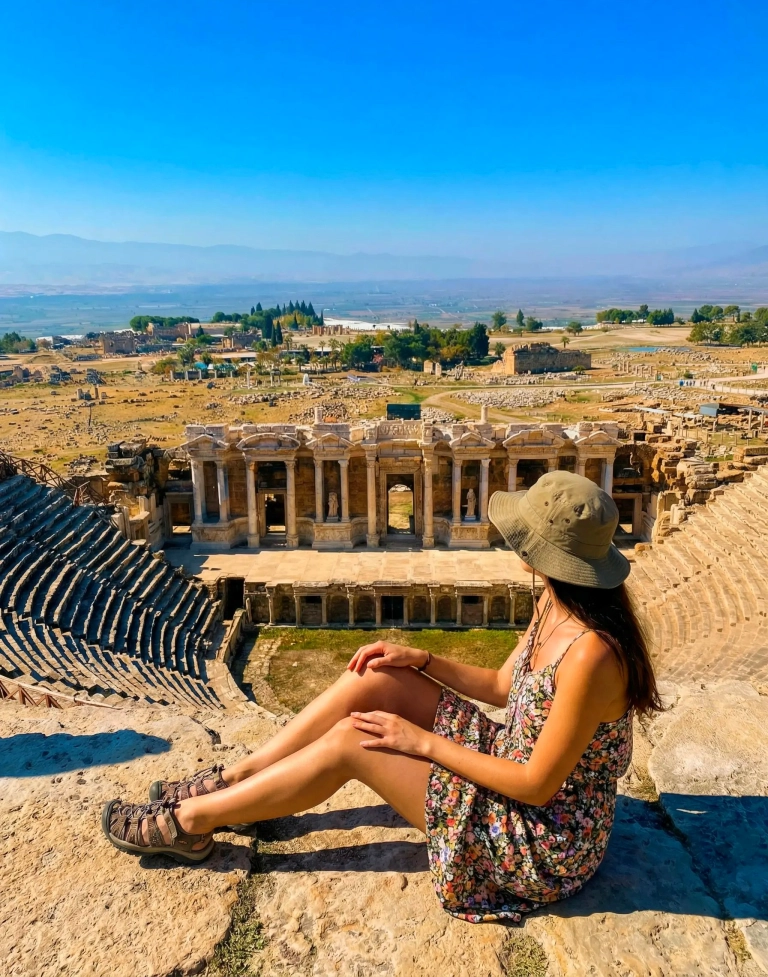
Aphrodisias and Pamukkale Heritage Flight Escape
Join a 2 day Aphrodisias and Pamukkale Heritage Flight Escape from Istanbul by domestic flight and private VIP vehicle. Visit Aphrodisias Ancient City and Aphrodisias Archaeological Museum, then continue to Pamukkale white terraces, Cleopatra Pool, and Hierapolis Ancient Site.