
Cappadocia Heritage and Valleys Tour

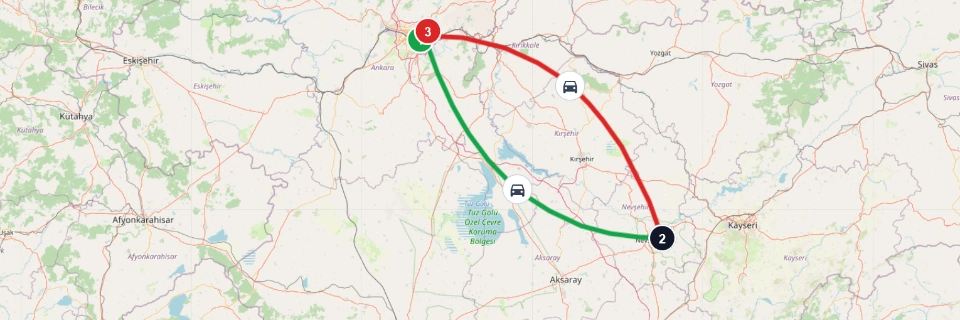
Discover Cappadocia in 2 days from Ankara by train with private guiding through Goreme Open Air Museum, Apple and Serpent churches, Kaymakli Underground City, and iconic valleys.
Highlights
- Tuz Golu and Avanos, Anatolia's salt-lake panorama and pottery-town culture stop
- Goreme Open Air Museum, one of Cappadocia's most important monastic and fresco heritage zones
- Apple, Tokali, Yilanli, and chapel clusters, key churches reflecting early Christian cave architecture
- Kaymakli Underground City, a multi-level subterranean settlement system of historic Cappadocia
- Pasabagi, Devrent, and Pigeon Valley, signature fairy chimney and erosion-formed valley landscapes
- Uchisar, Three Beauties, and Ortahisar, iconic panoramic points defining Cappadocia's skyline
Cappadocia Heritage and Valleys Tour
Discover Cappadocia in 2 days from Ankara by train with private guiding through Goreme Open Air Museum, Apple and Serpent churches, Kaymakli Underground City, and iconic valleys.
Itinerary
This 2 days Cappadocia tour from Ankara combines historical churches, underground settlements, and volcanic landscapes in one private route. The first day includes Avanos and a detailed visit to Goreme Open Air Museum, one of the most important monastic complexes in the region. You explore major rock cut chapels and churches including Apple Church, Serpent Church, Tokali Church, Santa Barbara Chapel, and Saint Basil Chapel. The itinerary is designed to show both artistic fresco traditions and the religious life of early Cappadocia communities. For travelers seeking a compact Cappadocia tour by train, this route offers strong depth and clear structure.
Day two focuses on settlement history and natural viewpoints across the valleys of Cappadocia. At Kaymakli Underground City, you observe how people created protected living spaces below ground during earlier periods. The route continues through Pasabagi, Devrent Valley, and Pigeon Valley, each known for different fairy chimney formations and geological patterns. You also visit Uchisar area, Three Beauties, and Ortahisar Castle points to complete the panoramic perspective of the region. This creates a balanced Cappadocia valleys and underground city tour in only two days.
Highlights such as Salt Lake and Kizilirmak corridor context add extra regional identity to the journey. Because the service is private, timing can be adjusted for photo stops, walking pace, and focused explanations at key sites. The program stays aligned with the listed Cappadocia itinerary and avoids unrelated destinations. It is suitable for first time visitors who want major highlights without losing historical context. Overall, this is a practical private Cappadocia heritage package departing from Ankara.
-
Day 1
Goreme Open Air and Avanos Route
D
Pickup in Ankara and departure for Cappadocia route.
Day one starts with private transfer from Ankara toward Cappadocia region.
Tuz Golu (Salt Lake)Photo stop at Turkey's major central salt lake basin.
Tuz Golu provides one of central Anatolia's broadest salt-pan landscapes.
The Tuz Golu (Salt Lake) stop offers one of the broadest and most visually unusual landscapes in central Anatolia. The salt-pan surface, low horizon, and changing light create a scene that feels almost dreamlike in its simplicity. It is a useful contrast to the carved valleys and rock-cut heritage of Cappadocia, reminding you that the region's beauty is not limited to one terrain type. Even a short stop here can feel surprisingly memorable.
What makes Tuz Golu so effective is the purity of the setting. There is very little visual clutter, which allows color, reflection, and scale to dominate the experience. That simplicity can make the lake feel almost abstract, especially under bright light. For travelers crossing the Anatolian plateau, it becomes one of the clearest expressions of the region's vast openness.
Arrival in AvanosStop in pottery town on Kizilirmak river corridor.
Avanos is one of Cappadocia's key artisan settlements known for ceramic traditions.
Arrival in Avanos introduces you to one of Cappadocia's most appealing town settings, where the Kizilirmak river corridor and long pottery tradition give the stop a different character from the region's valleys and rock churches. Avanos feels more rooted in artisan life and local continuity than in dramatic geology alone. That contrast makes it a valuable part of the route. It shows another face of Cappadocia. The town has a warmer, more lived-in rhythm that many travelers appreciate immediately.
As you arrive, notice the calmer street atmosphere and the sense that craft still matters here in a visible way. Travelers often enjoy Avanos because it balances regional heritage with a townscape that feels active and human in scale. If there is time, it is worth paying attention to ceramics, local workshops, and the relationship between settlement and river. The stop works through texture rather than spectacle. Avanos gives Cappadocia cultural depth as well as scenery.
Goreme Open Air MuseumGuided visit through the monastic rock-cut complex.
Goreme Open Air Museum is one of the region's most important Christian fresco heritage sites.
Goreme Open Air Museum is one of the places where Cappadocia's landscape and spiritual history come together most clearly. Carved directly into soft volcanic rock, the churches, chapels, and monastic spaces show how communities adapted the land into a sacred environment filled with faith, artistry, and daily life. The frescoes inside many of the cave churches add color and emotion to a setting that is already visually unforgettable. It is easy to understand why this site is considered one of the region's essential stops.
The visit becomes especially rewarding when you slow down and let the details emerge from the stone. Dark interiors, painted walls, worn steps, and quiet courtyards create a mood that feels very different from the dramatic valleys outside. Instead of seeing the museum only as a collection of monuments, try to experience it as a lived monastic world shaped by devotion and isolation. For travelers exploring Cappadocia, Goreme Open Air Museum often provides the historical depth that makes the entire landscape feel richer and more meaningful.
Nuns and Priests Monastery AreaVisit monastic cave sections within museum zone.
These monastic structures illustrate communal religious life in early Cappadocia.
Nuns and Priests Monastery Area adds an especially human dimension to Cappadocia's monastic heritage. Instead of focusing only on formal church interiors, this section helps you imagine how religious communities actually lived, moved, and organized daily life within the carved landscape. The spaces feel practical as well as spiritual, which makes them very revealing. It is a stop where devotion becomes easier to picture as lived routine.
What makes the area memorable is the way it deepens the Goreme complex beyond its most famous frescoed highlights. Here, monastic life becomes more tangible through carved rooms, communal arrangements, and the traces of disciplined shared existence. Travelers interested in early Christian life often find this as compelling as the larger churches. The monastery area gives the Cappadocian religious landscape a stronger human texture.
Apple ChurchVisit one of the most notable frescoed cave churches.
Apple Church preserves important iconographic cycles in the Goreme complex.
Apple Church is one of the cave churches that helps reveal how rich and varied Goreme's religious landscape really is. The church may not rely on monumental size alone, but it stands out through its fresco program, carved form, and role within the broader spiritual world of Cappadocia. These smaller sacred spaces often leave strong impressions precisely because they feel intimate and concentrated. Apple Church is one of those examples.
What makes the stop memorable is the balance between devotional atmosphere and artistic detail. The painted cycles help the church feel alive with narrative and ritual meaning rather than just architectural curiosity. For travelers moving through the Goreme complex, this kind of church adds nuance and texture to the larger monastic story. Apple Church rewards patient looking and a quieter kind of attention.
St. Barbara ChapelVisit chapel known for symbolic red-ochre motifs.
St. Barbara Chapel is notable for geometric and symbolic painted programs.
St. Barbara Chapel is one of those smaller Cappadocian sacred spaces that rewards close attention. The chapel may not have the scale of the most famous cave churches, but its symbolic and geometric painted program gives it a distinctive atmosphere and helps it stand apart within the region's Christian heritage. The compact setting makes the encounter feel intimate and focused. It is a place where detail matters more than monumentality.
What makes the chapel memorable is the sense of early devotional expression preserved in a modest carved interior. The painted motifs and cave architecture together create an experience that feels personal rather than grand. For travelers interested in the diversity of Cappadocia's rock churches, this stop adds valuable nuance to the route. St. Barbara Chapel shows how even smaller sacred spaces in the region can carry real emotional and artistic presence.
St. Basil ChapelVisit chapel linked to early Cappadocian church heritage.
St. Basil Chapel reflects early Christian religious architecture in cave-carved form.
The St. Basil Chapel adds an intimate early Christian dimension to the Cappadocia route, showing how even small carved sanctuaries can carry strong historical and spiritual presence. The chapel is quieter than the major open-air museum zones, which makes it especially rewarding for visitors who enjoy detail and atmosphere. Its compact scale invites close attention to the relationship between carved space and devotion. That intimacy is part of its charm.
What makes the chapel memorable is the way it represents a whole tradition in a very focused form. You begin to see how faith was adapted to the rock landscape not only in grand complexes, but also in smaller sacred spaces shaped for prayer and local use. This gives the route a more nuanced understanding of Cappadocia's religious world. The stop feels modest, but culturally rich.
Tokali ChurchVisit one of Cappadocia's largest and best-preserved cave churches.
Tokali Church is a major reference point for Byzantine fresco programs in Cappadocia.
Tokali Church is one of the most important cave churches in Cappadocia, and it often leaves a stronger impression than visitors expect. The scale of the interior, the depth of its fresco program, and the weight of its Byzantine heritage make the space feel spiritually and artistically significant at the same time. This is not a minor chapel tucked into the landscape, but a major sacred monument carved into it. The atmosphere inside is often one of the highlights of a Cappadocia heritage route.
What makes Tokali especially memorable is the richness of its painted surfaces and the way the architecture guides your attention through them. Even travelers who have already seen other cave churches often notice that this one feels more complete and more monumental. The stop rewards slow observation rather than a quick glance. Tokali Church is one of the places where Cappadocia's Christian past becomes most vivid and most beautiful.
Yilanli (Serpent) ChurchVisit church known for serpent-themed fresco narratives.
Yilanli Church is recognized for rare iconographic scenes in its painted interior.
Yilanli Church, also known as the Serpent Church, is one of Cappadocia's more symbolically striking cave churches, remembered especially for its unusual painted imagery. The church stands out not because it is large, but because its iconographic character gives the space a strong personality. This is the kind of stop where a single theme can make the whole interior feel more vivid. It adds welcome variety to the region's sacred-route experience. The church is small, but visually distinctive.
As you take in the painted scenes, pay attention to how symbolic motifs can shape the emotional atmosphere of a space. Travelers often enjoy Yilanli because it reveals a less standardized side of Cappadocia's religious art. It also pairs well with other churches in the route by showing that not every carved chapel followed the same visual logic. The stop is brief, but it expands the story of the region. Yilanli remains memorable through character rather than scale.
Lunch Break in GoremeMidday meal break during route (not included).
Lunch break is scheduled and paid directly by guests.
A lunch break in Goreme sits naturally within the Cappadocia route, where the dramatic landscape gives way for a moment to village atmosphere and local hospitality. After valleys, churches, or viewpoints, a midday meal here usually feels well timed. The region's food culture is shaped by Central Anatolian traditions, which often means dishes that are warm, practical, and satisfying. That suits a sightseeing day in Cappadocia very well. Lunch here can be simple but still very local.
If you can choose, pottery kebab, gözleme, lentil soup, testi dishes, mantı, and grilled meats are all good regional options depending on where you stop. Cappadocia also suits slower lunches with bread, yogurt, and home-style cooking rather than something rushed. Travelers often appreciate meal breaks here because they add warmth and comfort to a landscape-focused day. Goreme is a good place to let the route pause without losing character. The meal works best when it feels regional and unfussy.
Cappadocia Hotel Check-inOvernight stay with included dinner.
Day one concludes with hotel check-in and included dinner in Cappadocia region.
-
Day 2
Underground City and Valleys Route
B
Start day-two route after breakfast.
Morning departure begins underground city and valley itinerary.
Kaymakli Underground CityVisit one of Cappadocia's major multi-level underground settlements.
Kaymakli reveals the defensive and communal subterranean architecture of the region.
Kaymakli Underground City gives you one of Cappadocia's most unusual and immersive experiences. Descending into its narrow passages and carved chambers, you begin to understand how entire communities once organized shelter, storage, movement, and defense beneath the surface of the land. The engineering feels remarkably practical, but the atmosphere is what most visitors remember first. Cool air, low tunnels, and the sense of hidden life make the visit feel adventurous from the very first steps.
This is not just an underground shelter, but a complex system that reveals how people adapted creatively to uncertain times. As you move through the levels, it becomes easier to imagine families, supplies, animals, and religious life all being protected within this subterranean world. The experience is especially powerful because it feels so different from Cappadocia's open valleys and panoramic viewpoints above ground. For travelers who want a stronger sense of the region's human story, Kaymakli Underground City is often one of the most memorable stops on the route.
Pasabagi (Monks Valley)Visit fairy chimney clusters and monk-cell formations.
Pasabagi is one of the most iconic valley landscapes in Cappadocia.
Pasabagi (Monks Valley) offers one of the purest expressions of Cappadocia's fairy-chimney landscape. The valley is filled with distinctive rock forms that feel almost sculpted by intention, with mushroom-like shapes and tall cones turning the terrain into something strangely imaginative. It is one of those stops where the region's reputation becomes easy to understand at a glance. Even travelers who have seen other valleys often find Pasabagi especially memorable.
The charm of the place lies in the balance between surreal beauty and quiet atmosphere. You can enjoy it visually from a distance, but it becomes even more interesting when you walk among the formations and notice their scale and texture at ground level. The valley also carries a sense of calm that softens its dramatic appearance. Pasabagi is one of Cappadocia's essential stops because it feels both iconic and immersive at the same time.
Devrent ValleyWalk among uniquely shaped volcanic tuff formations.
Devrent Valley is known for natural rock forms resembling animal silhouettes.
Devrent Valley feels like Cappadocia at its most playful and surreal. The valley is famous for rock formations shaped by wind and time into forms that resemble animals, figures, and strange sculptures, so nearly every visitor starts seeing something different in the landscape. Unlike sites focused on churches or settlements, this stop is about imagination as much as history. The scenery has a dreamlike quality that makes even a short visit memorable.
What makes Devrent rewarding is the freedom to look slowly and let the shapes reveal themselves. One angle may look lunar and abstract, while another suddenly turns into a camel, a bird, or a giant stone silhouette. The soft volcanic terrain and open views also make it a very satisfying place for photography. For many travelers, Devrent Valley is where Cappadocia feels less like a normal region and more like a landscape invented for stories.
Uchisar CastleVisit panoramic castle-hill settlement point.
Uchisar offers one of the highest panoramic vantage points in Cappadocia.
Uchisar Castle gives you one of the most commanding panoramic experiences in Cappadocia. The rock citadel rises above the surrounding valleys like a natural watchtower, and once you reach the viewpoint, the region's tuff ridges, carved slopes, and layered settlements begin to spread out in a way that feels both beautiful and clarifying. It is the kind of stop that helps the wider geography suddenly make sense. The view is broad, clean, and deeply satisfying.
What makes Uchisar so memorable is the combination of altitude and sculptural form. The castle itself is already striking, but its real power comes from the perspective it offers over the landscape around it. This is often where travelers feel the full scale of Cappadocia rather than only its individual valleys. Uchisar works as both a landmark and an ideal final panorama stop.
Pigeon Valley ViewpointPhoto stop overlooking carved pigeon houses and valley corridor.
Pigeon Valley reflects traditional tuff-carved utility structures and broad scenic views.
Pigeon Valley Viewpoint gives one of the clearest views of how agriculture, settlement, and landscape once worked together in Cappadocia. From here, carved dovecotes, tuff ridges, and broad valley lines all become visible in one frame, helping the region feel both scenic and practical at the same time. The stop is rewarding because it reveals function within beauty. It is not only a lovely panorama, but an explanatory one.
The viewpoint is especially satisfying for travelers who want more than a general valley photo. The carved surfaces and broad open ridges begin to tell a story about how people used the land, not just admired it. That historical layer gives the scene extra depth. Pigeon Valley viewpoint is one of the best places to feel Cappadocia as both landscape and lived environment.
Three Beauties (Uc Guzeller)Visit the iconic fairy chimney trio symbol of the region.
Uc Guzeller is one of the most photographed natural landmarks in Cappadocia.
Three Beauties (Uc Guzeller) is one of Cappadocia's classic photo stops because the rock group has become one of the region's best-known natural symbols. The three fairy chimneys stand with a sculptural clarity that makes them instantly recognizable, and the surrounding landscape helps the formation feel both iconic and elegantly simple. It is a short stop, but one that often leaves a strong visual memory. Few places summarize Cappadocia's surreal geology so neatly.
The appeal of the site lies in its clarity and symbolism. You do not need a long explanation to understand why the formation has become so famous, yet the stop is still rewarding beyond the photo because it captures the playful side of the region's volcanic landscape. For many travelers, this is one of the moments when Cappadocia feels exactly like the image they hoped to find. Uc Guzeller is a brief but very effective landmark stop.
Ortahisar CastleStop at major rock-castle settlement in central Cappadocia.
Ortahisar Castle is a historic fortified rock mass central to regional settlement history.
Ortahisar Castle is one of Cappadocia's most recognizable rock citadels, and its silhouette alone explains why the stop matters. Rising like a natural fortress above the surrounding settlement, it captures the region's habit of turning geology into shelter, defense, and identity all at once. The structure feels both monumental and organic, as if the landscape itself had decided to become architecture. Even a short pause here gives a strong sense of central Cappadocia's character.
The appeal of Ortahisar comes from the way it anchors the surrounding scenery. From here, you can read the valleys, village life, and carved terrain with a clearer sense of how people once organized themselves around these rock masses. It is less theatrical than some headline viewpoints, which often makes it feel more authentic. Ortahisar leaves many travelers with a sharper understanding of how closely life in Cappadocia was tied to the stone itself.
Lunch Break in CappadociaMidday meal break during route (not included).
Lunch break is scheduled and paid directly by guests.
Lunch Break in Cappadocia is more than a pause between valleys, museums, and underground cities, because the region has a food identity of its own. Central Anatolian cooking is hearty, aromatic, and closely tied to clay, fire, and slow preparation, which suits the landscape around you perfectly. After a morning among rock formations and cave heritage, the local cuisine feels like a natural extension of the place. It is one of the best opportunities in the day to experience Cappadocia beyond the views.
The dish most travelers hope to try here is testi kebabı, the famous clay pot kebab cooked slowly in a sealed earthen vessel and often opened dramatically at the table. You may also find apricot-based meat dishes, local wines, and comforting homemade plates that reflect the agricultural traditions of the region. A good lunch in Cappadocia should feel warm, rustic, and rooted in the land rather than generic. If the menu allows it, this is the place to choose something unmistakably local.
Return Transfer to AnkaraRoad transfer back toward Ankara.
Intercity return segment completes the 2-day Cappadocia route.
Ankara Arrival and Final Drop-offFinal drop-off and service completion.
Tour services conclude with drop-off at designated point in Ankara.
Got a question about this tour?
Reach out to our travel experts.
Informations
-
What's Included
- 1 night accommodation with dinner (4-star or special-class boutique category)
- Private deluxe A/C VIP vehicle for all transfers and tours
- Pickup from your hotel or meeting point
- Drop-off to your hotel or meeting point
- Parking fees for listed route locations
- Private professional licensed tour guide
- Private tour operation only for your group
- Local taxes
-
What's Excluded
- Museum and site admission fees
- Personal expenses
- Lunches and beverages
- Intercity transportation tickets unless explicitly added to booking
- Gratuities for guide and driver
-
Entrance Fees
- Entrance fees are not included and are paid directly on site according to current official rates.
-
Travel Tips
- Use comfortable walking shoes and layered clothing; route includes uneven cave interiors
- open valleys
- and dry plateau conditions.
-
Note
- Route timing may vary by traffic between Ankara-Cappadocia corridor and seasonal density at Goreme
- Kaymakli
- and valley viewpoints.
Your Peace of Mind Options
Cancellation Policy
A transparent overview of applicable fees.
Customer Comments - Tripadvisor Write A Review!
Customer Comments - Tripadvisor




Tour Reminder!
You can create a reminder for yourself for this tour. We will send you a reminder e-mail/sms about this tour on the date you specify.
FAQs
-
What does the 2 Days Cappadocia Highlights and Underground City Tour include?
- Private tour operation only for your group
- Private professional licensed tour guide
- Private deluxe A/C VIP vehicle for all transfers and tours
- Pickup and drop-off at your hotel or meeting point
- Parking fees for listed route locations and local taxes
- 1 night accommodation with dinner (4-star or special-class boutique category)
-
Is this itinerary operated by road from Ankara?
- Yes. This is an overland program with private VIP vehicle service from Ankara
- Any intercity transportation tickets are excluded unless explicitly added to your booking
-
What is covered on Day 1 (Goreme Open Air and Avanos route)?
- Transfer from Ankara
- Tuz Golu (Salt Lake) stop
- Arrival in Avanos and cultural stop
- Goreme Open Air Museum and chapel cluster (Tokali, Apple, Serpent and similar churches as operationally possible)
- Central valley landmarks and viewpoints
- Hotel check-in and dinner
-
What is covered on Day 2 (Underground city and valleys route)?
- Kaymakli Underground City
- Pasabagi (Monks Valley)
- Devrent Valley
- Uchisar Castle panorama
- Pigeon Valley viewpoint
- Three Beauties viewpoint
- Ortahisar Castle panorama
- Return transfer to Ankara
-
Is the underground city visit included?
- The itinerary includes Kaymakli Underground City
- It involves stairs and narrow passages, and can be physically demanding for some travelers
-
Is this a private tour?
- Yes. It is operated privately for your group with a private guide and VIP vehicle
- Pace can be adjusted within the operational route
-
Are entrance fees included?
- No. Museum and site admission fees are excluded
- Please plan budget for Goreme Open Air Museum, Kaymakli, and any optional entries
-
Are meals included on this itinerary?
- Hotel dinner is included for the overnight stay
- Lunches and beverages are excluded
- Breakfast is not included unless explicitly stated on your confirmation
-
How physically demanding is the Cappadocia route?
- Moderate walking at open-air valleys and viewpoints
- Underground city visit includes stairs and narrow corridors
- Some sites include uneven stone paths
-
What is not included in the price?
- Museum and site admission fees
- Lunches and beverages
- Personal expenses
- Intercity transportation tickets unless explicitly added to booking
- Gratuities for guide and driver
General FAQs
-
What currency is used in Turkey?
Turkey uses the Turkish Lira (TRY).
- Cards are widely accepted in cities and tourist areas, but cash is still useful for small purchases.
- ATMs are common. Exchange offices and banks are also available.
-
Can I pay by credit card in Turkey?
In most restaurants, hotels, and shops you can pay by card.
- For markets, small shops, taxis, and tips, carrying some cash is recommended.
- Let your bank know you are traveling to avoid card blocks.
-
Is Turkey safe for tourists?
Turkey is generally safe for visitors, especially in main tourist areas.
- As in any destination, watch out for pickpockets in crowded places.
- Use licensed taxis/transport where possible and keep valuables secure.
-
What should I wear when visiting mosques in Turkey?
Dress modestly when entering mosques.
- Shoulders and knees should be covered.
- Women may be asked to cover their hair.
- Shoes are usually removed at the entrance.
-
Do I need a visa to visit Turkey?
Visa requirements depend on your nationality.
- Please check the latest rules from official sources (consulate/embassy or the official e-visa portal) before travel.
-
What is the best time to visit Turkey?
Spring and autumn are popular because temperatures are usually milder.
- Summer can be hot on the coast and inland.
- Winter is quieter and can be great for cities and some regions.
-
Will English be enough in Turkey?
Turkish is the official language. In tourist areas, English is commonly spoken.
- Learning a few basic Turkish words is appreciated and can help outside major areas.
-
What power plug is used in Turkey?
Turkey typically uses Type C and Type F plugs (220V, 50Hz).
- If your devices use a different plug type, bring a travel adapter.
-
Is tap water safe to drink in Turkey?
In many places, visitors prefer bottled water.
- Hotels and restaurants usually provide bottled water easily.
-
Is tipping expected in Turkey?
Tipping is common and appreciated for good service.
- In restaurants, rounding up or leaving a small amount is typical.
- For guides and drivers, tips are at your discretion based on satisfaction.
-
Do I need to carry my passport in Turkey?
We recommend keeping your passport safely in your hotel and carrying a copy (photo or printed) when out.
- Some venues may request an ID; your guide can advise for your route.
-
Do museums and sites have weekly closure days in Turkey?
Opening hours can change by season and some venues may have weekly closure days.
- We recommend checking the latest opening hours close to your travel date.
- Starting earlier in the day helps to avoid crowds at popular sites.
-
What are the emergency numbers in Turkey?
Dial 112 for emergencies (medical, police, fire and other urgent situations).
- 112 is a unified emergency line in Turkey.
- If you do not speak Turkish, try English and share your location clearly.
-
How do I get from airports to the city in Turkey?
Options depend on the city, but common choices are:
- Official airport taxi
- Airport shuttles/buses
- Metro/train (available in some cities)
- Pre-booked private transfers
If you arrive late at night or with luggage, a pre-booked transfer can be the easiest option.
-
Are taxis and ride-hailing apps reliable in Turkey?
Use licensed taxis and make sure the meter is used (unless a fixed airport fare is confirmed).
- In some cities, taxi-hailing apps can help you find a taxi more easily.
- If possible, keep small cash and ask for a receipt when needed.
-
How do I buy a SIM/eSIM in Turkey?
You can buy SIM/eSIM options from mobile operators and official stores.
- Bring your passport for registration.
- For longer stays, foreign phones may require device registration (IMEI) to keep working on local networks.
-
What are typical opening hours in Turkey?
Opening hours vary by city and season.
- Many shops and malls stay open late, especially in tourist areas.
- Some museums may close earlier and may have weekly closure days.
- During national or religious holidays, hours can change.
-
How do pharmacies work in Turkey (duty pharmacy)?
Pharmacies are called Eczane. Outside normal hours, there is usually a rotating on-duty pharmacy (Nöbetçi Eczane).
- Regular pharmacies typically post the on-duty pharmacy information on the door/window.
- Your hotel reception can also help you find the nearest one.
Let's Customize Your Trip!
Prepare your own tour plan!
Good to Know
-
Good to know: expect long driving time from Ankara
- Ankara to Cappadocia is a long overland transfer
- Traffic and seasonal conditions can affect timings
-
Good to know: underground city passages can feel tight
- Kaymakli has narrow corridors and stairs
- If you have claustrophobia, tell your guide in advance
-
Good to know: weather and wind can change across valleys
- Mornings and viewpoints can be windy
- Bring a light layer even in warm seasons
-
Good to know: plan cash for tickets and lunches
- Entrance fees are excluded
- Lunches and beverages are excluded
-
Good to know: comfortable shoes matter on uneven paths
- Many areas have uneven stone and dusty paths
- Shoes with good grip improve comfort
Want to read it later?
Download this tour’s PDF brochure and start tour planning offline
Similar Tours

Izmir and Ephesus Heritage Escape
Discover a 2 days Izmir and Ephesus Heritage Escape from Ankara by flight with private guide. Visit Izmir city center, Konak Square, Kemeralti Bazaar, Kadifekale, Agora, Izmir Archaeological Museum, Ephesus, House of Virgin Mary, and Temple of Artemis.
Izmir and Sardes Heritage Journey
Discover a 2 days Izmir and Sardes Heritage Journey from Ankara by flight with private guide. Visit Izmir Old Smyrna center, Konak Square, Kemeralti Bazaar, Kadifekale, Agora, Izmir Archaeological Museum, Sardes Archaeological Site, gymnasium, synagogue, and Temple of Artemis.
Izmir and Pamukkale Heritage Escape
Discover a 2 days Izmir and Pamukkale Heritage Escape from Ankara by flight with private guide. Visit Izmir Old Smyrna center, Konak Square, Kemeralti Bazaar, Kadifekale, Agora, Izmir Archaeological Museum, Pamukkale terraces, Hierapolis, and Cleopatra Pool.
Aphrodisias and Pamukkale Heritage Journey
Discover a 2 days Aphrodisias and Pamukkale Heritage Journey from Ankara by flight with private guide. Visit Aphrodisias Ancient City, Aphrodisias Archaeological Museum, Pamukkale white terraces, Hierapolis Ancient Site, and Cleopatra Swimming Pool.
Ephesus and Pamukkale Heritage Journey
Discover a 2 days Ephesus and Pamukkale Heritage Journey from Ankara by flight with private guide. Visit Ephesus Ancient City, House of Virgin Mary, Temple of Artemis, Ephesus Museum, Pamukkale, Hierapolis, and Cleopatra Pool.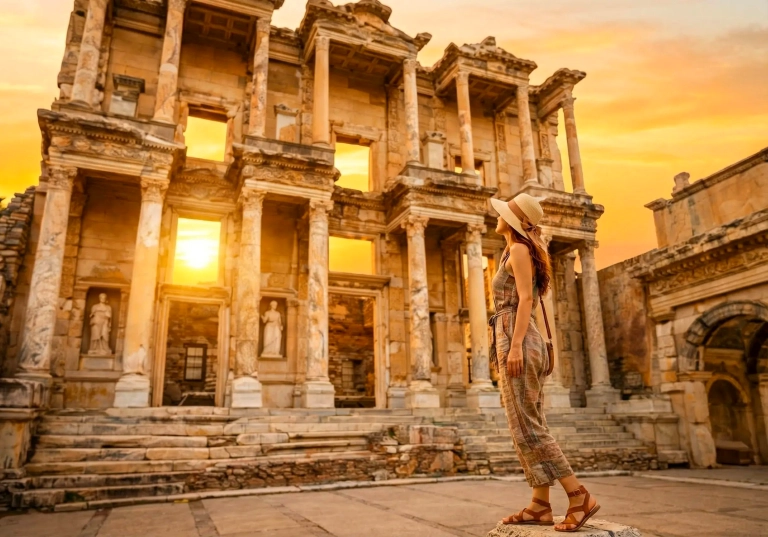
Ephesus and Aphrodisias Heritage Journey
Discover a 2 days Ephesus and Aphrodisias Heritage Journey from Ankara by flight with private guide. Visit Ephesus Ancient City, House of Virgin Mary, Temple of Artemis, Ephesus Archaeological Museum, Aphrodisias Ancient City, and Aphrodisias Archaeological Museum.
Ionian Cities Heritage Journey
Discover a 2 days Ionian Cities Heritage Journey from Ankara by flight with private guide. Visit Ephesus Ancient City, House of Virgin Mary, Temple of Artemis, Ephesus Archaeological Museum, Priene, Miletus, and Didyma Temple of Apollo.


