
Santorini Private Sightseeing Tour
Enjoy a private full-day Santorini sightseeing tour with Imerovigli, Firostefani Blue Dome, Akrotiri, Red and Black Beaches, Oia, and caldera wine views.
Highlights
- Oia village and caldera photography points
- Imerovigli and Firostefani blue-dome viewpoints
- Prophet Elias and Pyrgos elevated island panoramas
- Akrotiri area with Red and Black Beach contrasts
Santorini Private Sightseeing Tour
Enjoy a private full-day Santorini sightseeing tour with Imerovigli, Firostefani Blue Dome, Akrotiri, Red and Black Beaches, Oia, and caldera wine views.
Itinerary
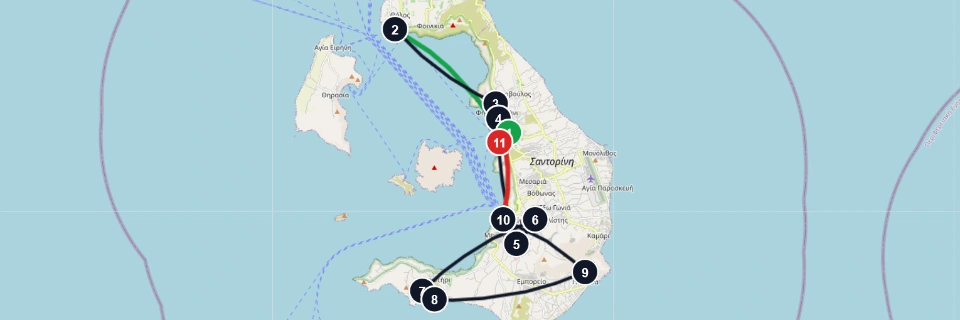
Explore the island on a curated santorini sightseeing tour private route designed for travelers who want flexibility and comfort. This full-day program starts in Santorini and combines panoramic viewpoints with cultural stops and coastal scenery. As a santorini full-day private vehicle tour, it keeps transfers efficient while allowing personalized pacing between locations. The itinerary includes iconic points such as Imerovigli and Firostefani before moving toward southern highlights. It is an ideal format for couples, families, and small private groups.
The route features major landmarks such as the firostefani blue dome visit, Megalochori, Pyrgos, and Prophet Elias viewpoints. These stops provide a broad picture of local architecture, village life, and high-elevation caldera scenery. A terrace wine break with Aegean views adds a relaxed moment to the day and reflects real Santorini lifestyle. This sequence creates a strong imerovigli akrotiri oia tour framework with balanced variety. Private travel helps maintain smooth movement across multiple stops.
Southern highlights include Akrotiri area exploration and the famous red and black beach santorini segment. These coastal locations add color contrast and geological interest after the village and caldera viewpoints. The itinerary then continues to Oia, where visitors can walk through the seaside streets and enjoy classic island atmosphere. This mix keeps the tour visually dynamic and culturally complete from start to finish. By return, the santorini sightseeing tour private delivers a comprehensive island experience.
-
Santorini
Private pickup and sightseeing start
Meet your private guide and begin Santorini highlights route.
-
Oia
Caldera village highlight
Visit Oia for iconic whitewashed architecture and sea views.
Oia is one of Santorini's most iconic villages, and even outside the formal sunset hour it still feels exceptional. Whitewashed facades, blue details, narrow lanes, and caldera-edge viewpoints combine into a setting that seems carefully composed from every angle. The village is immediately photogenic, but its real appeal comes from how naturally architecture, sea, and cliff line work together. Walking here feels less like checking a stop off the itinerary and more like entering the image of the island itself.
What makes Oia memorable is the balance between visual beauty and atmosphere. Every corner opens to another viewpoint, another terrace, or another stretch of Cycladic calm suspended above the sea. Even when the village is busy, the setting carries an unmistakable elegance. Oia is one of those places where Santorini feels most complete and most unmistakably itself.
-
Imerovigli
Clifftop viewpoint
Continue to Imerovigli for caldera and Skaros panoramas.
Imerovigli offers one of Santorini's most elegant and elevated caldera perspectives. The village feels quieter and more open than some of the island's busier stops, which makes the views seem even broader and more serene. Clifftop light, sweeping sea space, and the dramatic form of Skaros all contribute to a setting that feels refined rather than crowded. It is a place where the caldera can be appreciated with a little more calm.
What makes Imerovigli rewarding is the balance between grandeur and stillness. The scenery is every bit as dramatic as travelers hope for on Santorini, yet the atmosphere often feels slightly less performative and more contemplative. That allows the landscape to do the work on its own terms. Imerovigli is one of the island's best stops for travelers who want beauty with a quieter edge.
-
Firostefani Blue Dome
Photo stop
Stop at Firostefani for famous blue-dome church photos.
Firostefani Blue Dome is one of Santorini's classic visual moments, where the island's architecture and caldera scenery align almost perfectly. The blue dome, whitewashed forms, and open sea backdrop create the kind of image travelers often carry in mind before they ever arrive. In person, the scene feels less static and more atmospheric, with light, wind, and cliffside space adding real depth. It is a short stop, but a very memorable one.
The pleasure of this viewpoint lies in clarity rather than complexity. You do not need a long explanation to understand why it has become one of the island's defining photo angles, yet the setting still rewards slow looking beyond the camera. The combination of sacred architecture and volcanic landscape is what gives it lasting appeal. Firostefani offers one of the cleanest and most iconic images of Santorini.
-
Prophet Elias
Summit viewpoint
Climb to Prophet Elias for panoramic island views.
Prophet Elias is the kind of high viewpoint that gives an island a different emotional scale. From the summit area, the landscape opens widely, and the sense of height makes the surrounding sea, villages, and ridgelines feel more coherent and more dramatic at once. It is a stop built around perspective rather than monumentality. The reward comes from the view and the feeling of standing above the island's everyday level.
What makes the stop memorable is the simple clarity it offers. Instead of moving through lanes or coastlines, you pause and let the whole island arrange itself below you. That can be especially satisfying after a route with many smaller visual moments. Prophet Elias works best as a calm panoramic pause that lets the geography of the island settle fully into view.
-
Pyrgos
Historic village stop
Walk through Pyrgos and its traditional fortified core.
Pyrgos offers a different mood from Santorini's busier postcard-famous villages, with a more traditional hilltop character and a fortified-core atmosphere that feels rooted in local history. Walking through its lanes, you get a sense of an older island rhythm, where elevated viewpoints, whitewashed walls, and village texture combine in a more understated way. Because Pyrgos rises above its surroundings, it also gives you rewarding views without the same intensity of crowds found elsewhere. The village invites a slower, more observant kind of exploration. It is a very satisfying stop if you want to see another face of Santorini.
As you move upward through the old quarter, notice how the settlement seems to wrap itself around the hill in protective layers. The architecture feels lived-in and authentic, with small details that reward unhurried walking. Pyrgos is also a good place to appreciate the island's balance between beauty and defensible settlement planning. If you enjoy discovering places with atmosphere rather than only famous viewpoints, this village often becomes a pleasant surprise. It is calm, scenic, and quietly memorable.
-
Akrotiri Area
Archaeological zone stop
Continue to Akrotiri zone for volcanic and historical context.
Akrotiri Area gives Santorini a different historical depth by connecting the island's famous volcanic landscape with one of its most important archaeological stories. The area is often approached through the idea of volcanic catastrophe and preservation, which immediately sets it apart from the caldera viewpoints and white villages elsewhere on the route. It feels more like an introduction to the island's buried memory than a simple scenic stop. That gives the visit a distinctive intellectual appeal.
What makes Akrotiri rewarding is the way it ties geology, settlement, and myth together. Even before entering detailed excavation narratives, the area helps travelers understand that Santorini's beauty is inseparable from a dramatic ancient past. The stop adds historical density to a destination often experienced mainly through views. Akrotiri broadens Santorini from postcard beauty into a deeper cultural landscape.
-
Red Beach
Volcanic beach viewpoint
Visit Red Beach viewpoint with dramatic cliff colors.
Red Beach is one of Santorini's most visually distinctive coastal stops because the volcanic cliffs give the shoreline a bold, almost theatrical color field. The red tones against the sea create a scene that feels more geological than traditionally beach-like, which is exactly what makes the stop memorable. It is a place where the island's volcanic identity becomes impossible to miss. Even a short viewpoint pause tends to leave a strong image.
The beach is especially rewarding when approached as a landscape stop rather than a conventional resort beach. The color contrast, rock texture, and bay form all work together to create one of the island's most recognizable natural scenes. That visual power is the real attraction here. Red Beach offers one of the clearest reminders that Santorini is, above all, a volcanic island.
-
Black Beach
Coastal stop
Stop at Black Beach for volcanic shoreline contrast.
Black Beach offers one of Santorini's most striking natural contrasts, where dark volcanic shoreline meets the bright light of the Aegean. This stop feels different from the island's caldera villages because the emphasis shifts from architecture to raw geology and sea. The dark sand and rock immediately remind you that Santorini's beauty is born from volcanic force. Even a short pause here helps make the island's dramatic origins more tangible. It is a simple but visually memorable coastal stop.
As you look across the beach, notice how the darker tones change the mood of the landscape compared with the island's whitewashed settlements. The setting is a good reminder that Santorini is not only a postcard village destination, but also a powerful volcanic environment. If time allows, this is a pleasant place to enjoy the shoreline atmosphere and take a few distinctive photographs. Travelers often appreciate the stop because it adds a different texture to the day. It is scenic, elemental, and unmistakably Santorini.
-
Venetsanos Winery (Optional)
Optional tasting stop
Optional winery stop depending on timing and guest preference.
An optional stop at Venetsanos Winery adds a flavorful and scenic dimension to your Santorini experience. The winery setting helps connect the island's famous volcanic landscape with one of its oldest living traditions: wine production adapted to wind, sun, and dry soil. Even if you are not a wine specialist, the visit is enjoyable because the story of Santorini wine is inseparable from the island's geography. The atmosphere tends to be relaxed and rewarding, especially after a day of village and viewpoint stops. It is an optional visit that can add both taste and context to the route.
If you join the tasting, use the moment to notice how local varieties reflect the island's distinctive growing conditions. Santorini wines often carry a mineral edge that many visitors find memorable, and the experience can be especially enjoyable when paired with the surrounding views. This stop also offers a chance to slow down and appreciate the island through craftsmanship rather than scenery alone. Because it is optional, it usually feels flexible and easygoing rather than rushed. For travelers who enjoy local products and regional identity, it can be a very worthwhile addition.
-
Santorini Drop-off
Private return transfer
Return to hotel, port, airport, or Fira cable-car terminal.
Got a question about this tour?
Reach out to our travel experts.
Informations
-
What's Included
- Private tour with personalized pacing
- Private transportation by car or minibus
- English-speaking guide with live commentary
- Hotel/port/airport/Fira pickup and drop-off
- Bottled water
- Operational and parking costs
-
What's Excluded
- Personal expenses and optional activities
- Cable car tickets for cruise guests
- Optional winery tasting fees
- Gratuities
-
Entrance Fees
- Entry to optional ticketed sites is paid locally unless pre-arranged
- Any optional winery tasting package is not included by default
-
Travel Tips
- Wear comfortable shoes for mixed village and viewpoint terrain
- Carry sun protection for open coastal and cliffside stops
- Bring water and light layers for changing island wind conditions
- Keep camera ready for frequent photo stops
-
Note
- Route order may vary depending on traffic and crowd levels
- Cruise guest drop-off is typically at Fira cable-car terminal
- Stop durations can be adjusted within operational timing
Your Peace of Mind Options
Cancellation Policy
A transparent overview of applicable fees.
Customer Comments - Tripadvisor Write A Review!
Customer Comments - Tripadvisor





Tour Reminder!
You can create a reminder for yourself for this tour. We will send you a reminder e-mail/sms about this tour on the date you specify.
FAQs
-
What does the Santorini Sightseeing Private Full-Day Tour include?
- Private tour with personalized pacing
- Private transportation by car or minibus
- English-speaking guide with live commentary
- Hotel/port/airport/Fira pickup and drop-off
- Bottled water
- Operational and parking costs
-
Is this a private tour?
- Yes. This is a private sightseeing tour operated only for your party
- Stop durations can be adjusted within operational timing
-
Which places are visited on this route?
- Oia village
- Imerovigli and Firostefani viewpoints (blue-domed photo points)
- Prophet Elias and Pyrgos panoramas
- Akrotiri area
- Red Beach and Black Beach stops
- Optional winery stop (if desired)
-
Where is pickup and drop-off?
- Pickup and drop-off are arranged at hotel, port, airport, or Fira cable-car terminal
- Cruise guest drop-off is typically at the Fira cable-car terminal
-
Are cable car tickets included for cruise guests?
- No. Cable car tickets for cruise guests are excluded
- Please plan for tender and cable-car logistics separately
-
Are entrance fees included?
- Personal expenses and optional activities are excluded
- Optional winery tasting fees are excluded
-
Is bottled water included?
- Yes. Bottled water is included
-
Can the stop order change?
- Yes. Route order may vary depending on traffic and crowd levels
- Your guide will optimize the flow to improve comfort and photos
-
Are meals and beverages included?
- No. Meals and beverages are not listed as included
- We can suggest a lunch stop based on your route preference
-
What is not included in the price?
- Personal expenses and optional activities
- Cable car tickets for cruise guests
- Optional winery tasting fees
- Gratuities
General FAQs
-
What currency is used in Greece?
Greece uses the Euro (EUR).
- Cards are widely accepted, but carrying cash is useful for small purchases and tips.
-
Do I need a visa to visit Greece?
Visa requirements depend on your nationality. Greece is part of the Schengen Area.
- Please check the latest rules from official sources before travel.
-
What is the best time to visit Greece?
Many travelers prefer spring and early autumn for pleasant temperatures and fewer crowds.
- July and August are peak season, especially on the islands.
- Shoulder seasons can offer better availability and milder weather.
-
Is Greece safe for tourists?
Greece is generally safe for visitors.
- In major cities and crowded areas, watch for pickpockets.
- Use licensed taxis and keep valuables secure, especially at transport hubs.
-
Is tap water safe to drink in Greece?
Tap water is generally fine in many mainland areas, but on some islands visitors prefer bottled water.
- If in doubt, ask your hotel or guide locally.
-
What language is spoken in Greece?
Greek is the official language. In tourist areas, English is commonly spoken.
- Learning a few basic Greek phrases is appreciated.
-
How do ferries and domestic travel work in Greece?
Ferries are a key part of travel between islands and the mainland.
- Schedules can be seasonal and weather-dependent.
- In peak season, booking popular routes ahead can help.
-
What should I know about driving and taxis in Greece?
Driving can be a great way to explore, but roads can be narrow and parking limited in popular towns.
- Use seatbelts and drive defensively.
- For taxis, use licensed providers and confirm the fare when possible.
-
What power plug is used in Greece?
Greece typically uses Type C and Type F plugs (230V, 50Hz).
- Bring a travel adapter if needed.
-
Are SIM cards and mobile data easy to get in Greece?
Yes. Mobile data is widely available and you can buy SIM/eSIM options from common providers.
- Coverage is usually good in cities and many islands, but can vary in remote areas.
-
Is tipping expected in Greece?
Tipping is appreciated, especially for good service.
- In restaurants, rounding up or leaving a small amount is common.
- For guides and drivers, tips are optional and based on satisfaction.
-
What should I pack for Greece?
It depends on season and islands vs mainland, but these basics help:
- Comfortable walking shoes
- Sun protection (hat, sunscreen)
- A light layer for evenings or windy ferry rides
-
What are the emergency numbers in Greece?
Dial 112 for emergencies (free, EU-wide).
- Police: 100
- Ambulance: 166
- Fire: 199
- Coast Guard: 108
If you are unsure, call 112.
-
How do I get from airports/ports to the city in Greece?
Depending on the destination, you may use:
- Metro/train or public buses (common in large cities)
- Licensed taxis
- Pre-booked private transfers
- Ferries between islands and the mainland
In peak season, booking transfers and popular ferry routes ahead can help.
-
How do pharmacies work in Greece (on-duty pharmacy)?
Pharmacies often have a rotating on-duty system outside normal hours.
- Many pharmacies display the on-duty pharmacy information on the door/window.
- If you need urgent assistance, call 112 or your accommodation can help you locate the nearest option.
-
What are typical opening hours in Greece?
Opening hours vary by area and season.
- In some towns, shops may close during the afternoon and reopen in the evening.
- Sundays may have reduced opening, especially outside tourist areas.
- On national/religious holidays, hours can change.
-
What should I wear when visiting monasteries and churches in Greece?
Dress modestly at religious sites.
- Shoulders and knees should be covered.
- Some monasteries may have stricter rules.
-
Are there rules for photography in Greece?
In public areas, photography is usually fine. In museums, churches, and archaeological sites, rules can vary.
- Some places restrict flash or tripods.
- Look for signage and follow staff instructions.
Let's Customize Your Trip!
Prepare your own tour plan!
Good to Know
-
Good to know: Santorini traffic and crowds affect timing
- Stop order may shift for a smoother route
- Sunset hours can be especially busy in Oia
-
Good to know: plan cable-car time if you are a cruise guest
- Lines can be long at peak hours
- Allow buffer time for tender and cable-car logistics
-
Good to know: optional winery tastings are paid separately
- Winery tasting fees are excluded unless arranged
- Tell your guide if you want to add a tasting stop
-
Good to know: bring sun protection and comfortable shoes
- Viewpoints are exposed to sun and wind
- Village streets can be uneven and have steps
-
Good to know: gratuities are not included
- Tips are optional and at your discretion
- If you are happy with the service, gratuities are appreciated
Want to read it later?
Download this tour’s PDF brochure and start tour planning offline
Similar Tours

Santorini Volcano and Hot Springs Cruise
Join a small-group full-day Santorini boat tour with Caldera sailing, volcano visit, hot springs swim, and Thirassia Island stop.
Santorini Private Island Tour
Enjoy a private full-day Santorini minibus tour with Caldera viewpoints, Oia, Imerovigli, beaches, traditional villages, Akrotiri, and Venetsanos Winery.


