
Izmir and Sardes Jewish Heritage Discovery



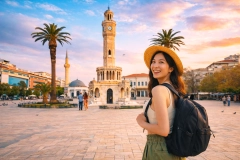


Take a full-day Jewish heritage journey from Istanbul by flight, combining Sardes Ancient City and Izmir highlights including Beth Israel, Havra Street, Kemeralti, and Smyrna Agora.
Highlights
- Visit Sardis ancient city and synagogue zone tied to one of antiquity's largest Jewish communities
- See the Artemis Temple of Sardis and the broader Lydian-Roman archaeological landscape
- Explore Izmir Jewish heritage streets including Havra district and Dario Moreno area
- Visit Beth Israel Synagogue and combine heritage route with Agora, Kadifekale, and Konak

Izmir and Sardes Jewish Heritage Discovery
Take a full-day Jewish heritage journey from Istanbul by flight, combining Sardes Ancient City and Izmir highlights including Beth Israel, Havra Street, Kemeralti, and Smyrna Agora.
Itinerary
This izmir and sardes jewish heritage day trip is ideal for travelers who want to connect biblical-era archaeology with living Jewish heritage in one route. Starting from Istanbul with flight-based logistics, the tour combines Sardes and Izmir in a carefully structured full-day format. Your guide explains the historical movement of Sephardic communities and how Jewish life evolved within western Anatolia over centuries. The itinerary is designed to deliver continuity, so ancient and later periods are interpreted as part of one long story. For guests interested in sephardic jewish heritage turkey, this program provides strong historical depth.
In Sardes, you explore the monumental remains of one of antiquity’s most influential cities, including the gymnasium complex and the remarkable sardes synagogue tour area. The program also includes the iconic temple of artemis sardis, where Hellenistic and Roman layers are explained with clear archaeological context. These visits reveal why Sardes was both a major trade center and an important religious site in the ancient world. The route then continues to Izmir, where Jewish district history becomes visible in a different urban setting. This transition gives travelers a rare chance to compare two major heritage zones in a single day.
In Izmir, stops include beth israel synagogue izmir context, Dario Moreno Street, the Historical Elevator, Kemeralti, Havra Street, Smyrna Agora, and Kadifekale viewpoints. Walking through havra street kemeralti bazaar sections helps you experience how community memory, commerce, and daily life still interact. The archaeological and city-center visits complete the timeline from ancient Sardes to modern Izmir with strong narrative flow. You can also observe local food culture tied to Sephardic influence during breaks in the day. For travelers comparing cultural routes in western Turkey, this itinerary offers one of the most complete smyrna agora kadifekale and Jewish heritage combinations.
-
Pickup in Istanbul
Meet your guide/driver and transfer to airport.
Your day starts with early transfer for domestic flight to Izmir.
-
Flight to Izmir
Domestic flight segment Istanbul to Izmir.
A morning flight connects Istanbul with Izmir for heritage route.
-
Transfer to Sardis
Drive to Sardis archaeological region near Salihli.
This segment links Izmir with the inland Sardis heritage zone.
-
Sardis Ancient City Visit
Explore major ancient-city and synagogue sections.
Sardis visit highlights Jewish, Lydian, and Roman historical layers.
A visit to Sardis Ancient City brings together one of the richest combinations of Lydian, Roman, Jewish, and early Christian history on the route. This is a site where many different layers remain visible enough to create a full and complex historical picture rather than a single narrative. That is part of what makes Sardis so rewarding. It is not only a biblical stop or an archaeological stop, but a city where several historical identities still overlap. Few places offer that range so clearly.
As you walk through the site, notice how civic structures, sacred spaces, and the wider urban remains all contribute to a sense of real historical depth. Travelers often appreciate Sardis because it feels significant in more than one way at once. The city rewards both careful observation and broader reflection on how cultures succeed and coexist in the same place. It is one of western Anatolia's most intellectually satisfying ancient visits. Sardis stays with you because it refuses to be reduced to one story.
-
Artemis Temple of Sardis
Temple zone and monumental architecture stop.
This stop adds one of the largest sacred-complex remains in the region.
The Temple of Artemis at Sardis introduces one of the region's major sacred complexes, adding another monumental layer to the city's already rich archaeological story. Even in ruin, the temple's scale suggests the importance of cult, prestige, and public identity within ancient Sardis. This is a place where sacred architecture speaks through proportion and setting rather than through complete preservation. The stop helps broaden your understanding of Sardis beyond its synagogue and Roman civic structures. It shows the city as a place of multiple religious expressions across time.
As you look at the surviving remains, imagine the temple within a larger sacred landscape that once carried both visual and ceremonial power. The monument works especially well in combination with the rest of the Sardis route, because it reveals yet another aspect of the city's complexity. Travelers often appreciate this stop for its scale and for the way it deepens the historical range of the site. It is not only a temple visit, but a reminder of how layered ancient urban life could be. Sardis becomes much more complete when this sacred dimension is included.
-
Return to Izmir and Beth Israel Synagogue
Continue Jewish heritage route inside Izmir city.
After Sardis, the route returns to Izmir for synagogue and district visits.
The stop called Return to Izmir and Beth Israel Synagogue brings the Sardis route back into a living urban Jewish context. After the archaeological depth of inland antiquity, arriving in Izmir reconnects the day to a later and still more socially familiar layer of western Anatolian history. This transition is especially meaningful because it links ancient community presence with modern and Ottoman-era Jewish life. It makes the route feel continuous rather than fragmented.
What makes the stop rewarding is the contrast it creates between archaeological memory and active city heritage. Beth Israel becomes more than a single synagogue reference, because it anchors a broader story of communal continuity in Izmir. The city setting adds energy and immediacy after the quieter ruins of Sardis. Together, the two parts of the day form a strong and unusually layered heritage sequence.
-
Havra Street and Kemeralti Walk
Market and synagogue-street community section.
Havra-Kemeralti corridor reflects shared trade and religious memory.
Havra Street and Kemeralti bring together one of Izmir's richest layers of trade, neighborhood life, and Jewish communal memory. As you walk through the market energy of Kemeralti and into the Havra Street zone, the district reveals how commerce and faith once stood side by side in the everyday structure of the city. Synagogues, old passages, shopfronts, and food stalls all contribute to an atmosphere that feels lived-in rather than museum-like. This is exactly why the area is so rewarding to explore on foot.
The walk works best when you give equal attention to both heritage and street life. A market lane, a historic doorway, or a food counter can all say something about how the quarter has evolved without losing its identity. If time allows, this is also a very good area to notice local flavors, from bakery items to traditional snacks and tea. By the end of the walk, the district usually feels less like a sightseeing stop and more like a living piece of old Izmir.
-
Agora and Kadifekale Stops
Archaeological and panoramic city reading section.
These stops complete classical and topographic context of Smyrna.
The combined Agora and Kadifekale stops give you one of the clearest ways to understand ancient and modern Izmir together, linking the civic-commercial life of old Smyrna with the commanding hilltop perspective above the city. This pairing works especially well because one stop explains the urban core while the other explains its geography. You move from the structure of the city to the way it sits in the landscape. That makes the wider story much easier to grasp. Few route combinations read the city this clearly.
As you continue between these points, notice how the agora and the hill complement one another rather than repeating the same idea. Travelers often appreciate this pairing because it turns Izmir from a set of isolated sites into a coherent historical city. The route also balances walking through remains with panoramic orientation. It is practical, interpretive, and visually rewarding all at once. This is one of the strongest ways to read Smyrna as a whole.
-
Konak Square and Clock Tower
Photo and final city-center orientation.
Konak anchors the route in modern Izmir's civic core.
Konak Square and Clock Tower is one of those places where Izmir immediately feels open, lively, and easy to read. The elegant clock tower stands at the center like a city symbol, while the surrounding square, waterfront movement, and everyday local rhythm make the stop feel more alive than formal. Ferries, sea air, pigeons, and constant foot traffic give the area a very recognizable Aegean energy. It is an ideal place to feel the pulse of modern Izmir in just a few minutes.
This is not only a photo stop, but also a good orientation point for understanding the city. From here, you can sense how historical quarters, administrative life, and the waterfront come together in one shared urban space. The atmosphere is usually relaxed and bright, which suits Izmir's reputation as one of Turkey's most easygoing big cities. For travelers, Konak Square often becomes the moment when Izmir shifts from a name on the itinerary to a place with its own clear personality.
-
Transfer to Izmir Airport
Return transfer for evening flight to Istanbul.
After all visits, you transfer to airport for return flight.
-
Flight to Istanbul and Drop-off
Domestic return flight and final transfer.
You return to Istanbul and are dropped off at your selected location.
Got a question about this tour?
Reach out to our travel experts.
Informations
-
What's Included
- Private licensed professional tour guide
- Private deluxe air-conditioned vehicle
- Hotel/meeting-point pickup and drop-off in Istanbul
- Four airport transfers included in route flow
- Parking fees and local taxes
-
What's Excluded
- Synagogue/museum entrance or donation fees where required
- Domestic flight tickets unless booked in package option
- Food and beverages
- Personal expenses and gratuities
-
Entrance Fees
- Sardis archaeological site and synagogue section entrance fee
- Beth Israel Synagogue access/donation rules where applicable
- Ancient Agora entrance fee and optional museum fees
-
Travel Tips
- Carry valid passport or ID for domestic flights and heritage-site checks
- Dress respectfully for synagogue visits and religious spaces
- Wear comfortable shoes for long urban and archaeological walking sections
- Bring sun protection and water for open-air site visits
-
Note
- This route generally requires advance planning for selected synagogue access points
- Passport details may be requested in advance for some heritage entries
- Tour dates can be affected by major religious holidays and local closures
- Final pickup, access, and flight details are shared after booking confirmation
Your Peace of Mind Options
Cancellation Policy
A transparent overview of applicable fees.
Customer Comments - Tripadvisor Write A Review!
Customer Comments - Tripadvisor


Tour Reminder!
You can create a reminder for yourself for this tour. We will send you a reminder e-mail/sms about this tour on the date you specify.
FAQs
-
What does the Izmir and Sardis Jewish Heritage day tour by flight from Istanbul include?
- Pickup in Istanbul and airport transfer
- Domestic flight to Izmir
- Drive to Sardis and visit the ancient city and synagogue area
- Artemis Temple of Sardis stop
- Return to Izmir for Beth Israel Synagogue (subject to access)
- Havra Street and Kemeralti walk
- Agora and Kadifekale stops
- Konak Square stop
- Return flight to Istanbul and final transfer
-
How long is the whole day and what is the pace like?
- Total duration: about 15 hours including flights and intercity driving
- Very full day with early start and late finish
- Private format allows some flexibility, but timing depends on flights
-
Are flights included?
- Flight inclusion depends on your booking option
- We will confirm whether flights are included or arranged separately
-
Do I need my passport or ID for the domestic flight and synagogue visits?
- Yes, valid ID is required for flights
- Some synagogue visits may require ID and prior permission
- Please bring the same ID used for flight booking
-
What is special about Sardis for Jewish heritage travelers?
- Sardis is known for its ancient synagogue and historical community traces
- The site visit combines archaeological context and heritage interpretation
- Your guide will explain the key points on site
-
How much walking is involved at Sardis?
- Moderate walking on uneven archaeological terrain
- Some areas are open and exposed to sun
- Comfortable shoes and water are recommended
-
Are entrance fees included?
- Entrance fees and personal expenses are typically paid on site unless stated otherwise
- Your guide can advise current fees on the day
-
Is lunch included?
- There is time for meal breaks during this long day
- Meals are typically not included unless stated otherwise
- Your guide can recommend options en route
-
Is this tour suitable for children and seniors?
- It can be demanding due to the long duration
- Walking is moderate, but the day is long with transfers
- If you prefer a lighter day, consider an Izmir-only heritage tour
-
What should we wear and bring?
- Comfortable walking shoes
- Sun protection and water
- Light jacket for early transfers
- Modest attire for religious sites
General FAQs
-
What currency is used in Turkey?
Turkey uses the Turkish Lira (TRY).
- Cards are widely accepted in cities and tourist areas, but cash is still useful for small purchases.
- ATMs are common. Exchange offices and banks are also available.
-
Can I pay by credit card in Turkey?
In most restaurants, hotels, and shops you can pay by card.
- For markets, small shops, taxis, and tips, carrying some cash is recommended.
- Let your bank know you are traveling to avoid card blocks.
-
Is Turkey safe for tourists?
Turkey is generally safe for visitors, especially in main tourist areas.
- As in any destination, watch out for pickpockets in crowded places.
- Use licensed taxis/transport where possible and keep valuables secure.
-
What should I wear when visiting mosques in Turkey?
Dress modestly when entering mosques.
- Shoulders and knees should be covered.
- Women may be asked to cover their hair.
- Shoes are usually removed at the entrance.
-
Do I need a visa to visit Turkey?
Visa requirements depend on your nationality.
- Please check the latest rules from official sources (consulate/embassy or the official e-visa portal) before travel.
-
What is the best time to visit Turkey?
Spring and autumn are popular because temperatures are usually milder.
- Summer can be hot on the coast and inland.
- Winter is quieter and can be great for cities and some regions.
-
Will English be enough in Turkey?
Turkish is the official language. In tourist areas, English is commonly spoken.
- Learning a few basic Turkish words is appreciated and can help outside major areas.
-
What power plug is used in Turkey?
Turkey typically uses Type C and Type F plugs (220V, 50Hz).
- If your devices use a different plug type, bring a travel adapter.
-
Is tap water safe to drink in Turkey?
In many places, visitors prefer bottled water.
- Hotels and restaurants usually provide bottled water easily.
-
Is tipping expected in Turkey?
Tipping is common and appreciated for good service.
- In restaurants, rounding up or leaving a small amount is typical.
- For guides and drivers, tips are at your discretion based on satisfaction.
-
Do I need to carry my passport in Turkey?
We recommend keeping your passport safely in your hotel and carrying a copy (photo or printed) when out.
- Some venues may request an ID; your guide can advise for your route.
-
Do museums and sites have weekly closure days in Turkey?
Opening hours can change by season and some venues may have weekly closure days.
- We recommend checking the latest opening hours close to your travel date.
- Starting earlier in the day helps to avoid crowds at popular sites.
-
What are the emergency numbers in Turkey?
Dial 112 for emergencies (medical, police, fire and other urgent situations).
- 112 is a unified emergency line in Turkey.
- If you do not speak Turkish, try English and share your location clearly.
-
How do I get from airports to the city in Turkey?
Options depend on the city, but common choices are:
- Official airport taxi
- Airport shuttles/buses
- Metro/train (available in some cities)
- Pre-booked private transfers
If you arrive late at night or with luggage, a pre-booked transfer can be the easiest option.
-
Are taxis and ride-hailing apps reliable in Turkey?
Use licensed taxis and make sure the meter is used (unless a fixed airport fare is confirmed).
- In some cities, taxi-hailing apps can help you find a taxi more easily.
- If possible, keep small cash and ask for a receipt when needed.
-
How do I buy a SIM/eSIM in Turkey?
You can buy SIM/eSIM options from mobile operators and official stores.
- Bring your passport for registration.
- For longer stays, foreign phones may require device registration (IMEI) to keep working on local networks.
-
What are typical opening hours in Turkey?
Opening hours vary by city and season.
- Many shops and malls stay open late, especially in tourist areas.
- Some museums may close earlier and may have weekly closure days.
- During national or religious holidays, hours can change.
-
How do pharmacies work in Turkey (duty pharmacy)?
Pharmacies are called Eczane. Outside normal hours, there is usually a rotating on-duty pharmacy (Nöbetçi Eczane).
- Regular pharmacies typically post the on-duty pharmacy information on the door/window.
- Your hotel reception can also help you find the nearest one.
Let's Customize Your Trip!
Prepare your own tour plan!
Good to Know
-
Local tip: start the day prepared for long hours
- Bring snacks and water
- Keep a power bank for phones on a long route
-
Local tip: carry ID and respect site rules
- Some heritage sites have access rules
- Having documents ready helps with smoother entry
-
Local tip: travel light
- Carry essentials only for flights and site walks
- A small bag is easiest during transfers
-
Local tip: keep valuables secure in markets
- Kemeralti can be busy
- Use a secure bag and keep personal items protected
-
Local tip: footwear and hydration
- Sardis paths can be uneven and sunny
- Good shoes and water make a big difference
Want to read it later?
Download this tour’s PDF brochure and start tour planning offline
Similar Tours

Istanbul Local Life Walking Experience
Explore Istanbul beyond classic monuments on a private 8-hour walking experience across Asian and European sides with daily bazaars, fish markets, Bosphorus cruise, local culture visits, and neighborhood food stops.


