
Sardes and Izmir Jewish Heritage Discovery
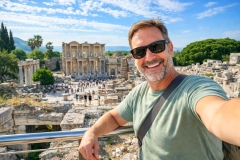

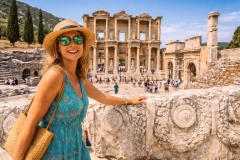
Explore Sardes and Izmir on a full-day Jewish heritage flight itinerary from Ankara with Sardes Ancient City, Artemis Temple, Beth Israel Synagogue, Havra Street, Dario Moreno Street, Asansor, Kemeralti, Konak Square, Agora, and Kadifekale.
Highlights
- Explore Sardes, a major ancient city linked with biblical-era history
- See the Temple of Artemis at Sardes archaeological zone
- Visit Beth Israel Synagogue, one of Izmir's key Jewish worship spaces
- Walk Dario Moreno Street and the Karatas heritage area
- Pause at Konak Square and Clock Tower in central Izmir
- Experience Kemeralti's dense traditional trade streets
- Walk Havra Street, center of Izmir's historic synagogue district
- Explore Smyrna Agora beneath modern city layers
- View Izmir from Kadifekale's elevated historic point
- Follow a combined Jewish heritage and archaeology route with private guiding

Sardes and Izmir Jewish Heritage Discovery
Explore Sardes and Izmir on a full-day Jewish heritage flight itinerary from Ankara with Sardes Ancient City, Artemis Temple, Beth Israel Synagogue, Havra Street, Dario Moreno Street, Asansor, Kemeralti, Konak Square, Agora, and Kadifekale.
Itinerary
This izmir and sardes jewish heritage day trip from ankara by flight is designed for travelers who want to combine Jewish heritage and ancient history in one full day. The itinerary links Sardes and Izmir through practical transfer planning and private guiding. Your guide explains both Sephardic community history and the wider historical background of the sites you visit. The route remains fully aligned with listed highlights and avoids unrelated additions. It is a strong option for a full-day sardes and izmir jewish tour.
The Sardes section includes sardes ancient city artemis temple and synagogue context, offering insight into the city's long urban and religious layers. This part of the day helps visitors understand Sardes as both a major ancient center and a meaningful stop in heritage-focused itineraries. Commentary stays site-based and tied to visible remains for clarity. The pace allows time to explore key monuments without disrupting the full-day flow. This creates a solid historical foundation before returning to Izmir.
In Izmir, the route continues with beth israel havra street dario moreno asansor and expands to kemeralti konak square agora kadifekale route highlights. These stops complete the day by connecting Sephardic memory, neighborhood life, and central city heritage. The itinerary remains fully aligned with official tour content and does not include off-route claims. Travel flow is optimized so all core visits fit comfortably in one day. For travelers seeking a sephardic heritage izmir day trip, this private jewish heritage tour turkey format offers strong depth and value.
-
Departure from Ankara
Flight to Izmir
Transfer from hotel and fly from Ankara to Izmir for Sardes and Izmir route.
-
Sardes Ancient City
Biblical-era archaeology
Drive to Sardes and explore one of Anatolia's major biblical-era cities.
Sardes Ancient City is one of the most layered archaeological stops in western Anatolia because it joins royal, biblical, and urban history in a single landscape. As the capital of ancient Lydia, Sardes carries the prestige of political power and early wealth, yet for many travelers it is equally important as one of the Seven Churches of Revelation. That combination makes the site feel broader than a typical ancient city visit. It speaks to empire, religion, and long continuity all at once.
The visit is especially rewarding when you let those layers sit together rather than separating them. Lydian memory, Greco-Roman urban life, and early Christian significance all deepen the meaning of the ruins. Even when the site feels quiet, its historical reach is unusually large. Sardes is one of those places where a thoughtful traveler can feel several different worlds overlapping in one stop.
-
Temple of Artemis at Sardes
Temple zone visit
Visit the Temple of Artemis area at Sardes archaeological site.
Temple of Artemis at Sardes offers a very different kind of sanctuary experience from the better-known Artemis site near Ephesus. Here, the surviving columns and temple zone still communicate a strong sense of scale, permanence, and sacred continuity within the broader Sardes landscape. The monument feels both classical and slightly remote, which adds to its atmosphere. It is a stop that combines visual elegance with historical quietness.
The temple becomes especially meaningful when seen as part of Sardes rather than as an isolated ruin. It reflects the long religious life of the city and helps show how major sanctuaries remained important across changing political and cultural eras. The surviving architecture is enough to trigger the imagination without overwhelming the landscape around it. The Temple of Artemis at Sardes rewards travelers who enjoy sacred sites with both dignity and restraint.
-
Historic Elevator (Asansor)
Karatas stop
Return toward Izmir and stop at the Historic Elevator.
The Historic Elevator, known locally as Asansor, is one of Izmir's most recognizable urban landmarks and one of its most enjoyable viewpoints. Built to connect different street levels in the Karatas district, it reflects both practical engineering and the cosmopolitan character of the old city. The structure has become much more than a functional lift, because it now offers one of the clearest visual introductions to Izmir's bay and hillside geography. When you arrive, the setting immediately explains how closely the city's identity is tied to its topography. It is a short stop that combines local history with a very satisfying panorama.
Take time to look out over the rooftops, shoreline, and broad curve of the gulf, especially if the light is soft or the weather is clear. The surrounding neighborhood also adds atmosphere, with streets that still carry traces of old Izmir's layered social life. Many travelers enjoy this stop because it feels both scenic and urban, rather than purely monumental. It is also a good place to pause and understand how different districts of the city relate to one another. Few spots in Izmir offer such a compact mix of story, viewpoint, and character.
-
Jewish District and Dario Moreno Street
Sephardic memory walk
Walk Dario Moreno Street and the surrounding Jewish district.
The walk through the Jewish District and Dario Moreno Street introduces one of Izmir's most character-filled heritage areas, where memory, music, and multicultural city life come together. Dario Moreno Street is especially evocative, with its stepped layout, historic ambiance, and connection to one of the city's beloved cultural figures. Combined with the surrounding Jewish quarter, the area reveals a more intimate side of Izmir than the seafront alone can show. It is the kind of place where architecture, neighborhood identity, and personal stories overlap naturally. Even a short visit here can leave a strong emotional impression.
As you continue through the district, notice how the streets invite walking rather than rushing. This part of the city is rewarding because it combines heritage with atmosphere instead of presenting history only through monuments. The nearby buildings, viewpoints, and narrow passages all contribute to a sense of layered urban life. Travelers often enjoy this stop for its human scale and its clear reminder that Izmir's identity has been shaped by many communities over time. It is a walk that feels thoughtful, local, and quietly memorable.
-
Beth Israel Synagogue
Synagogue visit
Visit Beth Israel Synagogue in Izmir.
Beth Israel Synagogue opens an important window onto Izmir's Jewish heritage, which is one of the city's most meaningful historical layers. The synagogue is valued not only as a place of worship, but also as a reminder of the communities that helped shape Izmir's cosmopolitan identity over generations. The atmosphere is often more intimate than at major archaeological sites, which gives the visit a different kind of depth. It feels less like grand spectacle and more like entering a living memory.
What makes the stop rewarding is the sense of continuity it carries. Architecture, liturgical space, and communal history all come together here in a way that broadens the story of the city beyond its Greco-Roman past. For travelers, this can be one of the moments when Izmir feels most layered and most human. Beth Israel Synagogue rewards quiet attention and adds valuable balance to a route full of ancient monuments.
-
Konak Square and Clock Tower
City-center stop
Pause at Konak Square and the city's iconic Clock Tower.
Konak Square and Clock Tower is one of those places where Izmir immediately feels open, lively, and easy to read. The elegant clock tower stands at the center like a city symbol, while the surrounding square, waterfront movement, and everyday local rhythm make the stop feel more alive than formal. Ferries, sea air, pigeons, and constant foot traffic give the area a very recognizable Aegean energy. It is an ideal place to feel the pulse of modern Izmir in just a few minutes.
This is not only a photo stop, but also a good orientation point for understanding the city. From here, you can sense how historical quarters, administrative life, and the waterfront come together in one shared urban space. The atmosphere is usually relaxed and bright, which suits Izmir's reputation as one of Turkey's most easygoing big cities. For travelers, Konak Square often becomes the moment when Izmir shifts from a name on the itinerary to a place with its own clear personality.
-
Kemeralti Bazaar
Historic market walk
Continue through Kemeralti Bazaar's traditional market streets.
Kemeralti Bazaar shows Izmir in a more local, textured, and everyday way than a formal monument ever could. Its market streets, old passages, workshops, and trading corners still carry the feeling of a living commercial district rather than a preserved historical display. Walking here means moving through layers of daily life, where shopping, conversation, tea breaks, and long traditions continue side by side. The result feels energetic, authentic, and very rooted in the city's identity.
This is the kind of place where it helps to wander with your eyes open rather than search only for one famous spot. Details matter here, from old facades and hidden courtyards to shopfronts that seem unchanged by the pace of modern life. The bazaar also reflects Izmir's broader character as an Aegean port city shaped by exchange, diversity, and movement. For travelers, Kemeralti often feels like one of the best places to encounter the city as locals actually use it.
-
Havra Street (Synagogue Street)
Jewish quarter core
Visit Havra Street, center of Izmir's historical synagogue area.
Havra Street, also known as Synagogue Street, is one of the most characterful parts of historic Izmir and a key place for understanding the city's Sephardic and mercantile heritage. Walking here feels very different from visiting a formal monument, because the atmosphere comes from the street itself, its layers of memory, and the everyday life that still surrounds it. This area once stood at the heart of a vibrant Jewish quarter closely tied to trade, worship, and neighborhood identity. Even today, it retains a dense urban energy that makes the past feel close at hand. It is one of the best places in Izmir to read history directly from the streetscape.
As you continue through the lane, look for the mix of commercial life, old facades, and the traces of community institutions that once shaped the district. The street rewards slow observation, especially if you are interested in cultural diversity and the lived fabric of historic port cities. It also connects naturally with nearby market areas, giving the walk a strong sense of continuity between memory and present-day movement. Rather than standing apart from the city, Havra Street remains woven into it. That is exactly what makes the experience feel authentic and memorable.
-
Smyrna Agora
Ancient urban core
Explore Smyrna Agora and its preserved archaeological remains.
Smyrna Agora is one of the most striking places in Izmir because ancient urban life appears in the middle of the modern city rather than far outside it. Walking through the remains, you can feel the commercial and civic importance this space once held, while traffic, buildings, and present-day life continue around it. That contrast gives the site unusual energy. It is not a remote ruin, but a visible reminder that the city has been layered, rebuilt, and inhabited for centuries.
The agora becomes more meaningful when you imagine it not as isolated stones, but as the working heart of ancient Smyrna. Colonnades, open courts, and surviving structural lines help you picture trade, conversation, administration, and public movement unfolding here day after day. For travelers interested in Roman urban life, it is one of the most rewarding stops in Izmir. Smyrna Agora makes the past feel unusually close because the present city never fully moved away from it.
-
Kadifekale
Panoramic final stop
Finish the city section at Kadifekale before airport transfer.
Kadifekale offers one of the clearest panoramic introductions to Izmir. Rising above the city, the hilltop fortress gives you space to look out over the gulf, the dense urban fabric, and the layers of settlement that connect ancient Smyrna with the modern metropolis below. The view is the first thing most travelers remember, especially when the light is clear and the coastline opens in front of you. It is a stop where geography explains history in a very direct way.
The fortress area also carries the feeling of a strategic lookout, which helps you understand why this height mattered for so long. Even when the surviving structures are modest, the position itself tells the story of defense, control, and urban planning across centuries. Take a moment here to read the city with your eyes, from the waterfront to the hills beyond. Kadifekale is one of those places where a short stop can still leave a strong sense of place.
-
Return to Ankara
Flight back
Transfer to Izmir airport and return to Ankara by evening flight.
Got a question about this tour?
Reach out to our travel experts.
Informations
-
What's Included
- Hotel pickup and drop-off in Ankara
- Round-trip domestic flight assistance as listed in the itinerary
- Private licensed tour guide
- Private air-conditioned vehicle and driver
- Parking fees and local taxes
-
What's Excluded
- Domestic flight tickets
- Museum and site entrance fees
- Meals and drinks
- Personal expenses
- Tips for guide and driver
-
Entrance Fees
- Entrance fees may apply for Sardes archaeological areas and selected museums or sites on the route.
-
Travel Tips
- Dress respectfully for synagogue and sacred-site visits
- Wear comfortable shoes suitable for both archaeological and city terrain
- Carry sun protection and water for open-air sections
- Keep your ID/passport available for domestic flight procedures
- Plan for a long active day with road transfers between regions
-
Note
- This tour should be booked at least 4 days in advance
- Passport details may be required in advance for synagogue permissions
- Tour operation can vary on Jewish and national holiday schedules
- This is a private tour operated only for your party
- Tour operates year-round under operational availability
Your Peace of Mind Options
Cancellation Policy
A transparent overview of applicable fees.
Customer Comments - Tripadvisor Write A Review!
Customer Comments - Tripadvisor





Tour Reminder!
You can create a reminder for yourself for this tour. We will send you a reminder e-mail/sms about this tour on the date you specify.
FAQs
-
What does the Izmir and Sardes Jewish heritage day tour by flight from Ankara include?
- Pickup in Ankara and airport transfer
- Domestic flight to Izmir
- Sardes ancient city visit
- Temple of Artemis at Sardes stop
- Return to Izmir: Historic Elevator and Karatas district
- Dario Moreno Street and Jewish district walk
- Beth Israel Synagogue visit (subject to access rules)
- Konak Square stop
- Kemeralti Bazaar and Havra Street heritage area
- Smyrna Agora and Kadifekale stops
- Return flight to Ankara and final transfer
-
How long is the whole day and what is the pace like?
- Total duration: about 12 hours including flights and driving
- Full day combining Sardes archaeology and Izmir Jewish heritage
- Private format allows flexible pacing
-
Are flights included?
- Flight inclusion depends on your booking option
- We will confirm whether flights are included or arranged separately
-
Do I need my passport or ID for flights and synagogue access?
- Yes, valid ID is required for domestic flights
- Some synagogue visits may require ID checks and prior permission
- Please bring the same ID used for flight booking
-
What is special about Sardes for heritage travelers?
- Sardes is linked to ancient history and well-known archaeological remains
- The visit typically includes areas associated with the synagogue complex and broader site context
- Your guide will explain what is visible and significant on the day
-
How much walking is involved?
- Moderate walking at Sardes on uneven ground
- Additional walking in Izmir heritage streets and markets
- Comfortable shoes are recommended
-
Can we enter Beth Israel Synagogue?
- Access can require permission, security procedures, and specific visiting hours
- Entry is subject to local rules and availability
- Sharing ID details in advance helps if arrangements are needed
-
Are entrance fees included?
- Entrance fees and personal expenses are typically paid on site unless stated otherwise
- Your guide can advise current fees on the day
-
Is lunch included?
- There is time for meal breaks during the day
- Meals are typically not included unless stated otherwise
- Your guide can recommend options en route
-
What happens if the flight is delayed?
- Domestic flight schedules can change
- Your guide will adjust timing to use time efficiently
- Some stops may be shortened to match the return flight
General FAQs
-
What currency is used in Turkey?
Turkey uses the Turkish Lira (TRY).
- Cards are widely accepted in cities and tourist areas, but cash is still useful for small purchases.
- ATMs are common. Exchange offices and banks are also available.
-
Can I pay by credit card in Turkey?
In most restaurants, hotels, and shops you can pay by card.
- For markets, small shops, taxis, and tips, carrying some cash is recommended.
- Let your bank know you are traveling to avoid card blocks.
-
Is Turkey safe for tourists?
Turkey is generally safe for visitors, especially in main tourist areas.
- As in any destination, watch out for pickpockets in crowded places.
- Use licensed taxis/transport where possible and keep valuables secure.
-
What should I wear when visiting mosques in Turkey?
Dress modestly when entering mosques.
- Shoulders and knees should be covered.
- Women may be asked to cover their hair.
- Shoes are usually removed at the entrance.
-
Do I need a visa to visit Turkey?
Visa requirements depend on your nationality.
- Please check the latest rules from official sources (consulate/embassy or the official e-visa portal) before travel.
-
What is the best time to visit Turkey?
Spring and autumn are popular because temperatures are usually milder.
- Summer can be hot on the coast and inland.
- Winter is quieter and can be great for cities and some regions.
-
Will English be enough in Turkey?
Turkish is the official language. In tourist areas, English is commonly spoken.
- Learning a few basic Turkish words is appreciated and can help outside major areas.
-
What power plug is used in Turkey?
Turkey typically uses Type C and Type F plugs (220V, 50Hz).
- If your devices use a different plug type, bring a travel adapter.
-
Is tap water safe to drink in Turkey?
In many places, visitors prefer bottled water.
- Hotels and restaurants usually provide bottled water easily.
-
Is tipping expected in Turkey?
Tipping is common and appreciated for good service.
- In restaurants, rounding up or leaving a small amount is typical.
- For guides and drivers, tips are at your discretion based on satisfaction.
-
Do I need to carry my passport in Turkey?
We recommend keeping your passport safely in your hotel and carrying a copy (photo or printed) when out.
- Some venues may request an ID; your guide can advise for your route.
-
Do museums and sites have weekly closure days in Turkey?
Opening hours can change by season and some venues may have weekly closure days.
- We recommend checking the latest opening hours close to your travel date.
- Starting earlier in the day helps to avoid crowds at popular sites.
-
What are the emergency numbers in Turkey?
Dial 112 for emergencies (medical, police, fire and other urgent situations).
- 112 is a unified emergency line in Turkey.
- If you do not speak Turkish, try English and share your location clearly.
-
How do I get from airports to the city in Turkey?
Options depend on the city, but common choices are:
- Official airport taxi
- Airport shuttles/buses
- Metro/train (available in some cities)
- Pre-booked private transfers
If you arrive late at night or with luggage, a pre-booked transfer can be the easiest option.
-
Are taxis and ride-hailing apps reliable in Turkey?
Use licensed taxis and make sure the meter is used (unless a fixed airport fare is confirmed).
- In some cities, taxi-hailing apps can help you find a taxi more easily.
- If possible, keep small cash and ask for a receipt when needed.
-
How do I buy a SIM/eSIM in Turkey?
You can buy SIM/eSIM options from mobile operators and official stores.
- Bring your passport for registration.
- For longer stays, foreign phones may require device registration (IMEI) to keep working on local networks.
-
What are typical opening hours in Turkey?
Opening hours vary by city and season.
- Many shops and malls stay open late, especially in tourist areas.
- Some museums may close earlier and may have weekly closure days.
- During national or religious holidays, hours can change.
-
How do pharmacies work in Turkey (duty pharmacy)?
Pharmacies are called Eczane. Outside normal hours, there is usually a rotating on-duty pharmacy (Nöbetçi Eczane).
- Regular pharmacies typically post the on-duty pharmacy information on the door/window.
- Your hotel reception can also help you find the nearest one.
Let's Customize Your Trip!
Prepare your own tour plan!
Good to Know
-
Local tip: be ready for a full day
- Bring water, snacks, and a power bank
- Travel light for easier transfers
-
Local tip: carry your ID
- Heritage access can require ID checks
- Having documents ready helps avoid delays
-
Local tip: sun protection and good shoes
- Sardes is open-air
- Hat, sunscreen, and good grip shoes improve comfort
-
Local tip: keep valuables secure in Kemeralti
- Busy markets are best enjoyed with secure bags
- Protect phones and wallets
-
Local tip: share your priorities early
- If you want more time at Sardes or more time in Izmir, tell your guide
- It helps allocate time on a tight flight schedule
Want to read it later?
Download this tour’s PDF brochure and start tour planning offline
Similar Tours

Biblical Ephesus and Smyrna Heritage Tour
Explore two biblical cities in one full-day flight itinerary from Ankara, including Ephesus Ancient City, House of Virgin Mary, Temple of Artemis, St. John Basilica, Smyrna Agora, St. Polycarp Church, Kadifekale, Konak Square, and Kemeralti.
Biblical Pergamum and Smyrna Heritage Tour
Explore two biblical cities in one full-day flight itinerary from Ankara with Pergamum Acropolis, Zeus Altar area, Asclepion, Red Basilica, Smyrna Agora, St. Polycarp Church, Kadifekale, Konak Square, and Kemeralti Bazaar.


