
Athens City and Cape Sounion Tour
Explore Athens landmarks and Cape Sounion on a small-group full-day tour from Athens with Acropolis, Acropolis Museum, and city centre highlights.
Highlights
- Panathenaic Stadium and Syntagma district orientation
- Acropolis and Acropolis Museum guided heritage visits
- Included lunch break between city and coastal segments
- Cape Sounion and Temple of Poseidon with Aegean views
Athens City and Cape Sounion Tour
Explore Athens landmarks and Cape Sounion on a small-group full-day tour from Athens with Acropolis, Acropolis Museum, and city centre highlights.
Itinerary
Discover the best of the capital with a carefully planned athens city tour and cape sounion tour that starts in the historic center. You will pass key monuments, elegant squares, and important statues that define the character of Athens. The route includes a stop near the Panathenaic Stadium area, giving you a clear sense of the city's Olympic and classical legacy. This itinerary is ideal for travelers who want a balanced athens full day small group tour without rushing between attractions. With a comfortable pace and organized logistics, this athens minibus tour gives you more time to enjoy each location.
The middle part of the day focuses on the two most requested cultural experiences in the city. You visit the Acropolis ancient site to see its remarkable remains and understand why this hill is central to Greek history. Afterward, the program continues with an acropolis museum visit, where original artifacts and modern displays complete the story of ancient Athens. This combination of acropolis and cape sounion in one day is a practical choice for guests with limited time. Instead of booking separate excursions, you experience major archaeological highlights in a single full-day schedule.
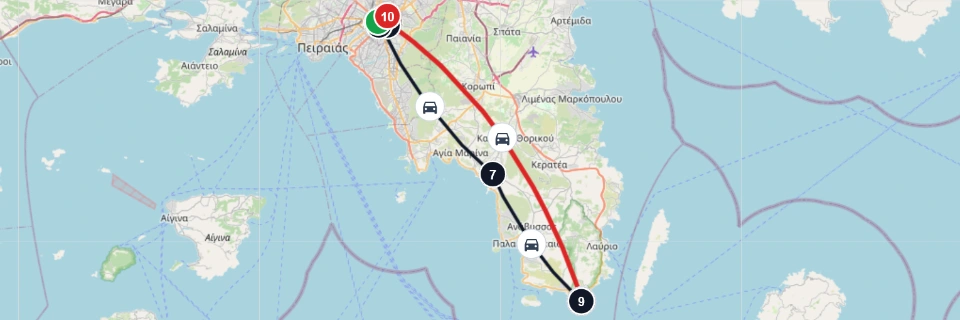
In the final section of the tour, you travel along the coast to the Cape Sounion ancient site for a different side of Attica. The scenery changes from urban landmarks to open sea views, making the day feel varied and complete. This coastal extension is one of the reasons travelers search for an athens city tour and cape sounion tour rather than a city-only program. The small-group format keeps the journey efficient and helps you avoid the pressure of large bus crowds. By the end of the route, you return with a full picture of both classical Athens and the southern coastal heritage.
-
Athens
Pickup and departure
Meet your group in Athens and begin the full-day program.
-
Panathenaic Stadium
City highlight stop
See the Panathenaic Stadium and its Olympic heritage context.
Panathenaic Stadium carries a special kind of historical energy because it connects ancient Athens with the revival of the modern Olympic Games. Built in marble and set in a graceful urban hollow, it feels ceremonial even before you begin thinking about its athletic legacy. The clean lines and open form make it easy to imagine crowds, competition, and civic spectacle gathering here. It is a stop where historical symbolism comes across immediately.
The stadium is rewarding not only for sports history, but also for the way it reflects Athens as a city of continuity. Very few places make the passage from antiquity to the modern era feel so physically visible in one setting. Even a short visit can leave a strong impression because the structure is simple, elegant, and full of meaning. For travelers in Athens, Panathenaic Stadium often feels like a clear and memorable link between classical memory and modern identity.
-
Syntagma Square
City center orientation
Pass through Syntagma and Parliament district landmarks.
Syntagma Square is the civic heart of modern Athens, and it offers a very different kind of historical experience from the classical ruins nearby. Here, parliament, ceremony, traffic, public movement, and city identity all come together in one central space. The square helps you feel Athens as a contemporary capital rather than only an ancient destination. That contrast gives the stop real value within the wider route.
The most memorable element for many travelers is the ceremonial atmosphere around the Parliament area, especially when the guards and formal setting come into view. Even a short pass through the square gives you a stronger sense of the city's modern political center and urban rhythm. It is less about lingering over one monument and more about feeling the pulse of present-day Athens. Syntagma works best as a moment of orientation between the city's ancient and modern faces.
-
Acropolis of Athens
Main archaeological visit
Tour the Acropolis and Parthenon sector with your guide.
Acropolis of Athens is one of those places that feels instantly familiar yet still overwhelming in person. Rising above the modern city, the sacred rock gathers some of the most recognizable monuments of the classical world, with the Parthenon standing as the clearest symbol of all. The approach itself builds anticipation, and once you are on the hill, the combination of architecture, light, and wide city views makes the experience feel larger than expected. It is not simply a famous site, but a powerful physical encounter with the idea of ancient Athens.
What makes the Acropolis unforgettable is the way it connects beauty, history, and setting so naturally. Every angle seems to explain why this place became central to the cultural imagination of Europe and beyond. At the same time, the hill is not frozen in the past, because modern Athens spreads around it in every direction. For travelers, the Acropolis often becomes the moment when classical history stops being academic and starts feeling immediate and alive.
-
Acropolis Museum
Museum visit
Continue to Acropolis Museum for curated classical collections.
Acropolis Museum gives the monuments of Athens a second life indoors. After standing among the ruins on the hill, coming here allows you to meet the sculptures, fragments, and architectural details at eye level, in a setting designed to make their craftsmanship easier to appreciate. The museum feels modern and clear without losing the emotional force of the ancient material it holds. It is not a separate stop from the Acropolis experience, but an essential continuation of it.
What makes the museum especially rewarding is the way it restores context to what weather, time, and displacement can no longer show on the hill itself. Instead of seeing the Acropolis only as silhouette and stone, you begin to understand its artistic richness, narrative detail, and human scale. The galleries also create a calmer space for reflection after the brightness and movement of the outdoor site. For many travelers, Acropolis Museum is where admiration turns into deeper understanding.
-
Lunch Break
Included lunch
Take the included lunch break before afternoon coastal drive.
An included lunch on the Athens Riviera route adds a pleasant pause between the Acropolis side of the day and the more open, sea-facing atmosphere of the southern coast. This is one of the nicer city lunches to take slowly, because the route itself moves from dense historical focus into broader coastal space. Athens and its nearby shoreline support that transition well. The meal can stay simple while still feeling distinctly Greek. That makes the stop both practical and enjoyable.
If local flavors are available, souvlaki, grilled fish, meze, Greek salad, spanakopita, or other Mediterranean staples are all good matches for the route. Travelers often enjoy lunch here because it breaks the day at exactly the right point and keeps the mood light before the Riviera section continues. The best version of the meal should feel sunny, local, and not overplanned. Athens and the coast do this very naturally. A relaxed Greek lunch suits the route beautifully.
-
Athens Riviera
Scenic coastal segment
Drive along the Athens Riviera en route to Sounion.
Athens Riviera offers a welcome change of rhythm from the dense historical core of the city. Driving along the coast, you feel Athens open toward the sea through wider light, softer horizons, and a more relaxed urban landscape shaped by the Aegean. This segment is less about a single monument and more about atmosphere, orientation, and scenic movement. It helps modern Athens feel broader and more varied.
The pleasure of the Riviera lies in that shift from classical center to coastal edge. Sea views, changing neighborhoods, and the sense of traveling outward from the city give the route a lighter mood before major stops farther south. It is a useful reminder that Athens is not only ancient and inland in feeling, but also deeply tied to the coast. The Athens Riviera works best as a scenic transition that adds freshness to the day.
-
Cape Sounion
Clifftop archaeological stop
Arrive at Cape Sounion for site visit and panorama.
Cape Sounion is one of the most beautiful combinations of archaeology and sea landscape in Greece. The clifftop setting above the Aegean gives the site an immediate dramatic force, and the experience of arriving here often feels as important as the monument itself. The openness, light, and horizon make the stop feel almost ceremonial. It is one of those places where the setting magnifies the meaning of the ruins.
What makes Sounion memorable is the way sacred architecture and coastline become inseparable. Even before you focus on the temple remains, the promontory already feels like a place chosen for significance. The site rewards both stillness and long views. Cape Sounion often becomes one of the most atmospheric and visually complete stops of the Greek itinerary.
-
Temple of Poseidon
Main monument visit
Visit the Temple of Poseidon above the Aegean coast.
Temple of Poseidon is one of the great coastal sanctuary experiences of Greece, with a setting that gives the monument almost as much power as the architecture itself. Perched above the sea, the temple feels chosen by the landscape rather than simply placed on it, and the open Aegean horizon adds a strong sense of exposure, myth, and distance. Even in ruin, the sanctuary carries a remarkable authority. It is a place where the sea becomes part of the sacred setting.
The stop is especially rewarding because the monument and the promontory are inseparable in memory. You do not only visit columns, but a site where wind, light, water, and stone combine into a complete atmosphere. For many travelers, this is one of the most emotionally satisfying classical stops on the route. The Temple of Poseidon is memorable precisely because the scenery feels as timeless as the history.
-
Athens Drop-off
Return transfer
Return to Athens and complete drop-off service.
Got a question about this tour?
Reach out to our travel experts.
Informations
-
What's Included
- Professional English-speaking licensed guide
- Round-trip transportation from Athens pickup points
- Acropolis and Acropolis Museum entrances
- Cape Sounion archaeological site entrance
- Included lunch (excluding drinks)
- Parking and operational route costs
-
What's Excluded
- Personal expenses and optional extras
- Beverages during lunch
- Services not listed under included section
-
Entrance Fees
- Acropolis entrance is included
- Acropolis Museum entrance is included
- Cape Sounion archaeological site entrance is included
- Optional personal purchases at sites are not included
-
Travel Tips
- Wear comfortable shoes for city and archaeological walking
- Carry sun protection for Acropolis and coastal segments
- Bring a light layer for sea-wind areas near Sounion
- Keep water with you through the full-day route
-
Note
- Visit sequence can change due to museum entry slots and traffic
- Departure and return timing are approximate on peak days
- All listed highlights are preserved even if order is adjusted
Your Peace of Mind Options
Cancellation Policy
A transparent overview of applicable fees.
Customer Comments - Tripadvisor Write A Review!
Customer Comments - Tripadvisor





Tour Reminder!
You can create a reminder for yourself for this tour. We will send you a reminder e-mail/sms about this tour on the date you specify.
FAQs
-
What does the Athens City Tour and Cape Sounion Small Group Full-Day Tour include?
- Professional English-speaking licensed guide
- Round-trip transportation from Athens pickup points
- Acropolis and Acropolis Museum entrances
- Cape Sounion archaeological site entrance
- Included lunch (excluding drinks)
- Parking and operational route costs
-
Is this a private tour?
- No. This is a small group full-day tour
- You will join other travelers on the same program
-
Which places are visited on this full-day route?
- Panathenaic Stadium
- Syntagma Square
- Acropolis of Athens
- Acropolis Museum
- Cape Sounion and Temple of Poseidon
-
Are entrance tickets included?
- Yes. Acropolis and Acropolis Museum entrances are included
- Yes. Cape Sounion archaeological site entrance is included
-
Is lunch included?
- Yes. Lunch is included
- Drinks/beverages during lunch are excluded
-
Where is pickup and drop-off?
- Round-trip transportation is from Athens pickup points
- Departure and return timing are approximate on peak days
-
Can the visit sequence change?
- Yes. Visit sequence can change due to museum entry slots and traffic
- All listed highlights are preserved even if the order is adjusted
-
How much walking is involved? Is it suitable for limited mobility?
- Expect walking on uneven surfaces at the Acropolis and Cape Sounion
- There are stairs, sloped paths, and exposed open-air areas
- If you have mobility concerns, tell us in advance so we can advise the best approach
-
What should I wear and bring?
- Comfortable walking shoes are strongly recommended
- In warm months: water, hat, and sunscreen
- A light layer can help due to coastal wind at Sounion
-
What is not included in the price?
- Personal expenses and optional extras
- Beverages during lunch
- Services not listed under included section
General FAQs
-
What currency is used in Greece?
Greece uses the Euro (EUR).
- Cards are widely accepted, but carrying cash is useful for small purchases and tips.
-
Do I need a visa to visit Greece?
Visa requirements depend on your nationality. Greece is part of the Schengen Area.
- Please check the latest rules from official sources before travel.
-
What is the best time to visit Greece?
Many travelers prefer spring and early autumn for pleasant temperatures and fewer crowds.
- July and August are peak season, especially on the islands.
- Shoulder seasons can offer better availability and milder weather.
-
Is Greece safe for tourists?
Greece is generally safe for visitors.
- In major cities and crowded areas, watch for pickpockets.
- Use licensed taxis and keep valuables secure, especially at transport hubs.
-
Is tap water safe to drink in Greece?
Tap water is generally fine in many mainland areas, but on some islands visitors prefer bottled water.
- If in doubt, ask your hotel or guide locally.
-
What language is spoken in Greece?
Greek is the official language. In tourist areas, English is commonly spoken.
- Learning a few basic Greek phrases is appreciated.
-
How do ferries and domestic travel work in Greece?
Ferries are a key part of travel between islands and the mainland.
- Schedules can be seasonal and weather-dependent.
- In peak season, booking popular routes ahead can help.
-
What should I know about driving and taxis in Greece?
Driving can be a great way to explore, but roads can be narrow and parking limited in popular towns.
- Use seatbelts and drive defensively.
- For taxis, use licensed providers and confirm the fare when possible.
-
What power plug is used in Greece?
Greece typically uses Type C and Type F plugs (230V, 50Hz).
- Bring a travel adapter if needed.
-
Are SIM cards and mobile data easy to get in Greece?
Yes. Mobile data is widely available and you can buy SIM/eSIM options from common providers.
- Coverage is usually good in cities and many islands, but can vary in remote areas.
-
Is tipping expected in Greece?
Tipping is appreciated, especially for good service.
- In restaurants, rounding up or leaving a small amount is common.
- For guides and drivers, tips are optional and based on satisfaction.
-
What should I pack for Greece?
It depends on season and islands vs mainland, but these basics help:
- Comfortable walking shoes
- Sun protection (hat, sunscreen)
- A light layer for evenings or windy ferry rides
-
What are the emergency numbers in Greece?
Dial 112 for emergencies (free, EU-wide).
- Police: 100
- Ambulance: 166
- Fire: 199
- Coast Guard: 108
If you are unsure, call 112.
-
How do I get from airports/ports to the city in Greece?
Depending on the destination, you may use:
- Metro/train or public buses (common in large cities)
- Licensed taxis
- Pre-booked private transfers
- Ferries between islands and the mainland
In peak season, booking transfers and popular ferry routes ahead can help.
-
How do pharmacies work in Greece (on-duty pharmacy)?
Pharmacies often have a rotating on-duty system outside normal hours.
- Many pharmacies display the on-duty pharmacy information on the door/window.
- If you need urgent assistance, call 112 or your accommodation can help you locate the nearest option.
-
What are typical opening hours in Greece?
Opening hours vary by area and season.
- In some towns, shops may close during the afternoon and reopen in the evening.
- Sundays may have reduced opening, especially outside tourist areas.
- On national/religious holidays, hours can change.
-
What should I wear when visiting monasteries and churches in Greece?
Dress modestly at religious sites.
- Shoulders and knees should be covered.
- Some monasteries may have stricter rules.
-
Are there rules for photography in Greece?
In public areas, photography is usually fine. In museums, churches, and archaeological sites, rules can vary.
- Some places restrict flash or tripods.
- Look for signage and follow staff instructions.
Let's Customize Your Trip!
Prepare your own tour plan!
Good to Know
-
Good to know: this is a long full-day itinerary
- It combines city landmarks and coastal heritage in one day
- Early starts and hydration help comfort
-
Good to know: the Acropolis can be crowded and hot
- Summer midday heat can be intense
- Sun protection and water are important
-
Good to know: Cape Sounion can be windy
- Coastal wind is common at the headland
- Bring a light layer even in warmer seasons
-
Good to know: beverages at lunch are typically extra
- Lunch is included but drinks are excluded
- Having some cash can be useful for extras
-
Good to know: return time is approximate on peak days
- Traffic and entry slots can shift timing
- Avoid scheduling tight plans immediately after the tour
Want to read it later?
Download this tour’s PDF brochure and start tour planning offline
Similar Tours

Meteora and Kalambaka Private Tour
Take a private full-day Meteora tour from Athens and explore the famous churches on rock pinnacles with a stop in Kalambaka.
Argolis Heritage Private Tour
Book a private full-day Argolis tour from Athens with Corinth Canal stop, Mycenae Ancient City, Nafplion Palamidi Fortress, and Epidaurus Theatre.
Argolis Ancient Cities Tour
Join a small-group full-day Argolis tour from Athens with Corinth Canal stop, Mycenae Ancient City, Nafplion Palamidi Fortress, and Epidaurus Theatre.
Delphi Ancient Site Private Tour
Take a private full-day Delphi tour from Athens and explore the Delphi Ancient Site with a scenic Mediterranean road journey.
Delphi Ancient Site Tour
Join a small-group full-day Delphi tour from Athens and explore the Delphi Ancient Site while enjoying scenic Mediterranean landscapes on the road.
Mycenae and Poros Island Private Tour
Book a private full-day tour from Athens to Mycenae and Poros Island, including a short Corinth Canal stop and a flexible day plan.


