
Patmos Heritage Walk Private Tour
Enjoy a private half-day Patmos Highlights Tour from Patmos with Cave of Apocalypse, Monastery of St John, House of Simandiris, and a guided walk in Chora town.
Highlights
- Cave of the Apocalypse and Revelation heritage
- Monastery of Saint John panoramic hilltop setting
- Simandiris House local architectural history
- Chora walk through traditional Patmos lanes
Patmos Heritage Walk Private Tour
Enjoy a private half-day Patmos Highlights Tour from Patmos with Cave of Apocalypse, Monastery of St John, House of Simandiris, and a guided walk in Chora town.
Itinerary
The Patmos highlights private tour is a half-day route created for travelers who want to see the island essential heritage points in one practical program. Departing from Patmos, this itinerary combines sacred landmarks and traditional town atmosphere with a clear route structure. The schedule is compact but meaningful, making it suitable for visitors with limited time. You can explore key sites with comfortable pacing and focused historical context. As a half day Patmos heritage tour, it offers efficiency and depth together.
The tour includes the Cave of Apocalypse and the Monastery of St John, two core landmarks of Patmos identity. This Cave of Apocalypse and Monastery of St John combination provides a strong spiritual and historical foundation for the day. The itinerary then continues to the House of Simandiris for added local cultural perspective. Each stop contributes to a coherent heritage narrative without unnecessary detours. It is a reliable option for travelers interested in a focused House of Simandiris Patmos visit.
The route concludes with a walk in Chora town, where traditional architecture and local atmosphere complete the experience. This final section balances the sacred sites with a lived historic setting. The program remains fully aligned with official tour highlights from start to finish. Private travel keeps transitions smooth and allows better use of time at each location. For visitors seeking a clear Chora town walking tour Patmos, this itinerary works very well.
-
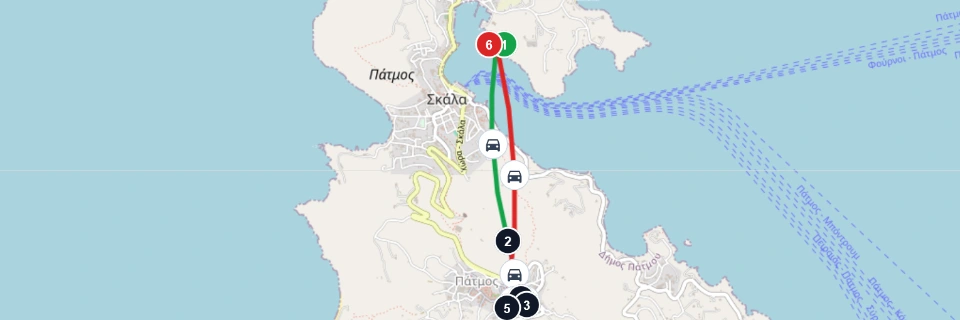
Patmos Pickup in Skala
Meet your guide in Skala for the half-day route.
The highlights route begins from Skala pickup.
-
Cave of the Apocalypse
Visit Patmos's key biblical heritage site.
The cave stop introduces the island's strongest spiritual narrative.
Cave of the Apocalypse is one of the defining sacred places on Patmos, and it carries a strong atmosphere of pilgrimage and spiritual memory. Closely linked to Saint John and the Revelation tradition, the cave is approached not simply as a historical site, but as a place where visitors continue to feel the island's biblical identity most directly. The setting is intimate and focused, which adds to its emotional power. It is one of those places where belief and place seem tightly joined.
The stop is especially rewarding because it gives Patmos a clear spiritual center. Rather than emphasizing monumental scale, the cave works through association, devotion, and the sense of standing in a site central to one of Christianity's most important narratives. For many travelers, the experience is less about spectacle than about presence. The Cave of the Apocalypse invites a quieter and more reflective kind of attention.
-
Monastery of Saint John
Explore the landmark monastery above Chora.
This monastery combines religious heritage with commanding island views.
Monastery of Saint John is the defining landmark of Patmos and one of the island's most important religious monuments. Rising above Chora with a fortress-like silhouette, the monastery immediately combines spiritual authority with architectural presence. It feels at once devotional, historical, and strategic in the landscape. That layered impression is what makes the visit so strong.
The experience is especially rewarding because the monastery does more than preserve sacred memory; it also anchors the visual identity of the island itself. Courtyards, walls, and elevated views help you feel how closely Patmos's religious story and physical setting are tied together. Even travelers who arrive mainly for scenery often find this stop unexpectedly powerful. The Monastery of Saint John gives Patmos its clearest spiritual and architectural center.
-
Simandiris House
Traditional house visit with local history context.
Simandiris House reflects Patmos domestic life and architectural identity.
Simandiris House offers a more intimate look at Patmos by stepping away from grand sacred sites and into the world of traditional domestic life. Preserved interiors, furnishings, and household details help you imagine how generations once lived within the island's architectural culture. This kind of visit is valuable because it turns history into something personal and lived-in rather than distant. The house reflects both local identity and the quiet sophistication of island domestic tradition. It is a small stop, but one with a very human scale.
As you move through the rooms, pay attention to how everyday objects and interior arrangements reveal status, habits, and family life. The experience works especially well if you enjoy understanding a destination through its homes as well as its monuments. Simandiris House also complements Patmos's religious heritage by showing the civilian world that existed alongside monastic and pilgrimage life. The result is a fuller sense of the island's social fabric. Many travelers find this stop unexpectedly memorable because of its warmth and authenticity.
-
Chora Town Walk
Walk through Chora's historic lanes and facades.
Chora's layout preserves medieval defensive planning with island charm.
A walk through Chora is one of the pleasures of Patmos, where whitewashed island architecture and medieval defensive character come together in a compact hilltop setting. The lanes feel intimate and atmospheric, shaped by curves, facades, and small details that reward unhurried exploration. Chora is especially appealing because it feels both historic and lived-in rather than staged for visitors. Every turn offers a slightly different composition of walls, passages, and views. It is a place best enjoyed slowly.
As you walk beneath the monastery walls and through the old lanes, notice how the settlement still preserves a strong sense of island identity and historical continuity. Chora works beautifully because it balances beauty with human scale, making even a short visit feel immersive. Travelers often remember it for its quiet elegance and the way the architecture seems to gather tightly around the hill. It is also an excellent place for photographs, especially in softer light. The walk is simple, but very memorable.
-
Return to Skala
Drop-off and end of private half-day highlights route.
The program returns to Skala after all scheduled visits.
Got a question about this tour?
Reach out to our travel experts.
Informations
-
What's Included
- Private air-conditioned transportation
- Driver and guiding support
- Route coordination for key heritage sites
- Operational and local handling costs
-
What's Excluded
- Entrance fees for cave and monastery venues
- Food, drinks, and personal expenses
- Optional gratuities and additional services
-
Entrance Fees
- Cave and monastery entry tickets are paid directly on site at current rates
-
Travel Tips
- Dress respectfully for monastery and church access
- Wear comfortable shoes for steps and stone paths
- Bring water, hat, and sun protection
- Carry small cash for tickets and personal needs
-
Note
- Site visiting hours can vary by season and religious calendar
- Short uphill walking is required at key stops
- Order of visits may adapt to local operational conditions
Your Peace of Mind Options
Cancellation Policy
A transparent overview of applicable fees.
Customer Comments - Tripadvisor Write A Review!
Customer Comments - Tripadvisor





Tour Reminder!
You can create a reminder for yourself for this tour. We will send you a reminder e-mail/sms about this tour on the date you specify.
FAQs
-
What does the Private Patmos Highlights Half-Day Cultural Tour include?
- Private air-conditioned transportation
- Driver and guiding support
- Route coordination for key heritage sites
- Operational and local handling costs
-
Is this a private tour?
- Yes. This is a private half-day cultural tour operated only for your party
- Order of visits may adapt to local operational conditions
-
Which places are visited on this half-day highlights route?
- Cave of the Apocalypse
- Monastery of Saint John (panoramic hilltop setting)
- Simandiris House
- Chora town walk
-
Are entrance fees included?
- No. Entrance fees for cave and monastery venues are excluded
- Please plan budget for tickets/donations as required on the day
-
Where is pickup and drop-off?
- Pickup is arranged in Skala (Patmos)
- Return is to Skala at the end
-
Can site hours affect the route?
- Yes. Site visiting hours can vary by season and religious calendar
- Order of visits may adapt to local operational conditions
-
How much walking is involved? Is it suitable for reduced mobility?
- Short uphill walking is required at key stops
- Some areas have uneven paths and steps
- If you have mobility concerns, tell us in advance so we can advise suitability and adjust stops
-
What should I wear for religious and heritage sites?
- Modest dress is recommended (shoulders and knees covered)
- Comfortable shoes are important for uneven paths
-
Are food and drinks included?
- No. Food, drinks, and personal expenses are excluded
- Optional gratuities and additional services are excluded
-
What is not included in the price?
- Entrance fees for cave and monastery venues
- Food, drinks, and personal expenses
- Optional gratuities and additional services
General FAQs
-
What currency is used in Greece?
Greece uses the Euro (EUR).
- Cards are widely accepted, but carrying cash is useful for small purchases and tips.
-
Do I need a visa to visit Greece?
Visa requirements depend on your nationality. Greece is part of the Schengen Area.
- Please check the latest rules from official sources before travel.
-
What is the best time to visit Greece?
Many travelers prefer spring and early autumn for pleasant temperatures and fewer crowds.
- July and August are peak season, especially on the islands.
- Shoulder seasons can offer better availability and milder weather.
-
Is Greece safe for tourists?
Greece is generally safe for visitors.
- In major cities and crowded areas, watch for pickpockets.
- Use licensed taxis and keep valuables secure, especially at transport hubs.
-
Is tap water safe to drink in Greece?
Tap water is generally fine in many mainland areas, but on some islands visitors prefer bottled water.
- If in doubt, ask your hotel or guide locally.
-
What language is spoken in Greece?
Greek is the official language. In tourist areas, English is commonly spoken.
- Learning a few basic Greek phrases is appreciated.
-
How do ferries and domestic travel work in Greece?
Ferries are a key part of travel between islands and the mainland.
- Schedules can be seasonal and weather-dependent.
- In peak season, booking popular routes ahead can help.
-
What should I know about driving and taxis in Greece?
Driving can be a great way to explore, but roads can be narrow and parking limited in popular towns.
- Use seatbelts and drive defensively.
- For taxis, use licensed providers and confirm the fare when possible.
-
What power plug is used in Greece?
Greece typically uses Type C and Type F plugs (230V, 50Hz).
- Bring a travel adapter if needed.
-
Are SIM cards and mobile data easy to get in Greece?
Yes. Mobile data is widely available and you can buy SIM/eSIM options from common providers.
- Coverage is usually good in cities and many islands, but can vary in remote areas.
-
Is tipping expected in Greece?
Tipping is appreciated, especially for good service.
- In restaurants, rounding up or leaving a small amount is common.
- For guides and drivers, tips are optional and based on satisfaction.
-
What should I pack for Greece?
It depends on season and islands vs mainland, but these basics help:
- Comfortable walking shoes
- Sun protection (hat, sunscreen)
- A light layer for evenings or windy ferry rides
-
What are the emergency numbers in Greece?
Dial 112 for emergencies (free, EU-wide).
- Police: 100
- Ambulance: 166
- Fire: 199
- Coast Guard: 108
If you are unsure, call 112.
-
How do I get from airports/ports to the city in Greece?
Depending on the destination, you may use:
- Metro/train or public buses (common in large cities)
- Licensed taxis
- Pre-booked private transfers
- Ferries between islands and the mainland
In peak season, booking transfers and popular ferry routes ahead can help.
-
How do pharmacies work in Greece (on-duty pharmacy)?
Pharmacies often have a rotating on-duty system outside normal hours.
- Many pharmacies display the on-duty pharmacy information on the door/window.
- If you need urgent assistance, call 112 or your accommodation can help you locate the nearest option.
-
What are typical opening hours in Greece?
Opening hours vary by area and season.
- In some towns, shops may close during the afternoon and reopen in the evening.
- Sundays may have reduced opening, especially outside tourist areas.
- On national/religious holidays, hours can change.
-
What should I wear when visiting monasteries and churches in Greece?
Dress modestly at religious sites.
- Shoulders and knees should be covered.
- Some monasteries may have stricter rules.
-
Are there rules for photography in Greece?
In public areas, photography is usually fine. In museums, churches, and archaeological sites, rules can vary.
- Some places restrict flash or tripods.
- Look for signage and follow staff instructions.
Let's Customize Your Trip!
Prepare your own tour plan!
Good to Know
-
Good to know: dress code applies at monastery and cave sites
- Cover shoulders and knees
- A light scarf can be helpful
-
Good to know: bring cash for tickets/donations
- Entrance fees are excluded
- Cash is often useful at religious sites
-
Good to know: short uphill walking is required
- Some paths include steps and uneven surfaces
- Comfortable shoes with good grip improve comfort
-
Good to know: site opening hours can change
- Schedules vary by season and religious calendar
- Order of visits may adapt to local conditions
-
Good to know: it is a half-day highlights route
- Tour duration is around 4 hours
- If you have tight port timing, tell us in advance
Want to read it later?
Download this tour’s PDF brochure and start tour planning offline


