
Ancient Corinth Half Day Tour
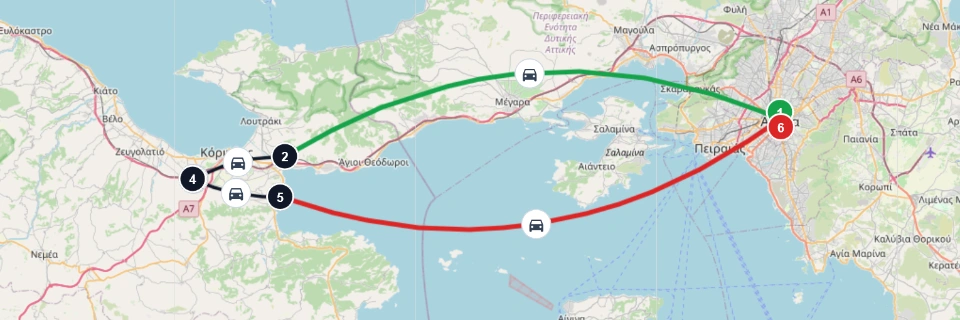
Join a small-group half-day tour from Athens to Ancient Corinth with a Corinth Canal stop and a visit to the Ancient Port of Cehries.
Highlights
- Corinth Canal engineering landmark panorama
- Ancient Corinth and Temple of Apollo remains
- Bema of Saint Paul and early Christian context
- Cenchreae Port linked to Roman-era trade and biblical routes
Ancient Corinth Half Day Tour
Join a small-group half-day tour from Athens to Ancient Corinth with a Corinth Canal stop and a visit to the Ancient Port of Cehries.
Itinerary
Discover the highlights of Corinth on a focused ancient corinth tour from athens designed for travelers with limited time. This route starts from Athens and keeps the itinerary compact without removing key historical stops. The first pause is a corinth canal short stop, giving you a clear geographical introduction and a great photo point. Because the program is a small group half-day tour, transitions are efficient and easy to follow. It is an ideal option for guests who want a practical athens to corinth day trip.
The central visit is Ancient Corinth, where you can explore one of the most important sites in regional history. This stop provides strong archaeological context and helps explain why Corinth was a major center in antiquity. The schedule is structured to keep the visit meaningful while staying inside a half-day format. Travelers who prioritize heritage value often choose this route for its clear focus. The result is a balanced experience that is concise but culturally rich.
The final section includes the ancient port of cehries, adding a maritime perspective to the inland archaeological story. This stop broadens the itinerary and creates a stronger historical sequence across the region. The combination of canal viewpoint, city ruins, and port remains keeps the tour varied and memorable. Small-group operation supports smoother movement between all three points. By return to Athens, the ancient corinth tour from athens delivers a complete half-day plan.
-
Athens
Pickup and departure
Meet your group in Athens and depart toward Corinth region.
-
Corinth Canal
Panorama stop
Stop at Corinth Canal for scenic overview and photos.
Corinth Canal may be a short stop, but it leaves a strong impression because the engineering is so visually immediate. The narrow waterway cuts sharply through steep rock walls, creating a view that feels both elegant and improbable. It is one of those places where geography and human ambition meet in a single glance. Even travelers who know little about the canal in advance usually find the panorama striking.
The stop works best when you take a moment to look beyond the photo and think about the canal as a link between seas, routes, and long-standing strategic dreams. Its scale is not grand in width, but that is exactly what gives the scene its drama. From above, the channel appears almost impossibly precise against the natural landscape. Corinth Canal is a brief but memorable reminder that infrastructure can be as visually powerful as a monument.
-
Ancient Corinth
Archaeological visit
Arrive at Ancient Corinth for guided exploration of the main ruins.
Ancient Corinth offers one of the clearest combinations of classical Greek memory, Roman urban life, and biblical association on a single site. The remains spread across a landscape that still feels easy to read, which helps visitors imagine the city not as an abstract ruin but as a real center of trade, politics, and daily movement. That breadth of identity gives the stop unusual richness. It is a site that speaks to more than one historical world at once.
For many travelers, the appeal of Corinth comes from precisely that overlap. Classical antiquity, early Christian routes, and the visible urban remains all reinforce one another, making the visit rewarding whether your interest is archaeology, religion, or the broader history of the Mediterranean. The site is legible, spacious, and intellectually satisfying. Ancient Corinth often feels like one of the most balanced and complete heritage stops on the Greek side of the route.
-
Temple of Apollo
Main monument sector
Visit the surviving Doric columns of Temple of Apollo.
Temple of Apollo at Ancient Corinth is one of the landmark images of the site because its surviving Doric columns still project unusual strength and clarity. The temple stands as a powerful reminder of the city's long life before and beyond its Roman fame, and its presence gives the archaeological area a clear monumental anchor. Even travelers who are not specialists tend to remember the simplicity and authority of the structure. It is a ruin with real visual confidence.
What makes the stop especially effective is the way the temple connects early Greek architecture with the later urban story of Corinth around it. The surviving columns are enough to suggest the scale and sacred importance the sanctuary once held without overwhelming the rest of the site. This makes it easy to appreciate both as a landmark and as part of a broader historical landscape. The Temple of Apollo at Corinth offers one of the most immediately legible classical moments on the route.
-
Cenchreae Port
Historic harbor stop
Continue to Cenchreae, the historic eastern port tied to Corinth's maritime trade.
Cenchreae Port adds an important maritime chapter to the story of ancient Corinth, reminding you that the city's influence depended not only on inland power but also on access to the sea. As the eastern port, Cenchreae helped connect Corinth to trade, movement, and communication across the wider Mediterranean. The stop is especially meaningful if you are interested in how cities functioned as networks rather than isolated centers. Even if the remains are not monumental in the conventional sense, the historical role of the harbor is considerable. It is a place where geography explains power.
As you consider the port, imagine goods, travelers, and ideas passing through this shoreline as part of everyday ancient life. The maritime dimension often makes the broader Corinth story feel much more complete. Travelers who enjoy biblical and classical history alike usually find value in understanding this harbor context. It gives the inland monuments a practical counterpart. Cenchreae may be quiet today, but its past importance still shapes how the region is understood.
-
Athens Drop-off
Return transfer
Return to Athens and complete drop-off service.
Got a question about this tour?
Reach out to our travel experts.
Informations
-
What's Included
- Round-trip transportation from Athens pickup points
- Professional English-speaking licensed guide
- Ancient Corinth site entrance
- Parking and operational route costs
-
What's Excluded
- Personal expenses and optional extras
- Meals and beverages
- Services not listed under included section
-
Entrance Fees
- Ancient Corinth entrance is included
- Optional museum or additional ticketed areas are not included
-
Travel Tips
- Wear comfortable shoes for uneven archaeological terrain
- Carry sun protection for open-site exposure
- Bring water for the half-day route
- Use a light jacket in cooler seasons
-
Note
- Return timing may vary depending on road traffic
- Stop sequence can adjust while preserving all listed highlights
- Pickup order may differ by hotel area
Your Peace of Mind Options
Cancellation Policy
A transparent overview of applicable fees.
Customer Comments - Tripadvisor Write A Review!
Customer Comments - Tripadvisor





Tour Reminder!
You can create a reminder for yourself for this tour. We will send you a reminder e-mail/sms about this tour on the date you specify.
FAQs
-
What does the Ancient Corinth and Cenchreae Port Small Group Half-Day Tour from Athens include?
- Round-trip transportation from Athens pickup points
- Professional English-speaking licensed guide
- Ancient Corinth site entrance
- Parking and operational route costs
-
Is this a private tour?
- No. This is a small group half-day tour
- You will join other travelers on the same program
-
Which places are visited on this tour?
- Corinth Canal panorama stop
- Ancient Corinth and Temple of Apollo area
- Cenchreae Port
-
Are entrance tickets included?
- Yes. Ancient Corinth site entrance is included
- Other fees (if applicable) are not listed as included
-
Is this tour suitable for early Christian / Saint Paul context?
- Yes. The route includes the Bema of Saint Paul context area in Ancient Corinth
- Cenchreae is historically linked to Roman-era trade routes and early Christian journeys
- Your guide can emphasize the early Christian and biblical background based on your interest
-
Where is pickup and drop-off?
- Round-trip transportation is from Athens pickup points
- Pickup order may differ by hotel area
- Return timing may vary depending on road traffic
-
Can the stop order change?
- Yes. Stop sequence can adjust while preserving all listed highlights
- Traffic can affect exact stop durations
-
How much walking is involved? Is it suitable for limited mobility?
- Expect walking on uneven archaeological surfaces in Ancient Corinth
- Some areas include steps and stone paths
- If you have mobility concerns, tell us in advance so we can advise the best approach
-
Are meals and beverages included?
- No. Meals and beverages are excluded
- Personal expenses and optional extras are excluded
-
What is not included in the price?
- Personal expenses and optional extras
- Meals and beverages
- Services not listed under included section
General FAQs
-
What currency is used in Greece?
Greece uses the Euro (EUR).
- Cards are widely accepted, but carrying cash is useful for small purchases and tips.
-
Do I need a visa to visit Greece?
Visa requirements depend on your nationality. Greece is part of the Schengen Area.
- Please check the latest rules from official sources before travel.
-
What is the best time to visit Greece?
Many travelers prefer spring and early autumn for pleasant temperatures and fewer crowds.
- July and August are peak season, especially on the islands.
- Shoulder seasons can offer better availability and milder weather.
-
Is Greece safe for tourists?
Greece is generally safe for visitors.
- In major cities and crowded areas, watch for pickpockets.
- Use licensed taxis and keep valuables secure, especially at transport hubs.
-
Is tap water safe to drink in Greece?
Tap water is generally fine in many mainland areas, but on some islands visitors prefer bottled water.
- If in doubt, ask your hotel or guide locally.
-
What language is spoken in Greece?
Greek is the official language. In tourist areas, English is commonly spoken.
- Learning a few basic Greek phrases is appreciated.
-
How do ferries and domestic travel work in Greece?
Ferries are a key part of travel between islands and the mainland.
- Schedules can be seasonal and weather-dependent.
- In peak season, booking popular routes ahead can help.
-
What should I know about driving and taxis in Greece?
Driving can be a great way to explore, but roads can be narrow and parking limited in popular towns.
- Use seatbelts and drive defensively.
- For taxis, use licensed providers and confirm the fare when possible.
-
What power plug is used in Greece?
Greece typically uses Type C and Type F plugs (230V, 50Hz).
- Bring a travel adapter if needed.
-
Are SIM cards and mobile data easy to get in Greece?
Yes. Mobile data is widely available and you can buy SIM/eSIM options from common providers.
- Coverage is usually good in cities and many islands, but can vary in remote areas.
-
Is tipping expected in Greece?
Tipping is appreciated, especially for good service.
- In restaurants, rounding up or leaving a small amount is common.
- For guides and drivers, tips are optional and based on satisfaction.
-
What should I pack for Greece?
It depends on season and islands vs mainland, but these basics help:
- Comfortable walking shoes
- Sun protection (hat, sunscreen)
- A light layer for evenings or windy ferry rides
-
What are the emergency numbers in Greece?
Dial 112 for emergencies (free, EU-wide).
- Police: 100
- Ambulance: 166
- Fire: 199
- Coast Guard: 108
If you are unsure, call 112.
-
How do I get from airports/ports to the city in Greece?
Depending on the destination, you may use:
- Metro/train or public buses (common in large cities)
- Licensed taxis
- Pre-booked private transfers
- Ferries between islands and the mainland
In peak season, booking transfers and popular ferry routes ahead can help.
-
How do pharmacies work in Greece (on-duty pharmacy)?
Pharmacies often have a rotating on-duty system outside normal hours.
- Many pharmacies display the on-duty pharmacy information on the door/window.
- If you need urgent assistance, call 112 or your accommodation can help you locate the nearest option.
-
What are typical opening hours in Greece?
Opening hours vary by area and season.
- In some towns, shops may close during the afternoon and reopen in the evening.
- Sundays may have reduced opening, especially outside tourist areas.
- On national/religious holidays, hours can change.
-
What should I wear when visiting monasteries and churches in Greece?
Dress modestly at religious sites.
- Shoulders and knees should be covered.
- Some monasteries may have stricter rules.
-
Are there rules for photography in Greece?
In public areas, photography is usually fine. In museums, churches, and archaeological sites, rules can vary.
- Some places restrict flash or tripods.
- Look for signage and follow staff instructions.
Let's Customize Your Trip!
Prepare your own tour plan!
Good to Know
-
Good to know: expect some driving time from Athens
- This is a cross-region half-day tour
- Traffic and road conditions can affect timing
-
Good to know: the Corinth Canal stop is usually brief
- It is typically a quick photo and observation stop
- Your guide will manage timing to fit the half-day flow
-
Good to know: comfortable shoes help at Ancient Corinth
- Uneven stone surfaces are common
- Shoes with good grip improve comfort
-
Good to know: bring water in warm months
- Open-air walking can be hot
- Having water improves comfort
-
Good to know: tell your guide if you want more biblical focus
- The route can emphasize archaeology or early Christian context
- Sharing your interest helps tailor the storytelling
Want to read it later?
Download this tour’s PDF brochure and start tour planning offline
Similar Tours


