
Aegean Icons and Anatolian Classics

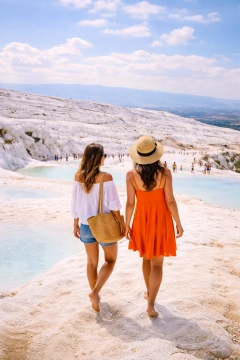
Discover a 14 day Greece and Turkey combined tour from Athens to Istanbul by ferry and flight including Acropolis, Santorini, Mykonos, Istanbul Old City, Cappadocia, and Ephesus.
Highlights
- Acropolis and modern Athens city landmarks
- Santorini and Mykonos island experiences
- Istanbul Old City with Hagia Sophia and Topkapi Palace
- Cappadocia valleys and Ephesus ancient heritage

Aegean Icons and Anatolian Classics
Discover a 14 day Greece and Turkey combined tour from Athens to Istanbul by ferry and flight including Acropolis, Santorini, Mykonos, Istanbul Old City, Cappadocia, and Ephesus.
Itinerary
This greece and turkey combined tour is designed for travelers who want the most recognized destinations from both countries in one itinerary. The route starts in Athens and continues through the Greek island chapter before entering Turkey. Santorini and Mykonos bring Aegean island atmosphere, while the later stages add historical city and regional heritage depth. Because the schedule is pre arranged, travelers can follow a clear route without fragmented planning. As a 14 day athens to istanbul package, it combines variety with practical structure.
After the Greece section, Istanbul introduces the classic Old City landmarks included in the program, such as Hagia Sophia Museum, Topkapi Palace, Grand Bazaar, Sultanahmet Square, and Blue Mosque. This creates a strong old city istanbul and acropolis tour narrative by linking Greek classical heritage with Ottoman-Byzantine urban history. The route then continues to Cappadocia for valley landscapes and underground heritage, adding a distinct regional contrast. Later, the itinerary moves to Kusadasi and features Ephesus Ancient City, House of Virgin Mary, and Temple of Artemis. All these points are part of the official itinerary and remain fully within declared tour scope.
Operationally, the program combines ferry and flight logistics with guided local tours and coordinated transfers. This makes it a smooth ferry and flight greece turkey holiday for guests who prefer one integrated booking. Accommodation, entries, and day tours are organized according to package inclusions, which helps maintain consistent travel rhythm. The journey gives equal weight to island time, city monuments, and archaeological landmarks across multiple regions. It is a complete santorini mykonos cappadocia ephesus itinerary connected by a clear Athens to Istanbul flow.
-
Day 1
Athens
Arrival day
Airport arrival and hotel transfer in Athens.
Athens AirportArrival point
Meet transfer staff at Athens International Airport.
Athens Hotel Check-inHotel transfer
Transfer and check in at your Athens hotel.
-
Day 2
Athens
B
City highlights day
Guided Athens city and Acropolis sightseeing.
Acropolis of AthensAncient citadel
Visit the Acropolis and Parthenon above modern Athens.
Acropolis of Athens is one of those places that feels instantly familiar yet still overwhelming in person. Rising above the modern city, the sacred rock gathers some of the most recognizable monuments of the classical world, with the Parthenon standing as the clearest symbol of all. The approach itself builds anticipation, and once you are on the hill, the combination of architecture, light, and wide city views makes the experience feel larger than expected. It is not simply a famous site, but a powerful physical encounter with the idea of ancient Athens.
What makes the Acropolis unforgettable is the way it connects beauty, history, and setting so naturally. Every angle seems to explain why this place became central to the cultural imagination of Europe and beyond. At the same time, the hill is not frozen in the past, because modern Athens spreads around it in every direction. For travelers, the Acropolis often becomes the moment when classical history stops being academic and starts feeling immediate and alive.
Acropolis MuseumMuseum visit
Explore the Acropolis Museum collections and monumental finds.
Acropolis Museum gives the monuments of Athens a second life indoors. After standing among the ruins on the hill, coming here allows you to meet the sculptures, fragments, and architectural details at eye level, in a setting designed to make their craftsmanship easier to appreciate. The museum feels modern and clear without losing the emotional force of the ancient material it holds. It is not a separate stop from the Acropolis experience, but an essential continuation of it.
What makes the museum especially rewarding is the way it restores context to what weather, time, and displacement can no longer show on the hill itself. Instead of seeing the Acropolis only as silhouette and stone, you begin to understand its artistic richness, narrative detail, and human scale. The galleries also create a calmer space for reflection after the brightness and movement of the outdoor site. For many travelers, Acropolis Museum is where admiration turns into deeper understanding.
Panathenaic StadiumHistoric landmark
See the marble stadium associated with the first modern Olympics.
Panathenaic Stadium carries a special kind of historical energy because it connects ancient Athens with the revival of the modern Olympic Games. Built in marble and set in a graceful urban hollow, it feels ceremonial even before you begin thinking about its athletic legacy. The clean lines and open form make it easy to imagine crowds, competition, and civic spectacle gathering here. It is a stop where historical symbolism comes across immediately.
The stadium is rewarding not only for sports history, but also for the way it reflects Athens as a city of continuity. Very few places make the passage from antiquity to the modern era feel so physically visible in one setting. Even a short visit can leave a strong impression because the structure is simple, elegant, and full of meaning. For travelers in Athens, Panathenaic Stadium often feels like a clear and memorable link between classical memory and modern identity.
Syntagma SquareCity center stop
View Parliament and ceremonial guards at Syntagma.
Syntagma Square is the civic heart of modern Athens, and it offers a very different kind of historical experience from the classical ruins nearby. Here, parliament, ceremony, traffic, public movement, and city identity all come together in one central space. The square helps you feel Athens as a contemporary capital rather than only an ancient destination. That contrast gives the stop real value within the wider route.
The most memorable element for many travelers is the ceremonial atmosphere around the Parliament area, especially when the guards and formal setting come into view. Even a short pass through the square gives you a stronger sense of the city's modern political center and urban rhythm. It is less about lingering over one monument and more about feeling the pulse of present-day Athens. Syntagma works best as a moment of orientation between the city's ancient and modern faces.
-
Day 3
Santorini
B
Ferry to Santorini
Port transfer and ferry crossing to Santorini.
Piraeus PortFerry departure
Board morning ferry at Piraeus port.
Athinios Port SantoriniIsland arrival
Arrive in Santorini and continue with hotel transfer.
Santorini Hotel Check-inHotel transfer
Check in at your Santorini hotel.
-
Day 4
Santorini
B
Leisure island day
Free day for villages, beaches, and caldera views.
Fira Caldera WalkCaldera panorama
Walk Fira's caldera edge with volcanic island panoramas.
Fira Caldera Walk is one of the classic Santorini experiences because the scenery is almost continuously spectacular. As you move along the cliff edge, the caldera opens beneath you in sweeping arcs of sea, volcanic islands, whitewashed buildings, and light that seems to change every few minutes. It is the kind of walk that makes people stop repeatedly, not because the route is difficult, but because the views keep asking for attention. The setting feels dramatic, airy, and unmistakably Cycladic.
What makes the walk so rewarding is the balance between natural force and human setting. The caldera itself tells the island's volcanic story, while the town around you adds cafes, terraces, church domes, and the lived texture of a famous island center. Even if Santorini already feels familiar from photos, being on the rim in person has a very different emotional effect. Fira is where the island often becomes more vivid, more immediate, and far more beautiful than expected.
Oia Sunset PointIconic village stop
Visit Oia for classic Cycladic lanes and sunset viewpoints.
Oia Sunset Point is one of those famous places that still manages to justify its reputation. As evening light begins to soften the whitewashed buildings and the caldera turns deeper blue and gold, the whole village seems to shift into a more cinematic version of itself. The views are instantly recognizable, but in person the atmosphere is much richer, with sea breeze, quiet anticipation, and changing color doing as much as the architecture. It feels like a destination designed for a final pause rather than a rushed visit.
The key to enjoying Oia is to let the moment unfold rather than chase only the perfect photograph. Terraces, domes, lanes, and cliff edges all begin to glow differently as the sun moves lower, and that gradual change is part of the experience. Even on a busy evening, the setting has an undeniable emotional pull. Oia is often the stop that leaves Santorini feeling most dreamlike and unforgettable.
Santorini Free TimeOptional activities
Use free time for beach, café, or optional excursions.
-
Day 5
Mykonos
B
Ferry to Mykonos
Transfer and ferry crossing from Santorini to Mykonos.
Santorini Port DepartureFerry departure
Board high-speed ferry at Santorini port.
Mykonos Port ArrivalIsland arrival
Arrive in Mykonos and transfer to hotel.
Mykonos Hotel Check-inHotel transfer
Check in at your Mykonos hotel.
-
Day 6
Mykonos
B
Leisure island day
Free day in Mykonos for beaches and old town.
Mykonos WindmillsIsland landmark
Visit the iconic windmills overlooking Mykonos town.
Mykonos Windmills are among the island's clearest visual symbols, and seeing them in person instantly explains why. Set above the town and close to the waterfront, they combine practical island history with the crisp white geometry that defines the Cycladic image in so many travelers' minds. The setting is open, bright, and immediately photogenic. It is a landmark stop that feels simple yet iconic.
The windmills are especially rewarding because they connect scenery with the working past of the island. What now feels picturesque once belonged to the everyday economic life of Mykonos, and that practical background gives the site more depth than a photo alone might suggest. With the sea, town, and harbor nearby, the viewpoint also works as a strong orientation point. The Mykonos windmills often become one of the island images visitors remember most clearly.
Little VeniceWaterfront quarter
Explore Little Venice and the harbor-side promenade.
Little Venice captures one of the most charming and photogenic sides of Mykonos. The waterfront houses seem to lean directly over the sea, while narrow lanes, bright light, and the open harbor atmosphere create a setting that feels playful and unmistakably island-based. It is the sort of place that invites wandering rather than rushing. Even a short stroll here can feel like stepping into the postcard image of the Cyclades.
What makes the area memorable is its balance of scenery and ease. The sea is always close, the views keep opening unexpectedly, and the old harbor character gives the walk a lively but relaxed rhythm. This is not a monumental heritage stop so much as a place to enjoy texture, mood, and simple coastal beauty. Little Venice is best experienced with no agenda beyond looking, walking, and taking in the setting.
Mykonos Free TimeOptional activities
Enjoy additional independent time around the island.
-
Day 7
Istanbul
B
Flight to Istanbul
Fly from Mykonos to Istanbul via Athens.
Mykonos AirportFlight departure
Transfer to airport and depart Mykonos.
Athens TransitConnection segment
Transit in Athens before onward flight.
Istanbul Airport ArrivalArrival in Istanbul
Land in Istanbul and continue to hotel transfer.
Istanbul Hotel Check-inHotel transfer
Check in and overnight in Istanbul.
-
Day 8
Istanbul
B
L
Classic city tour day
Guided Istanbul Old City sightseeing.
Hagia SophiaByzantine monument
Visit Hagia Sophia, one of Istanbul's most important monuments.
Hagia Sophia carries the weight of empires the moment you stand before it. Few monuments in the world express such a deep layering of history, where Byzantine ambition, Ottoman transformation, and modern memory all remain visible in one extraordinary structure. Inside, the immense dome, vast interior volume, marble surfaces, and surviving decorative details create a sense of awe that photographs rarely capture. It is less a single building than a long conversation between civilizations.
As you move through the space, keep looking upward and outward, because the scale is part of the emotional impact. Subtle details reveal themselves slowly, from calligraphic elements to traces of older artistic traditions, and that tension between eras is what makes the monument unforgettable. The setting in the heart of the historic peninsula only adds to the experience, placing you inside one of the most symbolically charged landscapes in Istanbul. For travelers interested in history, architecture, or simply atmosphere, Hagia Sophia almost always feels like a highlight of the entire trip.
Blue MosqueOttoman landmark
See the Blue Mosque and its historic Sultanahmet setting.
Blue Mosque is one of those landmarks that immediately defines the skyline and the mood of old Istanbul. Its six minarets, layered domes, and elegant proportions make it impressive from the outside, but the real experience deepens once you step into the prayer hall and see the light move across the interior. The famous blue-toned Iznik tiles and vast open space create an atmosphere that feels both grand and peaceful. Even in a busy part of the city, the monument still holds a strong sense of calm.
Because it remains an active place of worship, this visit works best when approached with quiet respect and a little patience. Take time to notice the courtyard, the rhythm of the arches, and the way the building was designed to balance spiritual presence with imperial scale. The surrounding Sultanahmet area adds even more power to the stop, since so many of Istanbul's major monuments stand within a short walk of one another. For many travelers, Blue Mosque becomes one of the moments when Istanbul stops feeling like a distant postcard and starts feeling immediate and real.
Hippodrome SquareHistoric center
Walk the former Byzantine Hippodrome area.
Hippodrome Square is one of the best places to imagine the ceremonial life of old Constantinople. What is now an open public space was once the great arena of the Byzantine capital, where chariot races, imperial appearances, and major political tensions played out before enormous crowds. As you walk through the square, the surviving monuments help the past feel surprisingly close rather than abstract. It is a stop that rewards a little imagination and historical awareness.
The setting is especially powerful because so many of Istanbul's major landmarks stand nearby. Obelisks, open space, and the surrounding skyline create a layered atmosphere in which Roman, Byzantine, and Ottoman history all seem to overlap. Instead of thinking of it as an empty square, try to picture the noise, spectacle, and rivalry that once defined this space. For travelers exploring Sultanahmet, Hippodrome Square often becomes the place where the historic peninsula starts to feel dramatically alive.
Lunch BreakIncluded lunch
Enjoy an included lunch during full-day touring.
A lunch break in the Sultanahmet route is one of the most satisfying urban meal pauses in Istanbul, because it sits among some of the city's grandest monuments while still allowing room for everyday enjoyment. Between the Hippodrome, Blue Mosque, Topkapi, and Grand Bazaar, the old city remains fully present even while you stop to eat. That makes lunch part of the experience rather than a break from it. The area naturally supports a slower midday pace. It is a stop where history and appetite can coexist very easily.
If you have options, kebab, pide, meze, lentil soup, köfte, döner, or lighter Turkish home-style dishes are all reliable choices around Sultanahmet. Travelers often appreciate a lunch here because it gives them a moment to rest while staying in the heart of imperial Istanbul. Tea afterwards before continuing to palace or bazaar sections also fits perfectly. The best meal in this part of the city is local, efficient, and not overplanned. Sultanahmet rewards a classic Istanbul lunch.
Topkapi PalaceImperial palace
Explore Topkapi Palace courtyards and imperial sections.
Topkapi Palace opens the door to the imperial world of the Ottoman court. Rather than a single grand building, the palace unfolds through courtyards, chambers, terraces, ceremonial spaces, and viewpoints that reveal how power was organized and displayed for centuries. The Bosphorus views alone are memorable, but the real fascination comes from imagining the officials, sultans, guards, and artisans who once filled these spaces. It is a place where politics, luxury, daily routine, and ceremony all seem to overlap.
Walking through the complex gives you a stronger sense of Ottoman history than a simple timeline ever could. One section may highlight refined decoration and courtly taste, while another reminds you that this was the administrative heart of an empire stretching across continents. Pay attention to the transitions between open courtyards and more private interiors, because that rhythm is part of the palace experience. By the time you leave, Topkapi Palace often feels less like a museum visit and more like a passage through the living structure of imperial Istanbul.
Grand BazaarHistoric market
Visit the Grand Bazaar before returning to hotel.
Grand Bazaar is not just a market, but an experience of movement, color, sound, and texture. As you enter its covered lanes, you step into a trading world shaped by centuries of commerce, where light falls across ceramics, textiles, lamps, jewelry, leather, sweets, and countless small details competing for your attention. The scale of the bazaar makes it feel almost like a city within the city. Even travelers who do not plan to shop usually enjoy simply walking through its atmosphere.
The best way to experience the bazaar is to stay curious and unhurried. Look beyond the main corridors and you will notice workshops, quieter passages, and the old rhythm of buying, bargaining, and craft still shaping the place. It is also one of the easiest places in Istanbul to feel how trade helped define the city's identity across empires. For many visitors, Grand Bazaar becomes one of the most sensory and memorable stops of the old city.
-
Day 9
Cappadocia
L
Flight and North route
Flight to Cappadocia and north valley highlights.
Istanbul Airport DepartureFlight departure
Transfer from hotel to airport for Cappadocia flight.
Cappadocia Airport ArrivalArrival point
Arrive in Cappadocia and meet local team.
Devrent ValleyRock formations
See Devrent Valley's unique erosion-shaped formations.
Devrent Valley feels like Cappadocia at its most playful and surreal. The valley is famous for rock formations shaped by wind and time into forms that resemble animals, figures, and strange sculptures, so nearly every visitor starts seeing something different in the landscape. Unlike sites focused on churches or settlements, this stop is about imagination as much as history. The scenery has a dreamlike quality that makes even a short visit memorable.
What makes Devrent rewarding is the freedom to look slowly and let the shapes reveal themselves. One angle may look lunar and abstract, while another suddenly turns into a camel, a bird, or a giant stone silhouette. The soft volcanic terrain and open views also make it a very satisfying place for photography. For many travelers, Devrent Valley is where Cappadocia feels less like a normal region and more like a landscape invented for stories.
Pasabag ValleyMonks Valley
Visit Pasabag's fairy chimneys and monastic landscape.
Pasabag Valley shows Cappadocia at its most iconic, with fairy chimneys that look almost impossibly sculptural. The valley's forms are dramatic enough to be memorable at first glance, yet the place also carries a calm atmosphere that lets the landscape speak for itself. It is one of the region's classic stops for good reason. The valley feels both surreal and oddly balanced.
What makes Pasabag especially rewarding is the combination of visual clarity and monastic association. The formations are spectacular on their own, but the wider setting also suggests a quieter spiritual history folded into the landscape. That gives the stop more depth than a simple photo opportunity. Pasabag Valley remains one of the most recognizable and satisfying expressions of Cappadocia's geology.
Lunch BreakIncluded lunch
Take an included lunch break during the route.
A lunch break on the north Cappadocia route works particularly well because the day usually combines sculpted valleys, fairy-chimney landscapes, and major open-air heritage sites. The visual richness of the morning makes a midday pause especially welcome. Lunch in this setting is most satisfying when it reflects the practical warmth of central Anatolian cuisine rather than trying to be overly elaborate. That keeps the route comfortable and regionally coherent. It is a stop that supports the scenery beautifully.
If you have a choice, gözleme, pottery kebab, soups, mantı, grilled items, and home-style village dishes all suit this part of Cappadocia. Travelers often appreciate meal breaks like this because they bring some physical comfort back into a landscape-driven day. The best lunch here should feel regional, filling, and easy to enjoy. North Cappadocia benefits from that grounded pause. It helps keep the rest of the day clear and enjoyable.
Goreme Open Air MuseumRock-cut churches
Explore UNESCO-listed cave churches and monastic cells.
Goreme Open Air Museum is one of the places where Cappadocia's landscape and spiritual history come together most clearly. Carved directly into soft volcanic rock, the churches, chapels, and monastic spaces show how communities adapted the land into a sacred environment filled with faith, artistry, and daily life. The frescoes inside many of the cave churches add color and emotion to a setting that is already visually unforgettable. It is easy to understand why this site is considered one of the region's essential stops.
The visit becomes especially rewarding when you slow down and let the details emerge from the stone. Dark interiors, painted walls, worn steps, and quiet courtyards create a mood that feels very different from the dramatic valleys outside. Instead of seeing the museum only as a collection of monuments, try to experience it as a lived monastic world shaped by devotion and isolation. For travelers exploring Cappadocia, Goreme Open Air Museum often provides the historical depth that makes the entire landscape feel richer and more meaningful.
Uchisar CastlePanoramic point
Stop for panoramic views around Uchisar area.
Uchisar Castle gives you one of the most commanding panoramic experiences in Cappadocia. The rock citadel rises above the surrounding valleys like a natural watchtower, and once you reach the viewpoint, the region's tuff ridges, carved slopes, and layered settlements begin to spread out in a way that feels both beautiful and clarifying. It is the kind of stop that helps the wider geography suddenly make sense. The view is broad, clean, and deeply satisfying.
What makes Uchisar so memorable is the combination of altitude and sculptural form. The castle itself is already striking, but its real power comes from the perspective it offers over the landscape around it. This is often where travelers feel the full scale of Cappadocia rather than only its individual valleys. Uchisar works as both a landmark and an ideal final panorama stop.
-
Day 10
Cappadocia
B
L
South route day
South Cappadocia valleys and underground heritage.
Red ValleyScenic valley
Walk through Red Valley's layered rock landscapes.
Red Valley is one of Cappadocia's most atmospheric walking landscapes, especially when the changing light begins to warm the stone. The valley is known for layered volcanic ridges, soft curves, and rich tones that shift from pale rose to deep red depending on the hour and the weather. Unlike the more architectural stops of the region, this one draws you into the natural rhythm of the terrain itself. It feels open, immersive, and quietly dramatic.
The pleasure of Red Valley comes from moving through it rather than only looking at it from a distance. Each bend reveals new formations, narrow paths, and broad viewpoints that make the landscape feel almost cinematic. It is also one of the places where Cappadocia's colors become part of the experience, not just the shapes of the rock. For travelers who enjoy scenery with mood and movement, Red Valley often feels like one of the most beautiful segments of the route.
Cavusin VillageCave settlement
Visit old cave houses and local stone-carved heritage.
Cavusin Village offers one of Cappadocia's most evocative combinations of settlement history and landscape. The old village is known for rock-cut dwellings, carved spaces, and traces of early Christian life that seem to emerge directly from the stone hillside. Walking through the area, you feel the closeness between shelter, devotion, and terrain in a way that is very specific to the region. It is a place where habitation and geology appear almost inseparable.
What gives Cavusin its character is the sense of an older, partially abandoned world still visible in the cliffs. Rather than polished monumentality, the stop offers atmosphere, texture, and the impression of lives shaped closely by the land. That makes it especially rewarding for travelers who enjoy places that feel both historical and intimate. Cavusin is the kind of stop that quietly lingers in memory after the day is over.
Lunch BreakIncluded lunch
Enjoy an included lunch before afternoon visits.
A lunch break on the south Cappadocia route fits naturally between places like Cavusin, Red Valley, Pigeon Valley, and Kaymakli, where the landscape is dramatic and the walking can be more demanding than it first appears. By midday, a slower meal helps the route feel sustainable and more enjoyable. The region's food culture is central Anatolian in character, so lunch is usually best when it is warm, practical, and regionally grounded. This makes the stop feel appropriate to the setting rather than generic. It is a useful reset in the middle of a full day.
If local options are available, look for pottery kebab, gözleme, lentil soup, mantı, grilled meats, beans, and other satisfying Cappadocian or Anatolian dishes. Travelers often appreciate lunch here because it provides both comfort and a clear local flavor profile before the afternoon continues. The best version of the stop should feel unhurried and restorative. South Cappadocia rewards substance over fuss. A good inland lunch suits the route very well.
Kaymakli Underground CityUnderground city
Discover the multi-level underground city network at Kaymakli.
Kaymakli Underground City gives you one of Cappadocia's most unusual and immersive experiences. Descending into its narrow passages and carved chambers, you begin to understand how entire communities once organized shelter, storage, movement, and defense beneath the surface of the land. The engineering feels remarkably practical, but the atmosphere is what most visitors remember first. Cool air, low tunnels, and the sense of hidden life make the visit feel adventurous from the very first steps.
This is not just an underground shelter, but a complex system that reveals how people adapted creatively to uncertain times. As you move through the levels, it becomes easier to imagine families, supplies, animals, and religious life all being protected within this subterranean world. The experience is especially powerful because it feels so different from Cappadocia's open valleys and panoramic viewpoints above ground. For travelers who want a stronger sense of the region's human story, Kaymakli Underground City is often one of the most memorable stops on the route.
Cappadocia Hotel ReturnEvening return
Return to hotel after full-day route completion.
-
Day 11
Kusadasi
B
Flight to Izmir and transfer
Travel from Cappadocia to Izmir and continue to Kusadasi.
Cappadocia Airport DepartureFlight departure
Transfer to airport and board Izmir flight.
Izmir Airport ArrivalArrival in Izmir
Land in Izmir and meet transfer to Kusadasi.
Kusadasi Hotel Check-inHotel transfer
Check in and overnight in Kusadasi.
-
Day 12
Kusadasi
B
L
Ephesus excursion day
Guided Ephesus and Selcuk heritage route.
Ephesus Ancient CityRoman heritage
Walk through Ephesus, one of the best-preserved Roman cities.
Ephesus Ancient City feels less like a ruin and more like a grand city waiting for its crowds to return. As you walk along the marble streets, the scale of the place becomes immediately clear through the Library of Celsus, the Great Theatre, and the long ceremonial avenues that once connected civic life, trade, and belief. Every corner reveals how powerful and sophisticated this Roman metropolis once was. It is easy to picture philosophers, merchants, and pilgrims moving through the same urban scene that now unfolds in front of you.
Give yourself time to slow down here, because Ephesus rewards careful attention rather than a rushed photo stop. Look at the carved details, the worn paving stones, and the way the city opens toward the theatre to understand how daily life was staged in public view. This is also one of the most evocative places in the region for travelers interested in early Christianity as well as classical history. By the end of the visit, Ephesus usually feels like one of the rare archaeological sites that is both monumental and deeply human.
House of Virgin MaryPilgrimage site
Visit the revered hilltop House of Virgin Mary near Ephesus.
House of Virgin Mary offers a very different atmosphere from the larger archaeological sites around Ephesus. Reached through pine-covered hills, the sanctuary feels quiet, intimate, and reflective, with a mood that encourages visitors to lower their voices and simply take in the setting. For many travelers, the power of the place comes from this sense of calm as much as from its religious meaning. Whether you arrive for spiritual reasons or cultural curiosity, the stop often leaves a lasting impression.
This site is respected by both Christian and Muslim visitors, which gives it a rare interfaith significance in the region. You will notice small acts of devotion everywhere, from candles and prayers to the stillness people keep around the chapel. Instead of treating it as a checklist stop, it is worth pausing for a few quiet minutes to absorb the landscape and the emotion of the place. House of Virgin Mary is best experienced with respect, patience, and an openness to its deeply personal atmosphere.
Lunch BreakIncluded lunch
Enjoy included lunch during the full-day excursion.
A lunch break on the Ephesus and House of Virgin Mary route comes at a very well judged point in the day, after major sacred and archaeological highlights but before the final return. The region around Selcuk suits this pause naturally, since the Aegean table tends to be lighter and easier to enjoy in the middle of a full sightseeing program. This helps lunch feel refreshing rather than slowing the route down too much. It is a stop where local atmosphere and practical timing work together well. Even a simple meal can feel tied to place.
If local options are available, look for meze, olive-oil dishes, salads, grilled meats, gözleme, and lighter Aegean lunch plates suited to warm weather and active sightseeing. Travelers often appreciate this stop because it balances the spiritual tone of the Virgin Mary site with the urban and archaeological scale of Ephesus. The best lunch here should feel fresh, calm, and regional. Around Selcuk, that comes naturally. It is a very fitting midpoint in the day.
Temple of Artemis AreaAncient wonder site
Stop at the remains of Artemis Temple, one of the ancient wonders.
Temple of Artemis Area is a quiet stop with an extraordinary historical echo. This landscape once held one of the Seven Wonders of the Ancient World, and although only modest remains are visible today, the significance of the sanctuary is far greater than the surviving stones might suggest at first glance. Standing here invites you to think beyond what remains and imagine the scale, prestige, and sacred role the temple once had in the ancient world. That contrast between past fame and present stillness gives the place a special mood.
The site also gains meaning from its relationship to nearby Ephesus and the wider Selcuk region. Rather than offering dramatic ruins alone, it gives historical perspective on how religion, power, and urban life once connected across this landscape. Travelers who pause long enough usually find the stop more moving than they expected, precisely because it asks for imagination. Temple of Artemis Area is best approached as a place of memory, scale, and reflection rather than spectacle.
Kusadasi ReturnHotel drop-off
Return to Kusadasi after the touring program.
-
Day 13
Istanbul
B
Return to Istanbul
Flight from Izmir area back to Istanbul.
Izmir Airport DepartureFlight departure
Transfer to Izmir airport and board Istanbul flight.
Istanbul Airport ArrivalArrival in Istanbul
Land in Istanbul and transfer to hotel.
Istanbul Hotel Check-inHotel transfer
Check in for your final overnight in Istanbul.
-
Day 14
Istanbul
B
Departure day
Final transfer to airport for international flight.
Istanbul Hotel Check-outCheck-out
Complete hotel checkout and proceed for transfer.
Istanbul AirportFinal drop-off
Arrive at airport for your departure flight.
Got a question about this tour?
Reach out to our travel experts.
Informations
-
What's Included
- 13 nights hotel accommodation in selected category
- Professional licensed English-speaking guides on guided days
- Breakfasts according to itinerary
- Selected lunches on full-day guided tour days
- Domestic flights and ferries listed in itinerary
- Airport and port transfers mentioned in the program
-
What's Excluded
- International flights before and after the package
- Visa fees and entry formalities for relevant countries
- Personal expenses and optional tours
- Tips for guide, driver and hotel staff
- Drinks during meals unless noted
- Travel insurance and personal medical costs
-
Entrance Fees
- Main museums and archaeological sites in guided program days are included
- Optional or out-of-program visits are extra
- Personal optional attraction tickets are not included
-
Travel Tips
- Use comfortable walking shoes for ancient city paths and slopes
- Carry a light layer for ferries and evening island breeze
- Keep sun protection for open-air touring segments
- Prepare passport and transport vouchers on transfer days
-
Note
- Program sequence can adjust due to ferry schedules, weather, and operational availability
- Equivalent hotels and transport classes may be used when needed
- All major listed highlights remain covered even if order changes
Your Peace of Mind Options
Cancellation Policy
A transparent overview of applicable fees.
Customer Comments - Tripadvisor Write A Review!
Customer Comments - Tripadvisor


Tour Reminder!
You can create a reminder for yourself for this tour. We will send you a reminder e-mail/sms about this tour on the date you specify.
FAQs
-
What does the 14-Day Greece and Turkey Most Popular Destinations Tour from Athens to Istanbul include?
- 13 nights hotel accommodation in selected category
- Professional licensed English-speaking guides on guided days
- Breakfasts according to itinerary
- Selected lunches on full-day guided tour days
- Domestic flights and ferries listed in itinerary
- Airport and port transfers mentioned in the program
-
Where does the tour start and end?
- This tour starts in Athens (Greece)
- It ends in Istanbul (Turkey)
- International flights before and after the package are excluded
-
Is this combined tour private or shared?
- This is a scheduled package with guided days and scheduled transfers
- Guided days operate with licensed guides (typically shared services)
- Flight and ferry segments follow operator schedules and rules
-
What is the day-by-day outline of this 14-day route?
- Days 1-2: Athens arrival and guided city highlights
- Days 3-4: Santorini with leisure day and viewpoints
- Days 5-6: Mykonos with leisure day
- Day 7: Flight to Istanbul (via Athens transit)
- Day 8: Istanbul classic city tour day
- Days 9-10: Cappadocia with North and South routes
- Days 11-12: Izmir flight and Kusadasi/Ephesus guided day
- Days 13-14: Return to Istanbul and departure
-
Which flights and ferries are included?
- Domestic flights and ferries listed in the itinerary are included
- Typical sectors include Mykonos to Istanbul (with Athens transit), Istanbul to Cappadocia, Cappadocia to Izmir, and Izmir to Istanbul
- Ferry sectors cover Athens to Santorini and Santorini to Mykonos
- Airline baggage rules apply on flight sectors
-
Are Santorini and Mykonos guided or free time?
- Santorini and Mykonos are planned as leisure segments in this itinerary
- You can explore independently or add optional island activities
-
What is included on the Istanbul guided day?
- Classic Old City monuments route (Hagia Sophia, Blue Mosque, Hippodrome area) as listed
- Topkapi Palace complex visit as listed
- Included lunch on the guided day as stated
-
Is a Cappadocia hot air balloon ride included?
- No. Hot air balloon rides are optional
- They depend on weather and flight availability
- We recommend booking early if it is important
-
What should I expect on the Ephesus day from Kusadasi?
- Full-day guided visit to Ephesus Ancient City
- House of Virgin Mary visit as listed
- Temple of Artemis stop as listed
- Included lunch on the guided day as stated
-
Which meals are included?
- Breakfasts are included according to itinerary
- Selected lunches are included on full-day guided tour days as stated
- Dinners and drinks are excluded unless noted
-
Do I need visas for Greece and Turkey?
- Visa fees and entry formalities for relevant countries are excluded
- Visa requirements depend on your nationality
- Please check passport validity and entry rules before travel
-
What is not included in the price?
- International flights before and after the package
- Visa fees and entry formalities for relevant countries
- Personal expenses and optional tours
- Tips for guide, driver and hotel staff
- Drinks during meals unless noted
- Travel insurance and personal medical costs
Let's Customize Your Trip!
Prepare your own tour plan!
Good to Know
-
Good to know: book Cappadocia hot air balloons early
- Balloon rides are optional and highly popular
- Operations depend on weather, so flexibility helps
-
Good to know: pack light for multiple transfers
- This itinerary includes ports, flights and multiple hotel changes
- A smaller suitcase and daypack make logistics easier
-
Good to know: keep flexibility on ferry days
- Sea conditions can affect ferry schedules
- Avoid tight connections immediately after arrivals
-
Good to know: wear comfortable non-slip shoes for Ephesus and island paths
- Ephesus has marble streets and uneven surfaces
- Non-slip walking shoes improve comfort
-
Good to know: dress modestly for mosques in Istanbul
- Shoulders and knees should be covered
- Women may need a headscarf for mosque entry
-
Good to know: plan time for airport connections
- Some flights can route via Athens or require connections
- Keep essentials in a carry-on for comfort
Want to read it later?
Download this tour’s PDF brochure and start tour planning offline
Similar Tours


